dbt semantic layer alternative: When to Switch
By William Zhu & the InfiniSynapse Data Team · Published: 2026-06-23 · Last updated: 2026-09-26 · About: Editorial standards · Contact: zhuhl@infinisynapse.com
A dbt semantic layer alternative is the layer that defines metrics once and serves them to BI tools, APIs, and agents when MetricFlow is the wrong server. It does not replace dbt. dbt still builds and tests the models. You are choosing what sits on those models: MetricFlow, a warehouse semantic view, Cube Core, LookML, or AtScale.

Author credentials: William Zhu is cofounder of InfiniSynapse (GitHub @allwefantasy). Desk experience: three-metric proofs (revenue / active users / margin) across MetricFlow, warehouse semantic views, and a headless OLAP cache. No personal LinkedIn; GitHub and the InfiniSynapse About page are the identity signals.
COI: InfiniSynapse sells an AI-native Data Agent platform. The production pattern is a commercial pattern and is labeled apart from the selection steps and the desk benchmarks.
Fact-check: The latency table is an InfiniSynapse desk composite (n=8 production-shaped proofs, Q1–Q2 2026), not a vendor ranking. Anchors: dbt Semantic Layer docs · Snowflake semantic views · NIST AI RMF.
Table of Contents
- TL;DR
- What This Alternative Replaces
- Alternative Categories
- Capability Matrix
- When MetricFlow Is Already Enough
- Comparison Framework
- Buyer Scorecard
- Selection Workflow
- InfiniSynapse Production Pattern
- FAQ
- Conclusion
TL;DR
Direct answer: A dbt semantic layer alternative replaces the dbt Semantic Layer (MetricFlow) as the place metrics are defined and served. Keep dbt for models and tests. Shortlist warehouse semantic views, Cube Core, LookML, or AtScale only after you write down why MetricFlow fails: latency, self-hosting, multi-warehouse federation, or agent consumers.
Who this is for: analytics engineers and platform leads who already model in dbt and are choosing a dbt semantic layer alternative for the metric server.
What you'll learn: the four serving options, a capability matrix, when to stay on MetricFlow, and a seven-step proof that includes our desk latencies.
Cluster context: semantic layer. Native setup and limits: dbt semantic layer.
What This Alternative Replaces
Model in dbt, serve the metrics elsewhere
The dbt Semantic Layer documentation describes MetricFlow as the component that defines metrics such as revenue on top of dbt models and serves them to other tools. That component is the thing a dbt semantic layer alternative stands in for. Transformation stays in dbt: versioned models, tests, and deploy cycles. Every option in the matrix below still wants those models underneath. The shorthand: model in dbt, serve through the semantic layer.
A sentence that pits dbt against Cube, LookML, or AtScale as either/or is the wrong evaluation. dbt stays. The question is which layer owns the metric ID.
When the search is dbt alternatives
Searches for dbt alternatives usually mean a different transformation tool: another way to build and test models. That is a different job from a dbt semantic layer alternative, which only changes the metric server. This page does not shortlist transformation replacements. If the models are untested, fix the marts before you swap MetricFlow; a new semantic layer on broken models just serves the wrong number faster. Requirements that any server still has to meet are on requirements for a semantic layer.
Alternative Categories
Four categories cover the dbt semantic layer alternative decisions we see. Named products below are the ones buyers put on the same shortlist; the desk numbers later are latency classes, not a sponsored rank of those brands.
Warehouse-native semantic views
Snowflake, BigQuery, and Databricks can expose metrics inside one warehouse, usually on curated dbt marts. On a single engine this is the first dbt semantic layer alternative most teams pilot. Snowflake semantic views are the reference many proofs use. Strength: the metric sits next to the data, with less extra infrastructure. Limit: a second warehouse means a second definition, or a headless layer above both. Agents still need a credential and a compile wrapper; the view does not supply orchestration.
Headless semantic platforms
Cube Core (Apache 2.0) and AtScale sit on dbt models and serve the same metric ID to BI tools, embedded apps, and agents, often with a cache or pre-aggregation. Buyers name Cube Core as a dbt semantic layer alternative when the MetricFlow API is what they want to replace, not dbt. Strength: one ID across engines, and a cache that absorbs agent bursts. Limit: another system to run, plus license or operations cost. Confirm the API exposes metric IDs, not a prompt that writes free SQL. Architecture trade-offs for the native path are on dbt semantic layer architecture.
BI-centric models
LookML (inside Looker), Power BI semantic models, and Tableau data models already govern executive metrics. A dbt semantic layer alternative in this category means serving those definitions, not rewriting them as MetricFlow YAML on day one. Strength: the business already trusts the dashboard number. Limit: agents and reverse-ETL jobs need an export or API; when the BI model and the warehouse diverge, you have two truths. Governed text-to-SQL still needs a compile contract, as covered in natural language to SQL.
Agent platforms with metric bindings
Some stacks wrap an existing catalog — MetricFlow, a warehouse view, or a BI export — and add review, replay, and multi-step plans. This is a dbt semantic layer alternative only for the serving and orchestration gap. It is not a second metric council. The platform must name which source it binds to and what happens when that source version changes mid-session.
Capability Matrix
Use this matrix to place a dbt semantic layer alternative before you book four vendor demos. "Sits on dbt models" means the layer consumes dbt marts; it does not mean the vendor replaces dbt.
| Layer | Sits on dbt models | Choose it when | Weak when |
|---|---|---|---|
| MetricFlow (dbt Semantic Layer) | Native, in the dbt project | One dbt project; API consumers; the team will operate MetricFlow | You need self-host, multi-warehouse IDs, or a cache in front of agent bursts |
| Warehouse semantic views | Yes, on marts | One warehouse and a DBA owner | Definitions must match across engines |
| Cube Core | Yes | Many consumers and a cache; open-source server | You will not staff the extra service |
| LookML | Can, inside Looker | Looker is the system of record for metrics | Agents have no export path |
| AtScale | Yes | Enterprise OLAP on warehouse tables | License and operations dominate a small metric set |
The IBM augmented analytics overview treats governed metrics as infrastructure for assisted analysis. The vendor that hosts that infrastructure is the row you pick above.
When MetricFlow Is Already Enough
Stay on MetricFlow when all of these are true: one warehouse, metrics already in the dbt project, consumers that can call the Semantic Layer API, and a P95 you have measured under your own agent load. A dbt semantic layer alternative is justified when one of those is false. Cloud-only features you cannot self-host, metric IDs that must compile on two engines, or a burst latency SLO the API misses are the usual triggers. Buying a second catalog because a demo felt faster, without a failing SLO, adds a council problem you did not have.
| Trigger | What you observe | Direction |
|---|---|---|
| API features you need are Cloud-only | Self-hosted MetricFlow cannot serve them | Warehouse views or a headless server |
| Agent P95 misses the SLO | Compile time blows up when loops fan out | Cached headless layer, then re-measure |
| Three BI models, one metric name | Dashboard totals disagree | One headless ID, BI tools consume it |
| Metrics YAML, untested marts | The number moves when a join changes | Fix dbt tests first; do not swap servers yet |
Comparison Framework
Score a dbt semantic layer alternative on six lenses. Run the same three metrics — revenue, active users, margin — through BI, the candidate compile API, and a baseline query on the raw schema. Non-zero variance against the finance baseline stops the pilot.
| Lens | Question | Pass signal |
|---|---|---|
| Source of truth | Where does the definition live? | One council-approved catalog |
| Compile path | How does a consumer query? | API, SQL visible, version logged |
| Grain | Are bad dimensions blocked? | Compile error, not a wrong total |
| Federation | Do engines match? | Cross-dialect checks in CI |
| Agent fit | Are metric IDs whitelisted? | Tools call IDs, not free SQL |
| Cost | Ops, license, warehouse credits | P95 written down under agent load |
Agent logs that touch financial metrics should line up with the NIST AI Risk Management Framework. Connectors that reach production data should follow the UK NCSC secure AI development guidelines.
Buyer Scorecard
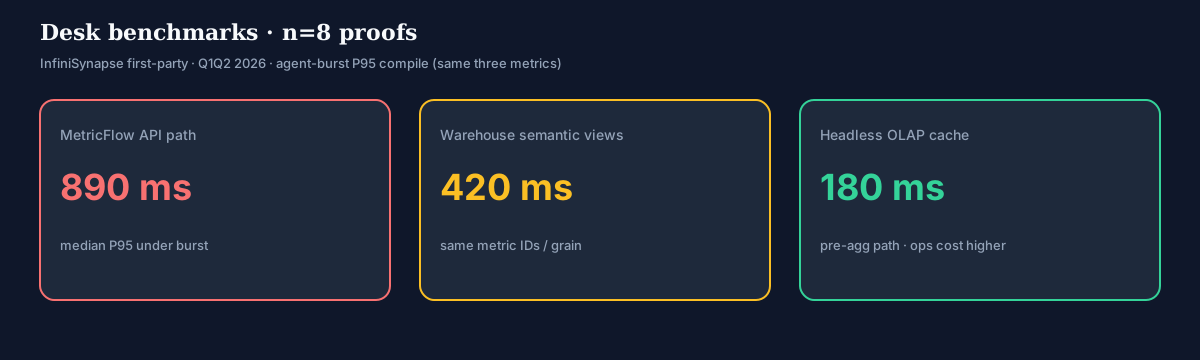
Desk anchors (InfiniSynapse, n=8 production-shaped proofs, Q1–Q2 2026). These are latency classes on the same three metric IDs. They are not a ranking of Cube, AtScale, or Looker.
| Path | Desk result | How to read it |
|---|---|---|
| Agent-burst P95, MetricFlow API | 890 ms median | Same three metric IDs |
| Agent-burst P95, warehouse semantic views | 420 ms median | Snowflake-style view path |
| Agent-burst P95, headless OLAP cache | 180 ms median | Lower latency, higher ops cost |
| Variance vs finance baseline, compile path | 0% | Stop the pilot if this is not zero |
| Variance, LLM on raw schema, no compile | 12–37% | Wrong grain or joins |
Re-measure on your warehouse and your concurrency. The cache row is not "always buy a headless platform." It is the cost of a cache when the API misses an SLO.
Score each shortlisted dbt semantic layer alternative from 0 to 2.
| Dimension | 2 (pass) | 0 (fail) |
|---|---|---|
| Governance | Council and versioning | A wiki page |
| Compile transparency | SQL and metric version | Black box |
| Agent integration | Metric tool and review | Schema pasted into a prompt |
| Performance | P95 inside the SLO under burst | Timeouts in agent loops |
| Federation | Tested multi-engine parity | One definition per warehouse |
| Exit | Definitions export to Git | No export |
Below 8/12 means custom work before production. Rescore after the pilot, not from the sales deck. The metric-definition background for dbt shops is dbt metrics layer. A passing score still has to name which dbt semantic layer alternative owns the version.
Hybrid patterns
A common dbt semantic layer alternative pattern keeps MetricFlow YAML as the definition and serves the same IDs through a warehouse view or a cache. Write down which system owns the version. Councils that approve YAML while agents read a stale cache have two layers and no source of truth.
Desk benchmarks
The figure above is the same eight proofs as the table. Treat each row as a class of dbt semantic layer alternative, then re-time it on your warehouse. Use the figure in the pilot memo next to the SQL diff. Procurement can reject a demo that hides the compile path.
Selection Workflow
Pick a dbt semantic layer alternative with two rows from the matrix, not a five-vendor bake-off.
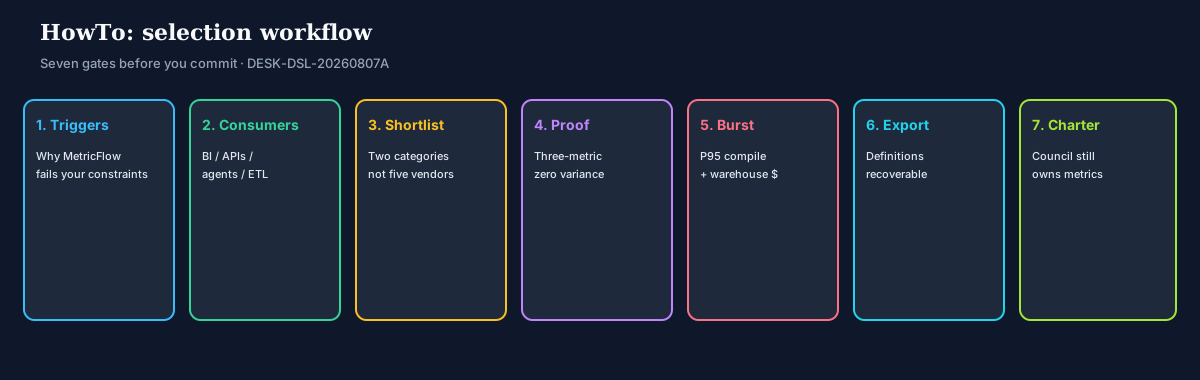
HowTo: select a dbt semantic layer alternative
- Document triggers. Name the MetricFlow limit: latency, Cloud-only features, federation, or agents.
- Inventory consumers. BI, APIs, agents, reverse ETL, with freshness and latency for each.
- Shortlist two rows from the matrix. Not five vendors.
- Run the three-metric proof. Variance against finance must be zero.
- Stress an agent burst. Record P95 and warehouse credits.
- Validate export. Definitions must be recoverable if the vendor relationship ends.
- Sign a council charter. A dbt semantic layer alternative does not remove metric ownership.
After the proof, return to semantic layer patterns if the estate includes more than one engine.
InfiniSynapse Production Pattern
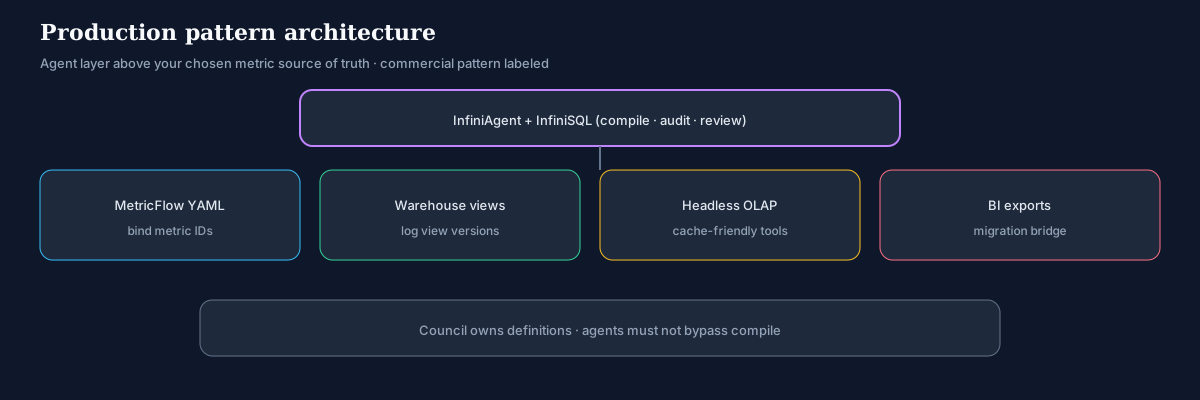
Commercial pattern (InfiniSynapse product). InfiniSynapse often sits as the agent layer above the metric source the customer already chose. It is not, by itself, the dbt semantic layer alternative. The alternative is the source in the left column.
| Customer metric source | InfiniSynapse role |
|---|---|
| MetricFlow YAML | Bind agents to metric IDs; run multi-step plans |
| Snowflake semantic views | Compile in InfiniSQL; log the view version |
| Headless OLAP cache | Agent tools that hit the cache, with an audit log |
| BI exports | A bridge during migration; the council still owns definitions |
We do not ask teams to delete a working catalog. We ask them to stop agents from skipping the compile path. Ask vendors for a compile log and a metric version ID before a multi-year contract.
Frequently Asked Questions
Should we leave dbt entirely?
No. A dbt semantic layer alternative complements dbt models. Warehouse views on dbt marts, and agent platforms bound to MetricFlow, keep the transformation practice. Leave dbt only if you are replacing transformation, which is a different project from this page.
Is a dbt semantic layer alternative the same as dbt alternatives?
No. Dbt alternatives usually means another tool to build and test models. A dbt semantic layer alternative only changes where metrics are defined and served. Keep dbt models unless that transformation job is the thing that failed.
Is RAG a semantic layer alternative?
No. RAG retrieves text. It does not enforce grain at compile time. Pair retrieval with a compile layer, as in SQL RAG vs semantic layer.
Which alternative is fastest for agents?
On our desk composite, a headless cache (180 ms median P95) was faster than warehouse views (420 ms) and a MetricFlow API (890 ms), on the same three metric IDs. That ordering is a reason to re-measure a dbt semantic layer alternative, not a reason to skip the variance test. Measure your set. A faster cache that fails the finance variance test is not a pass.
Can we use multiple alternatives at once?
One source of truth. Other tools consume it through an API or a federated ID. Two writable catalogs for the same metric is how dashboard totals diverge.
Conclusion
A dbt semantic layer alternative is the metric server you put on dbt models when MetricFlow's constraints block production: Cloud-only features, multi-warehouse IDs, or agent latency. Warehouse views, Cube Core, LookML, and AtScale win in different rows of the matrix. MetricFlow wins when one project, one warehouse, and a measured SLO already hold.
- Write the trigger that MetricFlow fails.
- Score two matrix rows with the three-metric proof.
- Read dbt semantic layer, then the semantic layer hub.
Revisit the matrix when the warehouse count, the BI system of record, or the agent consumer mix changes. The dbt semantic layer alternative that fit a dashboard-only estate can miss an agent SLO later.