
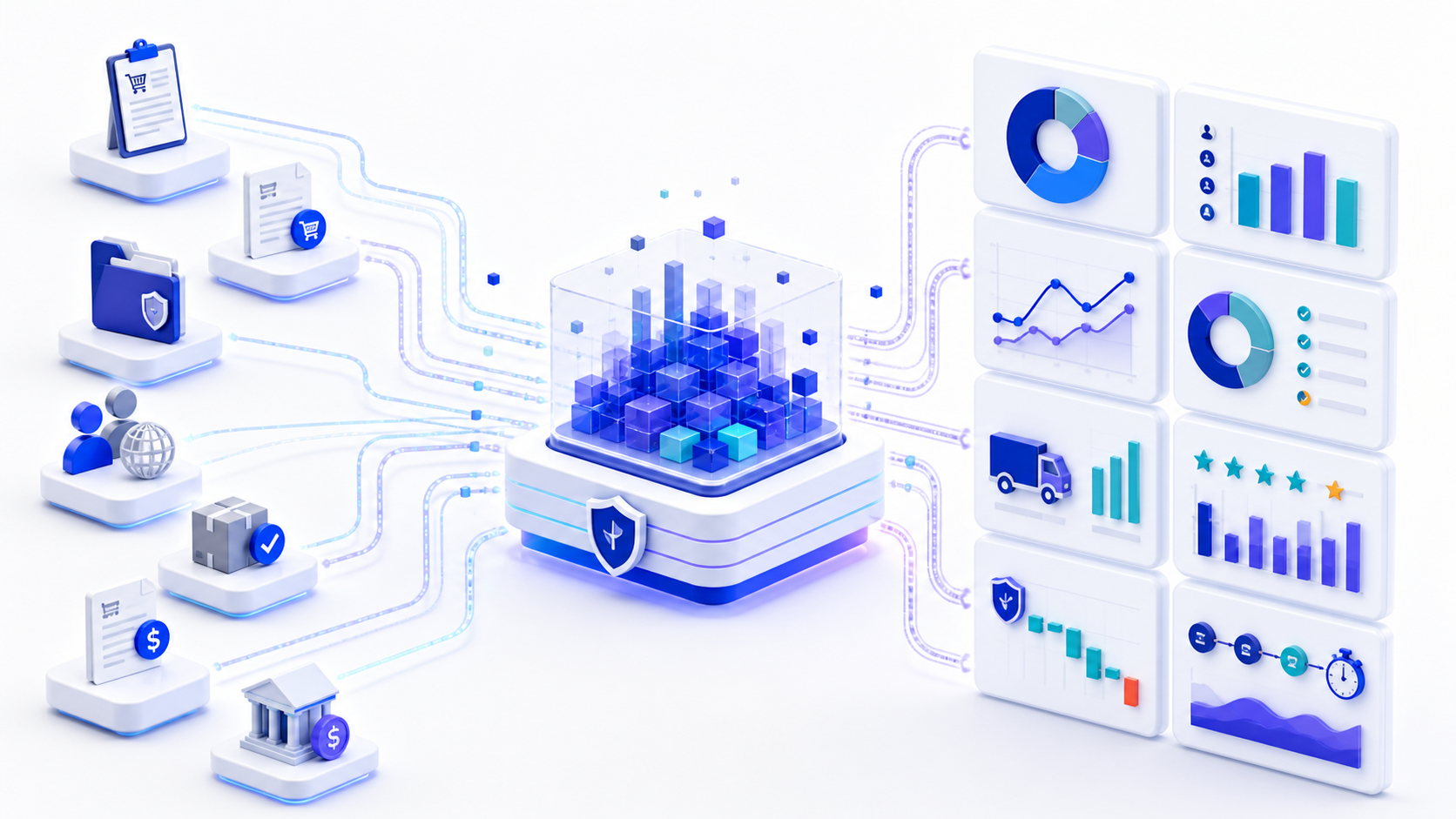
Quick Answer: What Is Procurement Analytics?快速回答:什么是采购分析?
Procurement analytics is the governed use of requisition, purchase-order, contract, supplier, receipt, invoice and payment data to describe procurement performance, diagnose variance and support sourcing, compliance, risk and process decisions. It joins commercial commitments with operational outcomes so teams can answer what was bought, from whom, at which price and terms, whether delivery and quality met expectations, where exposure is concentrated and whether an intervention produced validated value.
采购分析是以受治理方式使用请购、采购订单、合同、供应商、收货、发票与付款数据,描述采购表现、诊断差异并支持寻源、合规、风险与流程决策。它把商业承诺同运营结果连接起来,使团队能够回答采购了什么、向谁采购、价格和条款如何、交付与质量是否达标、风险集中在哪里,以及某项干预是否产生了经验证价值。
The output is evidence for a decision, not an automatic transaction. Procurement analytics may identify off-contract spend, a price change, a late supplier or an invoice exception. Authorized owners still decide sourcing actions, negotiate terms, approve suppliers, issue purchase orders and resolve disputes in the relevant procurement and financial systems.
输出是决策证据,而不是自动交易。采购分析可以识别合同外支出、价格变化、供应商迟交或发票异常;授权责任人仍需在相关采购与财务系统中决定寻源行动、谈判条款、批准供应商、签发采购订单并解决争议。
1. Procurement Analytics Purpose, Scope and Decisions1. 采购分析的目的、范围与决策
Begin with a decision and owner. Category managers may need to identify fragmented spend and sourcing opportunities. Buyers may need to explain price variance or supplier delivery failures. Contract owners may need to find leakage. Finance may need a defensible savings bridge. Operations may need to know which open purchase orders threaten production or customer service. Each question requires different dates, grains, sources and comparison logic.
应从决策与责任人开始。品类经理可能需要识别分散支出与寻源机会;采购人员需要解释价格差异或供应商交付失败;合同负责人需要发现泄漏;财务需要可辩护的节省桥接;运营团队需要知道哪些开放采购订单威胁生产或客户服务。每个问题都需要不同日期、粒度、来源与比较逻辑。
Define organizational entities, business units, purchasing organizations, categories, suppliers, geographies, currencies, period, document types and inclusion rules. State whether spend comes from purchase orders, invoices, payments, expenses or a reconciled view. Separate direct, indirect, capital and service spend where their processes differ. Specify whether tax, freight, rebates, credits, intercompany transactions and cancelled documents are included.
需要定义组织实体、业务单元、采购组织、品类、供应商、区域、币种、期间、单据类型与纳入规则。说明支出来自采购订单、发票、付款、费用还是协调视图;当流程不同时,应区分直接、间接、资本和服务支出;明确税费、运费、返利、贷项、公司间交易与取消单据是否纳入。
Consolidation, category strategy, tail spend and demand control.
整合、品类策略、尾部支出与需求控制。
Price, terms, contract coverage and sourcing event.
价格、条款、合同覆盖与寻源事件。
Performance, capacity, concentration, risk and development.
绩效、产能、集中度、风险与发展。
Cycle time, compliance, exception ownership and control.
周期时间、合规、异常责任与控制。
2. Procurement Analytics vs Spend Analysis and Reporting2. 采购分析与支出分析及报告的区别
Spend analysis focuses on collecting, cleansing, classifying and analyzing expenditure across supplier, category, organization and time. Procurement analytics is broader: it also connects price and contract terms, requisition-to-order behavior, receipt outcomes, supplier delivery and quality, invoice exceptions, payments, savings and risk. Spend analysis is a core domain within the larger procurement decision system.
支出分析聚焦收集、清洗、分类并按供应商、品类、组织和时间分析支出。采购分析范围更广,还连接价格与合同条款、请购到订单行为、收货结果、供应商交付与质量、发票异常、付款、节省与风险。支出分析是更大采购决策体系中的核心领域。
Reporting states what happened using agreed measures. Diagnostic analytics explains drivers and data breaks. Predictive analytics estimates likely outcomes such as delivery delay or price exposure. Prescriptive analysis compares options, constraints and consequences. The level of sophistication should follow decision readiness: predictive supplier risk has little value when supplier identities, receipt dates or category mappings are unreliable.
报告使用约定指标说明发生了什么;诊断分析解释驱动因素与数据断点;预测分析估计交付延误或价格暴露等可能结果;处方分析比较方案、约束与后果。复杂程度应服从决策就绪度:如果供应商身份、收货日期或品类映射不可靠,预测性供应商风险就没有多少价值。
| Capability能力 | Question问题 | Typical output典型输出 |
|---|---|---|
| Spend analysis支出分析 | What, where and with whom did we spend?采购了什么、在哪里、向谁支出? | Clean classified spend cube清洁分类支出立方体 |
| Supplier analytics供应商分析 | How did suppliers perform and where are risks?供应商表现如何,风险在哪里? | Comparable performance and exposure可比较绩效与暴露 |
| Process analytics流程分析 | Where do cycle time and exceptions arise?周期时间与异常在哪里产生? | Stage, bottleneck and control evidence阶段、瓶颈与控制证据 |
| Execution执行 | Which approved transaction should occur?应执行哪项批准交易? | Sourcing, contract, order or workflow action寻源、合同、订单或工作流行动 |
3. Procurement Data Sources and the Procure-to-Pay Model3. 采购数据来源与采购到付款模型
A useful model connects the chain from requisition and approval through sourcing, agreement, purchase order, acknowledgement, shipment, receipt, quality disposition, invoice, exception and payment. Preserve document headers and lines, because a single order can contain different suppliers, categories, tax treatments, delivery schedules or outcomes. Link changes and versions rather than keeping only the final state.
有用模型应连接从请购与批准到寻源、协议、采购订单、确认、发运、收货、质量处置、发票、异常与付款的链条。必须同时保留单据头和行,因为一张订单可能包含不同品类、税务处理、交付计划或结果;应连接变更与版本,而不能只保留最终状态。
Typical sources include ERP, e-procurement, sourcing, contract lifecycle management, supplier management, accounts payable, expense, quality, logistics and data-warehouse systems. External inputs may include commodity indices, currency rates, sanctions or business-continuity signals when governance permits. Each field needs a source, business timestamp, ingestion timestamp, owner and definition. The same “supplier,” “spend date” or “on time” label often means different things across systems.
典型来源包括 ERP、电子采购、寻源、合同生命周期管理、供应商管理、应付账款、费用、质量、物流与数据仓库系统。治理允许时,外部输入可包括商品指数、汇率、制裁或业务连续性信号。每个字段都需要来源、业务时间戳、摄取时间戳、责任人与定义。同一“供应商”“支出日期”或“准时”标签在不同系统中往往含义不同。
Design a conformed analytical grain. Spend may be invoice line for financial actuals, purchase-order line for commitments or payment line for cash. Supplier performance may be schedule line, receipt line, lot or defect event. Process time may be event-to-event duration with business calendars. Store relationships across grains rather than forcing all facts into one wide table that duplicates amounts.
应设计一致分析粒度。财务实际支出可能使用发票行,承诺使用采购订单行,现金使用付款行;供应商绩效可能使用计划行、收货行、批次或缺陷事件;流程时间可能是使用业务日历计算的事件间时长。应保存不同粒度之间的关系,而不是把所有事实强塞进一张会重复金额的宽表。
4. Supplier Identity, Classification and Data Quality4. 供应商身份、分类与数据质量
Supplier normalization is foundational. One legal supplier can appear under multiple ERP vendor IDs, spellings, sites, bank accounts or subsidiaries. Build a governed crosswalk from transaction supplier to site, legal entity and ultimate parent where supported. Preserve the original value and confidence. Do not merge suppliers solely on a similar name; use tax, registration, address, bank and internal master evidence under appropriate access controls.
供应商标准化是基础。同一法律供应商可能以多个 ERP 供应商 ID、拼写、地点、银行账户或子公司出现。应在证据支持时建立从交易供应商到地点、法律实体与最终母公司的受治理映射,保留原始值与置信度。不能仅因名称相似就合并供应商;应在适当访问控制下使用税务、注册、地址、银行与内部主数据证据。
Category classification needs a taxonomy, version and review workflow. Map item, free-text description, supplier, account and contract evidence to the chosen category hierarchy. Measure classified coverage, confidence, manual overrides and accuracy on reviewed samples. A model that assigns every line can still be wrong. Keep “unclassified” visible and route high-value or high-risk ambiguity for review.
品类分类需要分类体系、版本与评审流程。把物品、自由文本描述、供应商、科目与合同证据映射到选定品类层级。衡量已分类覆盖率、置信度、人工调整以及评审样本准确率。一个给每行都赋值的模型仍可能错误;应保持“未分类”可见,并把高价值或高风险歧义送交评审。
Reconcile amount, quantity, unit, currency and sign. Retain transaction currency, functional currency, rate source and rate date. Handle credits, returns, prepayments and duplicate documents explicitly. Validate PO–receipt–invoice quantity and amount bridges. Publish quality checks by source and period so a drop in spend is not mistaken for savings when an interface failed.
应协调金额、数量、单位、币种与符号,并保留交易币种、功能币种、汇率来源和日期;明确处理贷项、退货、预付款与重复单据;验证采购订单—收货—发票之间的数量和金额桥接。按来源与期间发布质量检查,避免接口故障导致支出下降时被误认为节省。
5. Spend Analytics by Category, Supplier and Organization5. 按品类、供应商与组织开展支出分析
A spend cube should support consistent slicing by category, supplier parent and site, business unit, cost center, buyer, location, contract, channel, currency and time. Begin with total in-scope spend and bridge to classified, addressable, managed, contracted, PO-backed and paid views. These labels need explicit rules. “Addressable” is not all spend; taxes, regulated charges or committed categories may be outside practical sourcing control.
支出立方体应支持按品类、供应商母公司与地点、业务单元、成本中心、采购员、地点、合同、渠道、币种和时间一致切分。从范围内总支出开始,桥接到已分类、可寻源、受管理、合同覆盖、有 PO 支持和已付款视图。这些标签都需要明确规则。“可寻源”并非全部支出,税费、受监管收费或已承诺品类可能不在实际寻源控制范围。
Use Pareto and tail-spend views carefully. Supplier count, transaction count, average order value and fragmented demand can reveal process cost or consolidation opportunity, but fewer suppliers is not automatically better. Concentration can increase dependency, while local or diverse suppliers may serve policy objectives. Drill from a pattern to lines and evidence before declaring an opportunity.
应谨慎使用帕累托与尾部支出视图。供应商数量、交易数量、平均订单价值与分散需求可以揭示流程成本或整合机会,但供应商越少并不必然越好;集中可能增加依赖,而本地或多元供应商可能服务政策目标。在宣布机会前,应从模式下钻到交易行与证据。
6. An Eight-Step Procurement Analytics Workflow6. 八步采购分析工作流
- Define the decision.定义决策。 Name the owner, action, scope, grain, period, cutoff and materiality.明确责任人、行动、范围、粒度、期间、截止点与重大性。
- Map the document chain.映射单据链。 Connect requisition, contract, order, receipt, invoice, payment and supplier events.连接请购、合同、订单、收货、发票、付款与供应商事件。
- Reconcile identities and amounts.协调身份与金额。 Resolve supplier, category, item, organization, currency, quantity and sign.解析供应商、品类、物品、组织、币种、数量与符号。
- Build governed measures.构建受治理指标。 Define spend, price, compliance, delivery, quality, risk, cycle time and savings.定义支出、价格、合规、交付、质量、风险、周期与节省。
- Establish a baseline.建立基线。 Freeze comparable history, data-quality status, contracts, volume and market context.冻结可比历史、数据质量状态、合同、数量与市场背景。
- Analyze exceptions and drivers.分析异常与驱动。 Segment patterns, bridge variance and drill to source evidence.细分模式、桥接差异并下钻来源证据。
- Assign and validate action.分配并验证行动。 Record opportunity, owner, dependency, approval, timing and expected consequence.记录机会、责任人、依赖、批准、时间与预期后果。
- Measure realized outcomes.衡量实际结果。 Compare frozen baseline with actual price, volume, service, risk and finance validation.把冻结基线与实际价格、数量、服务、风险及财务验证比较。
7. Purchase Price, Variance and Total-Cost Analytics7. 采购价格、差异与总成本分析
Price analysis starts with a comparable unit. Normalize units, pack sizes, specifications, currency, incoterms, freight, tax and effective dates. Compare invoice price with purchase order, contract, prior period, bid, standard cost or market reference only when the comparison is valid. A lower price for a different specification, destination, payment term or minimum quantity is not necessarily a saving.
价格分析从可比单位开始。统一单位、包装、规格、币种、贸易术语、运费、税费与生效日期。只有比较有效时,才能把发票价格同采购订单、合同、上期、报价、标准成本或市场参考比较。不同规格、目的地、付款条款或最低量下的更低价格不一定是节省。
Bridge spend variance into price, quantity, mix, currency, timing and scope. This prevents procurement from receiving credit or blame for demand changes. For categories where acquisition price is incomplete, include freight, duties, quality failure, inspection, inventory, payment terms, downtime, disposal and switching costs as documented total-cost components. Avoid adding speculative values without confidence ranges.
应把支出差异桥接为价格、数量、组合、币种、时间与范围,避免把需求变化错误归功或归责于采购。对于采购价不足以代表完整成本的品类,应把运费、关税、质量失败、检验、库存、付款条款、停机、处置与切换成本作为有记录的总成本组成。不能在没有置信区间时加入推测数值。
8. Contract Coverage, Compliance and Leakage8. 合同覆盖、合规与泄漏
Contract coverage asks whether eligible spend has an applicable, approved agreement. Contract compliance asks whether transactions followed supplier, item, price, quantity, term and channel conditions. Purchase-order compliance asks whether a valid PO existed at the required point in the process. These are different controls. A transaction can be under contract but use the wrong price, or have a PO but no agreement.
合同覆盖询问合格支出是否存在适用且批准的协议;合同合规询问交易是否遵循供应商、物品、价格、数量、条款与渠道条件;采购订单合规询问流程要求节点是否存在有效 PO。这些是不同控制。交易可能在合同范围内却使用错误价格,也可能有 PO 却没有协议。
Define eligible population, effective dates, renewal, amendment, tolerance and exception approvals. Map contracts at the appropriate line and category level. Analyze off-contract, non-PO, after-the-fact PO, price leakage and expired agreement spend separately. Some exceptions are legitimate emergencies or regulated choices; the objective is explainable control, not a mechanical 100% target.
需要定义合格总体、生效日期、续约、修订、容差与例外批准,并在适当订单行与品类层映射合同。分别分析合同外、无 PO、事后 PO、价格泄漏和过期协议支出。有些例外属于合理紧急情况或监管选择,目标是可解释控制,而不是机械追求 100%。
9. Supplier Delivery, Quality and Service Analytics9. 供应商交付、质量与服务分析
Supplier performance management requires consistent event and attribution rules. Delivery measures may compare requested, committed or confirmed date with shipment, arrival, receipt or usable date. Quantity performance may be order line, schedule, receipt or complete delivery. Quality can include rejected quantity, defect rate, return, corrective action and cost of poor quality. Publish the exact numerator, denominator, tolerance, calendar and exclusions.
供应商绩效管理需要一致事件与归因规则。交付指标可能把要求、承诺或确认日期同发运、到达、收货或可用日期比较;数量绩效可能按订单行、计划、收货或完整交付衡量;质量可包括拒收数量、缺陷率、退货、纠正行动和不良质量成本。应公布精确分子、分母、容差、日历与排除项。
Compare like with like. Segment by category, lane, product criticality, order type and period. Separate supplier-caused delay from buyer change, quality hold, transport event or incorrect master data when evidence exists. A score can summarize, but drill-through must preserve the affected orders and events. Use a dedicated supplier scorecard page for score design and governance.
比较必须同类。按品类、路线、产品关键性、订单类型与期间细分;在有证据时,把供应商造成的延误同采购方变更、质量冻结、运输事件或错误主数据区分。评分可以总结,但下钻必须保留受影响订单与事件。评分设计与治理应在独立供应商评分卡页面展开。
10. Supplier Risk, Concentration and Exposure10. 供应商风险、集中度与暴露
Risk analytics should connect a signal to business exposure. Supplier spend alone does not show dependency. Add sole-source status, qualified alternatives, inventory cover, lead time, affected products, facilities, customers, revenue or production dependency and recovery time. Map legal parent and site because a diversified vendor-ID list may still represent one corporate or geographic concentration.
风险分析应把信号连接到业务暴露。仅有供应商支出不能显示依赖,还需加入单一来源状态、合格替代、库存覆盖、提前期、受影响产品、设施、客户、收入或生产依赖及恢复时间。应映射法律母公司与地点,因为看似多元的供应商 ID 列表可能仍代表同一企业或地理集中。
Separate observed fact, external signal, model score and analyst judgment. Record source date and confidence. Avoid treating every negative news item as disruption or claiming causality from correlation. Prioritize by likelihood, impact, time to action and available response. Detailed methodology belongs in supplier risk assessment; this guide focuses on integrating risk with procurement evidence.
必须区分观察事实、外部信号、模型评分与分析人员判断,并记录来源日期与置信度。不能把每条负面新闻都视为中断,也不能从相关性宣称因果。按可能性、影响、行动时间与可用响应排序。详细方法应放在供应商风险评估页面;本指南聚焦把风险同采购证据连接。
11. Procurement Savings, Value and Benefit Validation11. 采购节省、价值与收益验证
Separate identified opportunity, negotiated saving, implemented saving and realized financial result. Define the baseline price or cost, comparable specification, baseline volume, effective date, contract term and counterfactual. Bridge market movement, currency, demand, mix, quality, freight and payment terms. Finance should know whether a figure is cost reduction, cost avoidance, working-capital effect, process efficiency or risk reduction.
应区分已识别机会、谈判节省、已实施节省与实际财务结果。定义基准价格或成本、可比规格、基准数量、生效日期、合同期限与反事实,并桥接市场变动、币种、需求、组合、质量、运费和付款条款。财务需要知道数值属于成本降低、成本规避、营运资金影响、流程效率还是风险降低。
Avoid multiplying a unit-price difference by forecast volume without checking actual adoption. Validate that users bought through the new agreement, price and specification, and that volume did not shift to an excluded supplier or product. Preserve initiative owner, dependency, approval, implementation status, finance validation and realized period. Report a range when baseline or future volume is uncertain.
不能在未检查实际采用时把单位价差直接乘以预测数量。应验证用户是否通过新协议、价格与规格采购,以及数量是否转移到被排除的供应商或产品。保留项目责任人、依赖、批准、实施状态、财务验证与实现期间。当基线或未来数量不确定时,应报告区间。
12. Procure-to-Pay Process and Cycle-Time Analytics12. 采购到付款流程与周期分析
Measure stage durations using event timestamps and business calendars: requisition creation to approval, approval to PO, PO to supplier acknowledgement, order to receipt, receipt to invoice match, invoice to approval and approval to payment. Report median, percentiles and aging, not only averages. Segment by category, value, exception type, organization, buyer and supplier to reveal where work accumulates.
使用事件时间戳与业务日历衡量各阶段:请购创建到批准、批准到 PO、PO 到供应商确认、订单到收货、收货到发票匹配、发票到批准以及批准到付款。应报告中位数、分位数与库龄,而不只平均值;按品类、价值、异常类型、组织、采购员与供应商细分,揭示工作积压位置。
Cycle time is not automatically better when shorter. Controls, competitive sourcing, technical evaluation or regulatory review may add necessary time. Distinguish waiting, touch, rework and approved hold. Analyze first-pass match, invoice exceptions, duplicate attempts, approval loops and after-the-fact documents. Link process improvement to service, control and workload rather than encouraging users to bypass governance.
周期越短并不自动越好。控制、竞争寻源、技术评估或监管复核可能增加必要时间。应区分等待、处理、返工与批准暂停,并分析一次匹配、发票异常、重复尝试、审批循环和事后单据。流程改进应连接服务、控制与工作量,而不能鼓励用户绕过治理。
13. Procurement Analytics KPIs and Dashboard Design13. 采购分析 KPI 与仪表板设计
Build a balanced system rather than one savings number. Spend KPIs include coverage, classification, addressable spend, managed spend, tail spend and concentration. Commercial KPIs include contract coverage, compliance, purchase price variance and term adoption. Supplier KPIs include on-time delivery, complete delivery, rejection, defect, corrective-action aging and lead-time reliability. Process KPIs include cycle time, touchless rate, PO compliance, invoice exceptions and approval aging.
应构建平衡体系,而不是只看一个节省数值。支出 KPI 包括覆盖、分类、可寻源支出、受管理支出、尾部支出和集中度;商业 KPI 包括合同覆盖、合规、采购价格差异与条款采用;供应商 KPI 包括准时交付、完整交付、拒收、缺陷、纠正行动库龄与提前期可靠性;流程 KPI 包括周期时间、无接触率、PO 合规、发票异常与审批库龄。
Every dashboard measure needs business definition, owner, source, grain, refresh, target, tolerance and drill-through. Show data freshness and coverage near the result. Use trends, distributions and cohorts rather than a wall of red and green tiles. Provide an exception register with amount or operational exposure, cause status, action owner, due date and resolution. A KPI is useful only when a role can interpret and act on it.
每个仪表板指标都需要业务定义、责任人、来源、粒度、刷新、目标、容差与下钻。应在结果附近显示数据新鲜度和覆盖率,使用趋势、分布和群组,而不是堆满红绿卡片。异常登记应包括金额或运营暴露、原因状态、行动责任人、截止日与解决情况。只有当某个角色能够解释并行动时,KPI 才有价值。
14. Worked Example: Category Spend and Supplier Performance14. 示例:品类支出与供应商绩效
Consider a hypothetical manufacturer reviewing a packaging category. The first dashboard shows 12 suppliers and apparent price differences. Identity resolution reveals that three vendor IDs belong to one parent, and unit normalization shows two “lower-price” suppliers use smaller pack sizes. After currency and freight alignment, the valid comparable spend is 86% of the original category total. These numbers are illustrative, not a benchmark.
假设某制造商评审包装品类。初始仪表板显示 12 家供应商及明显价差。身份解析发现三个供应商 ID 属于同一母公司,单位统一又显示两个“低价”供应商使用更小包装。经过币种与运费协调,可有效比较的支出为原品类总额的 86%。这些数字仅为示例,不是基准。
The team then connects order schedules, receipts and quality events. Supplier A has the lowest comparable price but frequent partial deliveries and higher rejection; Supplier B has a higher price but stable complete delivery. Total-cost scenarios include inspection, expedites and production exposure with documented ranges. Contract analysis also finds that several plants bought from Supplier A outside the agreed pack and freight terms.
团队随后连接订单计划、收货与质量事件。供应商 A 可比价格最低,却频繁部分交付且拒收率更高;供应商 B 价格较高,但完整交付稳定。总成本情景以有记录区间加入检验、加急与生产暴露。合同分析还发现多个工厂向供应商 A 采购时未遵循约定包装与运费条款。
The conclusion is not an automatic supplier switch. Category, operations, quality and finance review the evidence, validate the service requirement and approve a negotiation and allocation scenario. The baseline, expected value, owner and effective date are frozen. After implementation, actual price, mix, quality, delivery and expedite outcomes are compared with the baseline before any saving is reported.
结论不是自动切换供应商。品类、运营、质量与财务共同评审证据,验证服务要求并批准谈判与分配情景;冻结基线、预期价值、责任人与生效日期。实施后,在报告任何节省前,把实际价格、组合、质量、交付与加急结果同基线比较。
15. AI Procurement Analytics With Multi-Source Evidence15. 基于多源证据的 AI 采购分析
AI can help discover relevant tables, normalize supplier names, suggest classifications, generate analytical queries, summarize variance, compare suppliers and flag validation failures. It should not invent category mappings, supplier relationships, savings or causal explanations. High-value identity and classification decisions need confidence, evidence and review. Every answer should retain sources, cutoff, filters, joins, transformations and definition versions.
AI 可以帮助发现相关表、统一供应商名称、建议分类、生成分析查询、总结差异、比较供应商并标记验证失败。它不能虚构品类映射、供应商关系、节省或因果解释。高价值身份与分类决策需要置信度、证据与复核。每个答案都应保留来源、截止点、筛选、连接、转换与定义版本。
InfiniSynapse fits as an analytical and intelligence layer: connect governed ERP, procurement, contract, inventory, logistics, quality and warehouse data; ask cross-source questions; plan and generate queries; inspect results; compare entities; and preserve reviewable evidence. It does not create purchase orders, run sourcing events, negotiate contracts, approve suppliers, operate a supplier portal or execute payments.
InfiniSynapse 适合作为分析与智能层:连接受治理的 ERP、采购、合同、库存、物流、质量与数仓数据,提出跨源问题,规划并生成查询,检查结果,比较实体并保留可复核证据。它不会创建采购订单、运行寻源活动、谈判合同、批准供应商、运营供应商门户或执行付款。
Prepare one decision, approved grain, source systems, supplier and category mappings, period, cutoff and metric definitions. Use InfiniSynapse to examine joined evidence and retain a transparent analytical trail.
准备一个决策、批准粒度、来源系统、供应商与品类映射、期间、截止点和指标定义。使用 InfiniSynapse 检查连接证据并保留透明分析链路。
Try InfiniSynapse Online在线体验 InfiniSynapseThis guide is part of the broader supply chain analytics content framework. Link related operational evidence through supply chain visibility and inventory policy through inventory optimization.
16. Common Procurement Analytics Failures and Checklist16. 采购分析常见失败与检查清单
Define commitments, actuals, payments, credits and exclusions.
定义承诺、实际、付款、贷项与排除。
Resolve site, legal entity and parent with governed evidence.
用受治理证据解析地点、法律实体与母公司。
Measure coverage, confidence, overrides and reviewed accuracy.
衡量覆盖、置信度、调整与评审准确率。
Normalize terms and include relevant documented consequences.
统一条款并加入相关且有记录的后果。
Validate adoption, volume, mix, timing and finance result.
验证采用、数量、组合、时间与财务结果。
Preserve orders, events, definitions and attribution evidence.
保留订单、事件、定义与归因证据。
- Define the decision, owner, scope, grain, dates, population and materiality.定义决策、责任人、范围、粒度、日期、总体与重大性。
- Connect the requisition–contract–order–receipt–invoice–payment chain.连接请购—合同—订单—收货—发票—付款链。
- Reconcile suppliers, categories, units, currency, quantity, amount and sign.协调供应商、品类、单位、币种、数量、金额与符号。
- Publish metric definitions, data freshness, coverage and quality exceptions.公布指标定义、数据新鲜度、覆盖率与质量异常。
- Bridge price, volume, mix, currency, scope and market effects.桥接价格、数量、组合、币种、范围与市场影响。
- Assign evidence-backed actions without bypassing procurement controls.分配基于证据的行动,不能绕过采购控制。
- Measure implemented and realized results against a frozen baseline.根据冻结基线衡量已实施与实际结果。
Frequently Asked Questions常见问题
Procurement analytics is the governed use of procurement, supplier, contract, receipt, invoice and payment data to describe performance, diagnose variance and support sourcing, compliance, risk and process decisions.
采购分析是以受治理方式使用采购、供应商、合同、收货、发票与付款数据,描述表现、诊断差异并支持寻源、合规、风险与流程决策。
Typical inputs include requisitions, purchase orders, contracts, supplier master data, goods and service receipts, invoices, payments, category mappings, budgets, quality events and delivery milestones.
典型输入包括请购、采购订单、合同、供应商主数据、货物与服务收货、发票、付款、品类映射、预算、质量事件与交付里程碑。
Spend analysis focuses on cleansing, classifying and analyzing expenditure. Procurement analytics is broader and also covers supplier, price, contract, delivery, quality, risk and procure-to-pay performance.
支出分析聚焦清洗、分类和分析支出;采购分析范围更广,还覆盖供应商、价格、合同、交付、质量、风险与采购到付款表现。
Track spend coverage, contract and PO compliance, price variance, supplier delivery and quality, concentration, sourcing and purchasing cycle times, invoice exceptions and validated savings.
跟踪支出覆盖、合同与 PO 合规、价格差异、供应商交付与质量、集中度、寻源与采购周期、发票异常及经验证节省。
Define the baseline, scope, price and volume bridge, implementation date, demand and market effects, finance validation and realized period before reporting savings.
报告节省前应定义基线、范围、价格与数量桥接、实施日期、需求与市场影响、财务验证和实现期间。
Analytics can identify evidence, exceptions and opportunities, but purchasing approvals, supplier communication, purchase orders and other execution remain in authorized procurement systems and workflows.
分析可以识别证据、异常与机会,但采购批准、供应商沟通、采购订单和其他执行仍留在授权采购系统与工作流中。
Sources and Evidence Notes资料来源与证据说明
This guide uses official procurement analytics documentation for spend dimensions, classification controls, compliance, supplier performance and process measures. The worked example and all numbers in it are explicitly hypothetical, not benchmarks.
本指南使用官方采购分析文档支持支出维度、分类控制、合规、供应商绩效与流程指标。示例及其中全部数字明确为假设,不是基准。
- SAP Ariba — Spend analysis reporting basicsSAP Ariba — 支出分析报告基础
- Oracle — Spend classification performance and analyticsOracle — 支出分类表现与分析
- Oracle Analytics — Procurement prebuilt analysesOracle Analytics — 采购预构建分析
- SAP S/4HANA — Purchasing spend dimensions and calculationSAP S/4HANA — 采购支出维度与计算
- Oracle — Procurement and supplier performance report definitionsOracle — 采购与供应商绩效报告定义
- SAP Analytics Cloud — Procurement benchmark reporting measuresSAP Analytics Cloud — 采购基准报告指标