 InfiniSynapse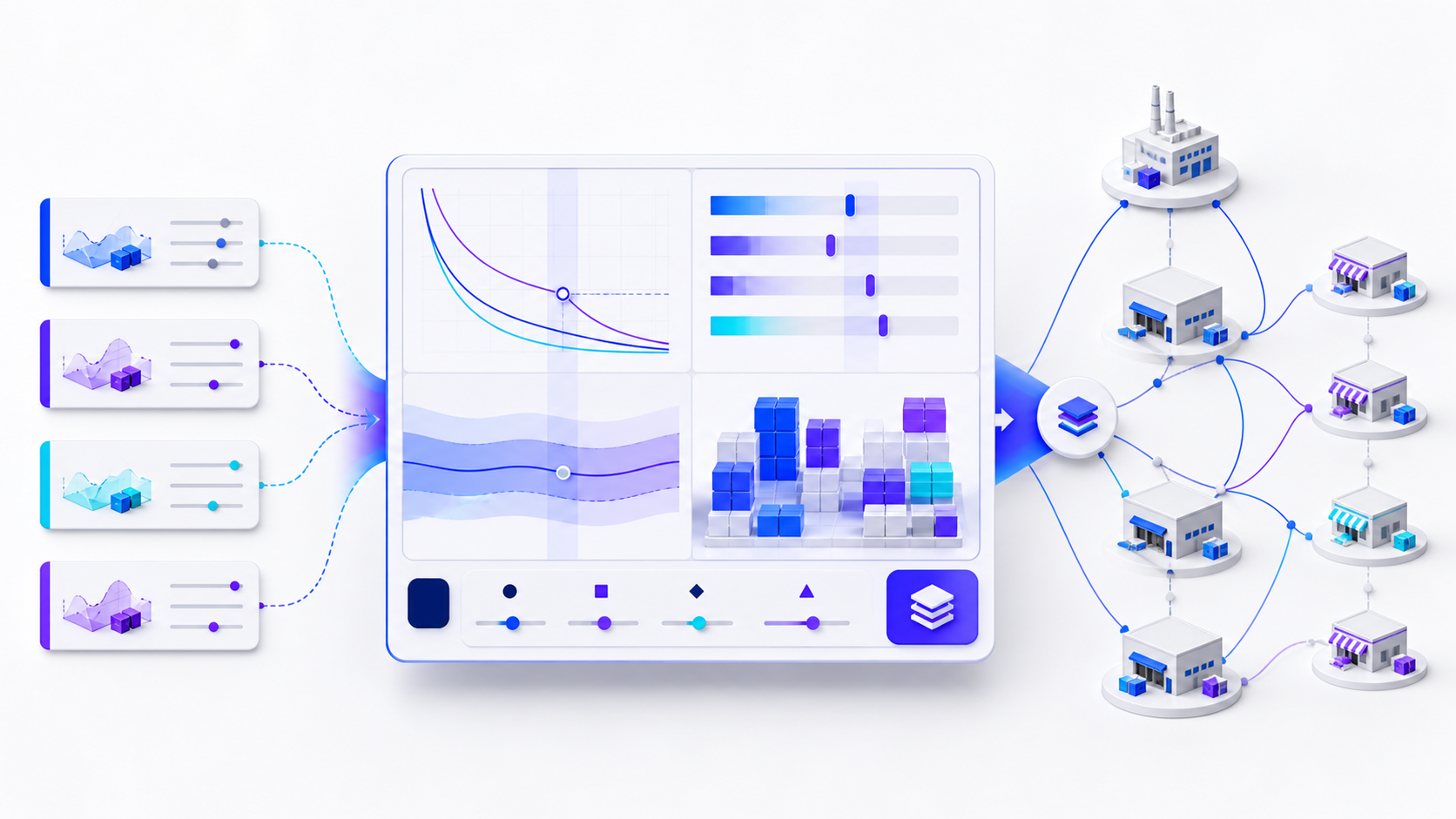
What is inventory optimization software?什么是库存优化软件?
Inventory optimization software recommends where and how much inventory to hold by balancing service objectives with inventory cost under demand, supply, and lead-time uncertainty. Depending on scope, it may recommend safety stock, reorder parameters, service levels, inventory targets, stock placement, or scenarios for one location or an interconnected multi-echelon network.
库存优化软件在需求、供应和提前期不确定性下权衡服务目标与库存成本,从而建议库存应放在哪里以及持有多少。根据产品范围,它可能针对单个地点或相互连接的多级网络,推荐安全库存、再订货参数、服务水平、库存目标、库存布置或场景。
The category has no universal feature boundary. Some tools calculate single-echelon safety stock. Others jointly optimize products and locations across suppliers, plants, distribution centers, warehouses, stores, or service depots. Some are modules inside supply-planning suites, while others focus on service parts, retail, manufacturing, or aftermarket networks. Buyers should test documented workflows rather than assume “AI,” “optimization,” or “multi-echelon” guarantees a particular method.
这一类别没有统一功能边界。有些工具计算单级安全库存,有些则跨供应商、工厂、配送中心、仓库、门店或服务网点联合优化产品与地点。还有些是供应计划套件中的模块,或专注服务零件、零售、制造及售后网络。买方应测试书面工作流,而不能假定“AI”“优化”或“多级”天然代表某种方法。
Optimization is not the same as forecasting. The planned inventory forecasting guide projects future stock from demand and supply. Optimization adds an objective, decision variables, constraints, uncertainty treatment, and a method for selecting among feasible policies. Replenishment execution is another layer: it turns an approved policy into orders, transfers, or production actions.
优化不等于预测。计划上线的库存预测指南根据需求与供应推演未来库存;优化则增加目标函数、决策变量、约束、不确定性处理以及在可行政策中选择的方法。补货执行又是另一层,它把已批准政策转化为订单、调拨或生产动作。
When is dedicated inventory optimization software justified?何时值得采用专业库存优化软件?
A controlled spreadsheet may remain fit for a small, stable, single-location assortment with transparent formulas and limited constraints. Dedicated software becomes more defensible when manual policy updates, duplicated buffers, inconsistent service targets, version conflict, network dependencies, intermittent demand, many SKU-location combinations, or slow scenario analysis create material service or working-capital risk.
对于规模小、稳定、单地点的商品组合,如果公式透明、约束有限,受控表格仍可能适用。当人工政策更新、重复缓冲、服务目标不一致、版本冲突、网络依赖、间歇需求、大量 SKU-地点组合或缓慢的场景分析造成重大服务或营运资金风险时,专业软件更有依据。
Many items, locations, echelons, sourcing paths, service classes, constraints, currencies, units, and lifecycle states exceed practical manual control.
大量物料、地点、层级、采购路径、服务类别、约束、币种、单位和生命周期状态超出人工控制能力。
Stockouts, expedites, excess, expiry, obsolescence, capacity breaches, and tied-up cash are large enough to justify implementation and operating effort.
缺货、加急、过剩、过期、过时、容量超限和资金占用足以证明实施及运营投入合理。
Do not buy software merely because inventory is high. First determine whether the problem is policy design, inaccurate inventory records, unstable supply, weak demand planning, master-data defects, order execution, or incentives. Optimization cannot repair every root cause; a sophisticated model using unreliable stock and lead-time data can produce precise-looking but unusable recommendations.
不要仅因为库存高就购买软件。应先判断问题来自政策设计、库存记录不准、供应不稳、需求计划薄弱、主数据缺陷、订单执行还是激励机制。优化无法修复所有根因;复杂模型若使用不可靠的库存和提前期数据,也只会产生看似精确但不可用的建议。
Compare inventory optimization software solution types比较库存优化软件方案类型
| Type类型 | Best fit适用场景 | Verify需验证 | Risk风险 |
|---|---|---|---|
| Controlled spreadsheet or model受控表格或模型 | Limited assortment, transparent single-echelon policy有限商品组合、透明单级政策 | Versioning, input controls, audit, owner, and backtest版本、输入控制、审计、责任人和回测 | Silent edits and scaling limits静默修改和扩展限制 |
| ERP or planning-suite moduleERP 或计划套件模块 | Existing process, master data, and execution integration已有流程、主数据和执行集成 | Actual optimization depth, configuration, scenarios, and licensing实际优化深度、配置、场景和许可 | Module name may exceed implemented capability模块名称可能大于实际能力 |
| Specialist single-echelon tool专业单级工具 | Policy by SKU-location with differentiated service and uncertainty按 SKU-地点区分服务和不确定性的政策 | Forecast-error use, constraints, overrides, and writeback预测误差、约束、调整和回写 | Local optimization can duplicate network buffers局部优化可能重复网络缓冲 |
| Multi-echelon inventory optimization多级库存优化 | Connected networks where stock at one node supports another一个节点库存支持另一节点的关联网络 | Network model, internal service, propagation, feasibility, and explainability网络模型、内部服务、传播、可行性和可解释性 | High data and model-governance demands数据和模型治理要求高 |
| Analytics layer分析层 | Cross-source diagnostics, monitoring, and outcome investigation跨源诊断、监控和结果调查 | Connection to the authoritative policy and execution systems与权威政策及执行系统的连接 | Does not replace an optimization engine or transaction system不能替代优化引擎或交易系统 |
Core inventory optimization software capabilities to evaluate应评估的库存优化软件核心能力
Demand and forecast error, intermittent demand, lead-time and supply variability, cycle service, fill rate, response time, uptime, or other defined objectives.
需求与预测误差、间歇需求、提前期与供应波动,以及周期服务、满足率、响应时间、可用性或其他已定义目标。
Safety stock, reorder point, order-up-to level, minimum and maximum, inventory target, service class, placement, and effective dates with clear units.
安全库存、再订货点、最高库存、最小与最大值、库存目标、服务类别、布置和带明确单位的生效日期。
MOQ, pack size, capacity, shelf life, budget, storage, sourcing, lifecycle, contractual service, holding cost, shortage consequence, and expedites.
最小起订量、包装、容量、保质期、预算、仓储、采购、生命周期、合同服务、持有成本、缺货后果和加急。
Comparable versions, what-if controls, baseline deltas, reason codes, binding constraints, cost-service frontier, exceptions, approvals, export, and restore.
可比较版本、假设控制、相对基线变化、原因代码、约束瓶颈、成本服务前沿、异常、审批、导出和恢复。
Single versus multi-echelon, upstream service propagation, substitution, repair loops, new items, phase-out, supersession, perishability, and returns.
单级与多级、上游服务传播、替代、维修循环、新品、退市、替换、易腐和退货。
ERP, WMS, planning platform, warehouse, API or batch, lineage, reconciliation, role separation, release workflow, monitoring, and rollback.
ERP、WMS、计划平台、数据仓库、API 或批处理、血缘、核对、职责分离、发布流程、监控和回滚。
Require vendors to state what is calculated, optimized, simulated, recommended, approved, and executed. A recommendation dashboard is not proof of mathematical optimization; an optimization engine is not proof of an operationally feasible plan; and a writeback connector is not proof of controlled approval.
要求供应商说明哪些内容被计算、优化、模拟、推荐、批准和执行。建议仪表板不能证明存在数学优化,优化引擎不能证明计划在运营上可行,回写连接器也不能证明审批受到控制。
Understand the objective behind the recommendation理解建议背后的目标函数
A simplified objective may include holding, shortage, expedite, ordering, transfer, expiry, markdown, and obsolescence costs. Another design may minimize inventory investment while meeting service targets. These are not interchangeable. Ask which service definition is used, whether costs are direct inputs or derived proxies, how infeasibility is reported, and whether one product-location recommendation can harm another node or customer class.
简化目标可能包括持有、缺货、加急、订货、调拨、过期、降价和过时成本;另一种设计可能在满足服务目标的前提下最小化库存投入。二者不可互换。应询问采用何种服务定义、成本是直接输入还是推导代理、不可行如何报告,以及一个产品-地点建议是否会损害其他节点或客户类别。
Optimization can produce false confidence when uncertain inputs are treated as exact. Demand distributions, forecast errors, lead times, supplier service, costs, and constraint parameters should have owners, effective dates, refresh rules, and sensitivity tests. The planned safety stock formula guide explains a narrower single-policy calculation; software evaluation must determine when the product uses a formula, simulation, stochastic optimization, or another approach.
如果把不确定输入当作精确值,优化会制造虚假信心。需求分布、预测误差、提前期、供应商服务、成本和约束参数都应有责任人、生效日期、刷新规则及敏感性测试。计划上线的安全库存公式指南解释较窄的单项政策计算;软件评估则必须确定产品何时使用公式、模拟、随机优化或其他方法。
Prepare data before evaluating inventory optimization software评估库存优化软件前准备数据
Build a representative SKU-location-time dataset with requested demand, fulfilled quantity, stockout flags, forecast snapshots, on-hand by status, reservations, open purchase and transfer orders, receipts, order and receipt dates, lead-time events, supplier and lane, product and location hierarchy, units, costs, shelf life, service commitments, and current policy. Multi-echelon evaluation additionally needs network relationships, sourcing priorities, internal service assumptions, transformation or repair flows, and stock ownership.
应建立代表性的 SKU-地点-时间数据集,包括请求需求、履约数量、缺货标记、预测快照、按状态划分的在手库存、预留、未结采购及调拨订单、收货、下单与收货日期、提前期事件、供应商与线路、产品及地点层级、单位、成本、保质期、服务承诺和当前政策。多级评估还需要网络关系、采购优先级、内部服务假设、转换或维修流程以及库存所有权。
- Reconcile quantities: opening balances, demand, receipts, and adjustments must reconcile to authoritative systems at a common as-of time.核对数量:期初余额、需求、收货和调整必须在统一时点与权威系统核对。
- Correct censored demand: sales during stockouts understate unconstrained need and can make a low-stock policy appear successful.修正受压制需求:缺货期间销量低估未受约束需求,并可能让低库存政策看似成功。
- Define lead time: order approval to usable receipt differs from supplier processing or transit time; preserve partial and exceptional events.定义提前期:订单批准到可用入库不同于供应商处理或运输时间,应保留分批和异常事件。
- Separate statuses and units: quarantine, damaged, in-transit, consigned, allocated, and expired stock are not equivalent to freely usable inventory.区分状态与单位:冻结、损坏、在途、寄售、已分配和过期库存不等于可自由使用库存。
Use a 100-point inventory optimization software scorecard使用100分库存优化软件评分表
Set weights before vendor demonstrations. Score evidence—not presentation quality—on a 0–5 scale, multiply by the agreed category weight, and document blockers separately. A high total should never override a mandatory security, legal, data-residency, feasibility, or execution-control failure.
在供应商演示前设定权重。按 0–5 分评价证据而非演示质量,再乘以约定类别权重,并单独记录阻断项。即使总分很高,也不能覆盖强制安全、法律、数据驻留、可行性或执行控制失败。
| Category类别 | Weight权重 | Evidence required所需证据 |
|---|---|---|
| Optimization and uncertainty fit优化与不确定性适配 | 25 | Representative demand patterns, service definitions, objectives, constraints, single or multi-echelon behavior, sensitivity代表性需求形态、服务定义、目标、约束、单级或多级行为、敏感性 |
| Policy, scenarios, and explainability政策、场景与可解释性 | 20 | Recommendations, baseline delta, reason, binding constraints, comparison, approval, export, restore建议、基线变化、原因、约束瓶颈、比较、审批、导出、恢复 |
| Data, integration, and architecture数据、集成与架构 | 20 | Source-to-target mapping, reconciliation, lineage, latency, failure handling, scale, environments, APIs or batch源到目标映射、核对、血缘、延迟、失败处理、规模、环境、API 或批处理 |
| Planner workflow and governance计划人员流程与治理 | 15 | Exceptions, overrides, reason codes, roles, audit, release calendar, ownership, model monitoring异常、调整、原因代码、角色、审计、发布日历、责任、模型监控 |
| Security, reliability, and support安全、可靠性与支持 | 10 | Access, separation, encryption, retention, recovery, uptime terms, incidents, releases, support escalation访问、隔离、加密、保留、恢复、可用性条款、事件、发布、支持升级 |
| Implementation and total cost实施与总成本 | 10 | Internal effort, partner, configuration, testing, training, licenses, usage growth, upgrades, exit内部工作量、伙伴、配置、测试、培训、许可、用量增长、升级、退出 |
Design a defensible inventory optimization software POC设计可核验的库存优化软件 POC
- Freeze scope and baseline冻结范围与基线Select representative stable, seasonal, intermittent, high-value, perishable, constrained, and network-dependent items. Preserve current policy, outcomes, and data snapshot.选择代表性的稳定、季节、间歇、高价值、易腐、受约束及网络依赖物料,保留当前政策、结果和数据快照。
- Predefine business tasks预定义业务任务Load data, reproduce current policy, optimize a target, explain changes, run demand and supply scenarios, apply constraints, override, approve, export, and rerun.加载数据、复现当前政策、优化目标、解释变化、运行需求与供应场景、应用约束、调整、审批、导出并重跑。
- Test failure conditions测试失败条件Use missing history, zeros, outliers, negative stock, unit mismatch, late receipts, infeasible targets, network loops, new items, and configuration changes.使用缺失历史、零值、异常、负库存、单位不匹配、延迟收货、不可行目标、网络循环、新品和配置变化测试。
- Measure reproducibly可复现地衡量Compare with the frozen baseline using out-of-sample or replay periods, identical definitions, scenario version, run time, user effort, and documented acceptance thresholds.使用样本外或历史重放期间,以相同定义、场景版本、运行时间、用户工作量和书面验收阈值与冻结基线比较。
- Audit the operating model审计运营模式Confirm ownership, release and rollback, model monitoring, data incidents, access, support, change control, and the exact handoff to planning or execution.确认责任、发布与回滚、模型监控、数据事件、访问、支持、变更控制及向计划或执行的准确交接。
POC rule: do not optimize the same historical periods used to configure and tune the model, then call the result validation. Preserve a later holdout or perform rolling decision-date replay without future information leakage.
POC 规则:不要在用于配置和调参的同一历史期间优化后,把结果称为验证。应保留后续留出期,或在无未来信息泄漏的情况下按滚动决策日重放。
Implement inventory optimization software in phases分阶段实施库存优化软件
| Phase阶段 | Deliverables交付物 | Exit gate退出门槛 |
|---|---|---|
| 1. Definitions and data1. 定义与数据 | Decision charter, grain, service and cost definitions, network, mappings, reconciliation, quality baseline, owners决策章程、粒度、服务与成本定义、网络、映射、核对、质量基线、责任人 | Representative inputs reconcile and known defects have treatment代表性输入已核对,已知缺陷有处理方案 |
| 2. Model and POC2. 模型与 POC | Baseline, assumptions, constraints, scenarios, replay, scorecard, security and architecture review基线、假设、约束、场景、重放、评分表、安全与架构审查 | Predefined acceptance criteria and blockers resolved预定义验收标准通过且阻断项解决 |
| 3. Controlled pilot3. 受控试点 | Parallel recommendations, planner review, reasons, approval, limited writeback or manual handoff, incident playbook并行建议、计划人员审查、原因、审批、有限回写或人工交接、事件手册 | Stable runs, trusted explanations, safe process, manageable workload运行稳定、解释可信、流程安全、工作量可控 |
| 4. Rollout and operation4. 推广与运营 | Segment waves, training, release calendar, monitoring, fallback, support, value review, change governance分群波次、培训、发布日历、监控、回退、支持、价值复核、变更治理 | Sustained operating and outcome evidence by segment按分群形成持续运营及结果证据 |
Keep a human approval gate until data quality, explanations, exceptions, and rollback are proven. Do not use “autonomous” as a reason to remove accountability. Define which role owns service targets, cost assumptions, model health, constraints, overrides, release, and the final transaction.
在数据质量、解释、异常和回滚得到证明前,应保留人工审批门槛。不能以“自主”为理由取消责任。必须明确谁负责服务目标、成本假设、模型健康、约束、调整、发布以及最终交易。
Validate inventory optimization outcomes after launch上线后验证库存优化结果
Measure the recommendation chain, not just inventory reduction. Track input freshness and reconciliation, recommendation coverage, infeasible cases, overrides, approval time, policy adoption, stockouts, fill rate or cycle service, OTIF where relevant, average and peak inventory, working capital, expedites, backorders, expiry, obsolescence, markdown, capacity breaches, and planner workload. Segment by item class, location, lifecycle, demand pattern, service commitment, and supplier.
应衡量完整建议链,而不只是库存下降。监控输入新鲜度与核对、建议覆盖、不可行情形、调整、审批时间、政策采用、缺货、满足率或周期服务、适用时的 OTIF、平均与峰值库存、营运资金、加急、延期交货、过期、过时、降价、容量超限和计划人员工作量,并按物料类别、地点、生命周期、需求形态、服务承诺和供应商分群。
A before-and-after chart does not prove causality. Demand, price, assortment, supply, service policy, capacity, and execution may change at the same time. Use phased rollout, matched comparison, or decision-date replay where feasible; document concurrent changes and distinguish observed movement from inferred software impact.
前后对比图不能证明因果。需求、价格、商品组合、供应、服务政策、产能和执行可能同时变化。在可行时使用分阶段推广、匹配对照或决策日重放,记录同期变化,并区分观察到的变化与推断的软件影响。
Total cost and inventory optimization software buying red flags库存优化软件总成本与采购风险红旗
Model total cost across implementation and steady operation: subscriptions and metric growth, planning environments, data platform, integration, implementation partner, configuration, model design, testing, security review, training, internal product ownership, planner time, monitoring, support tiers, upgrades, and exit or migration. Request low, expected, and high scenarios tied to SKU-location volume, users, runs, storage, and interfaces.
总成本应覆盖实施和稳定运营:订阅及计量增长、计划环境、数据平台、集成、实施伙伴、配置、模型设计、测试、安全审查、培训、内部产品责任、计划人员时间、监控、支持等级、升级以及退出或迁移。要求按 SKU-地点规模、用户、运行次数、存储和接口提供低、中、高场景。
- Demo-only evidence: no representative data, preparation effort, frozen baseline, holdout, or repeatable run.只有演示证据:没有代表性数据、准备工作量、冻结基线、留出期或可重复运行。
- Opaque optimization: objective, service definition, variables, uncertainty, constraints, infeasibility, sensitivity, and fallback are unclear.优化不透明:目标、服务定义、变量、不确定性、约束、不可行、敏感性和回退不清。
- Benefits without mechanisms: inventory or service claims are not tied to changed policies, adopted actions, and necessary execution.收益缺少机制:库存或服务宣传未连接到政策变化、采用动作和必要执行。
- Workflow without control: overrides and approvals lack reasons, history, role separation, export, restore, and rollback.有工作流但无控制:调整与审批缺少原因、历史、职责分离、导出、恢复和回滚。
- Undefined ownership: consultants own every change, or internal teams do not own data, policy, model health, release, and outcomes.责任未定义:每次变更都依赖顾问,或内部团队不负责数据、政策、模型健康、发布和结果。
Analyze inventory policies and outcomes across connected data跨关联数据分析库存政策与结果
Prepare demand and forecast snapshots, stockout flags, inventory balances, open orders, receipts, lead-time events, suppliers, locations, policies, recommended targets, overrides, approvals, service outcomes, and inventory costs. InfiniSynapse can be used as an analysis layer to explore connected data, compare segments, investigate changes, and monitor observed results around an existing optimization or planning process.
请准备需求与预测快照、缺货标记、库存余额、未结订单、收货、提前期事件、供应商、地点、政策、推荐目标、调整、审批、服务结果和库存成本。InfiniSynapse 可作为分析层,用于探索关联数据、比较分群、调查变化,并监控现有优化或计划流程周边的实际结果。
Capability boundary: this page does not present InfiniSynapse as the inventory optimization engine or execution system. It does not automatically set approved safety stock, optimize a multi-echelon network, create purchase orders, allocate stock, operate a warehouse, schedule transport or production, or write transactions back to ERP.
能力边界:本页不把 InfiniSynapse 描述为库存优化引擎或执行系统。它不会自动设定已批准安全库存、优化多级网络、创建采购订单、分配库存、运营仓库、安排运输或生产,也不会向 ERP 回写交易。
Open the InfiniSynapse analytics workspace打开 InfiniSynapse 在线分析工作区Inventory optimization software buyer FAQ库存优化软件买方常见问题
What does inventory optimization software do?库存优化软件有什么作用?
It recommends policies or targets by modeling uncertainty, lead times, service objectives, costs, constraints, and sometimes relationships across multiple supply-chain echelons. Actual scope varies.
它通过建模不确定性、提前期、服务目标、成本、约束及有时跨多个供应链层级的关系,推荐政策或目标;实际范围因产品而异。
What is multi-echelon inventory optimization software?什么是多级库存优化软件?
It coordinates inventory targets across connected suppliers, plants, distribution centers, warehouses, stores, or service locations rather than optimizing each node independently.
它跨相互连接的供应商、工厂、配送中心、仓库、门店或服务地点协调库存目标,而不是独立优化每个节点。
How should software be evaluated?应该如何评估软件?
Use representative data, a frozen baseline, predefined tasks, transparent assumptions, measurable acceptance criteria, constraints and scenarios, integration and security tests, planner usability, implementation effort, and total cost.
应使用代表性数据、冻结基线、预定义任务、透明假设、可测验收标准、约束与场景、集成及安全测试、计划人员易用性、实施工作量和总成本。
Can the software automatically place orders?软件可以自动下单吗?
Some products connect recommendations to execution, while others only calculate targets or scenarios. Verify approval, order creation, allocation, writeback, and exception handling rather than infer them from the category name.
有些产品把建议连接到执行,有些只计算目标或场景。必须验证审批、订单创建、分配、回写和异常处理,而不能从类别名称推断。
Is InfiniSynapse inventory optimization software?InfiniSynapse 是库存优化软件吗?
It is positioned here as an analysis layer for connected demand, inventory, lead-time, policy, and outcome data—not as the optimization engine or execution system that sets targets, places orders, allocates stock, or writes ERP transactions.
本页将其定位为分析关联需求、库存、提前期、政策和结果数据的分析层,而不是设定目标、下单、分配库存或回写 ERP 交易的优化引擎及执行系统。
Official inventory optimization references and limitations库存优化官方参考与限制
SAP documents a Global Multi-Stage Inventory Optimization operator that recommends safety stock across products and locations while considering uncertainty, lead times, costs, service levels, and network relationships in its official multi-stage inventory optimization guide. IBM documents service-level analysis, segmentation, intermittent-demand forecasting, scenario analysis, and safety-stock alignment in its Maximo Inventory Optimization product overview.
SAP 在其官方多级库存优化指南中说明了跨产品与地点推荐安全库存,并考虑不确定性、提前期、成本、服务水平和网络关系的全局多级优化算子。IBM 在其 Maximo 库存优化产品概述中说明了服务水平分析、分群、间歇需求预测、场景分析和安全库存对齐。
These documents demonstrate possible product capabilities, not a universal category contract or endorsement. Features, editions, methods, integrations, security, licensing, and roadmaps change. Verify current vendor documentation and contracts. This page is an evaluation framework, not procurement, legal, financial, security, statistical, implementation, or inventory-control advice. For monitoring principles, see InfiniSynapse's live guide to a focused data dashboard.
这些文档说明可能的产品能力,不是通用类别合同或背书。功能、版本、方法、集成、安全、许可和路线图会变化,应核验当前供应商文档与合同。本页是评估框架,不构成采购、法律、财务、安全、统计、实施或库存控制建议。关于监控原则,可参阅 InfiniSynapse 已上线的聚焦型数据仪表板指南。