Direct answer直接回答
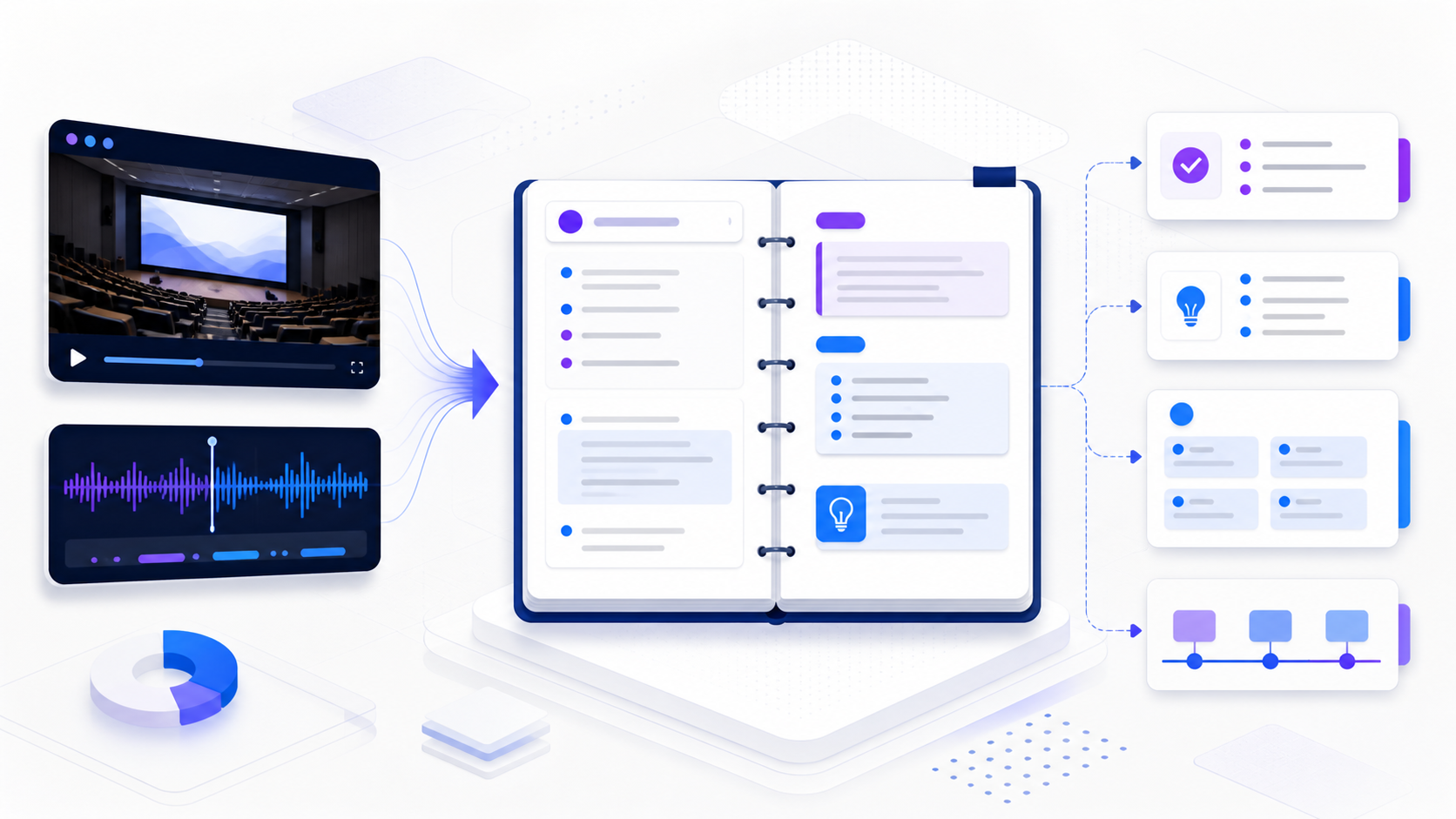
A video note taker converts a recording into organized notes, but the most useful notes preserve timestamps, separate facts from interpretation, and identify unanswered questions. Start with a video or transcript you may process, the meeting or learning objective, and a preferred note structure; the working deliverable is scannable notes with key ideas, decisions, tasks, questions, and source-linked moments.
视频笔记工具可把录像整理为结构化笔记,但真正有用的笔记会保留时间码、区分事实与解释,并标出尚未回答的问题。 开始前应准备有权处理的视频或文字稿、会议或学习目标以及偏好的笔记结构;工作结果应形成包含重点、决策、任务、问题和来源时刻的可浏览笔记。
Choose the step you need选择你需要的步骤
Start with the four core steps below, then continue into the deeper checks that match your task.
先完成下面四个核心步骤,再根据任务需要继续查看后续深度检查。
Choose a note system for the action after watching根据观看后的行动选择笔记系统
Video notes for a meeting, lecture, interview, and product demo should not look identical. Meeting notes need decisions, owners, deadlines, and open questions. Lecture notes need concepts, worked examples, prerequisites, and prompts for retrieval practice. Interview notes need speaker attribution, quotations, themes, and contradictions. A product demo needs steps, settings, expected results, and failure states. Define the destination before capture; otherwise a note taker produces a chronological transcript summary that is easy to generate but difficult to use.
会议、课程、访谈和产品演示的笔记不应采用同一结构。会议笔记需要决策、负责人、期限与未决问题;课程笔记需要概念、例题、前置知识与主动回忆问题;访谈笔记需要说话人、引语、主题与矛盾;产品演示则需要步骤、设置、预期结果和失败状态。记录前先确定用途,否则工具往往只生成按时间排列的文字稿摘要,容易生成却难以使用。
Capture observations, interpretation, and actions in separate layers分层记录观察、解释与行动
Use three clearly labeled layers. Source notes preserve what was said or shown with a timestamp. Interpretation notes explain why it matters or how it connects to prior knowledge. Action notes state what someone will do, by when, and what evidence marks completion. Keeping the layers separate prevents an AI inference from becoming an apparent quotation and stops a tentative idea from becoming an assigned commitment. When a note depends on a slide or on-screen action, say so explicitly instead of pretending the transcript contains all evidence.
可使用三个明确层级:来源笔记记录说了什么或展示了什么并附时间码;解释笔记说明其意义或与已有知识的关系;行动笔记写清谁在何时完成什么,以及完成证据。分层能防止 AI 推断看起来像原话,也能避免暂定想法被误当成正式承诺。若笔记依赖幻灯片或屏幕动作,应明确注明,不要假装文字稿包含全部证据。
Convert chronology into a scannable note artifact把时间顺序转换为可扫描的笔记材料
After capture, reorganize by the reader's retrieval path. Put a one-minute orientation first, followed by topics or decisions, then evidence-linked details and unresolved items. Use short titles that answer “what is here?” rather than labels such as Segment 3. Link important bullets to the moment where the evidence begins. Keep a parking lot for useful material outside the current purpose so it does not crowd the main notes. The finished document should help a reader find one item without replaying the entire recording.
记录完成后,应按读者检索路径重新组织。开头放一分钟速览,随后按主题或决策排列,再放带证据的细节与未解决事项。标题应回答“这里有什么”,不要只写“第三段”。重要要点链接到证据开始时刻;与当前任务无关但有价值的材料可放入候选区,避免挤占主笔记。最终文档应让读者无需重放整段录像也能找到某一事项。
Review notes by testing retrieval and ownership通过检索与责任测试复核笔记
Ask another person to locate a decision, supporting moment, unresolved question, and next action. If they cannot do so quickly, improve labels and grouping. Replay every quotation and numerical commitment, confirm action owners, and distinguish deadlines stated in the video from dates added later. For learning notes, answer the review questions without looking and revise any prompt that merely asks for recognition. Archive the source link, note version, and review date together so later edits remain traceable.
让另一位读者尝试定位一项决策、支撑时刻、未解决问题和下一步行动;若无法快速找到,应改进标签与分组。所有引语和数字承诺都要回放,确认行动负责人,并区分视频中明确提出的期限与后来补充的日期。学习笔记则应在不查看答案时完成复习问题,删除只要求识别的伪问题。来源链接、笔记版本与复核日期应一起归档。
Choose live capture or post-video synthesis选择实时记录还是观看后整理
Live note taking and post-video synthesis solve different problems. Live capture is useful when the viewer must mark questions, decisions, and surprising moments without interrupting the session. Keep it lightweight: a timestamp, a short label, and a symbol for question, claim, action, or review. Trying to write polished prose while watching usually causes missed demonstrations and fragmented attention. Post-video synthesis is better for reorganizing the material, resolving references, and combining related moments that appeared far apart. Decide the mode before playback and state what must be captured immediately because it cannot be recovered reliably later.
A practical hybrid uses quick markers during playback and a separate consolidation pass. Pause only for high-value items such as a formula, configuration step, commitment, or disputed claim. After the video, expand each marker using the transcript and nearby frames, then delete markers that do not support the learning or work objective. Measure capture quality by whether the viewer can reconstruct the important moment, not by the number of notes. A dense stream of copied sentences is usually less useful than a small set of source-linked observations with clear purposes.
实时记笔记与观看后整理解决的是不同问题。实时记录适合在不中断观看的情况下标记问题、决策和意外时刻,内容应保持轻量:一个时间码、一个短标签,再用符号区分问题、观点、行动或待复核项。边看边写完整文章往往会错过演示并分散注意力。观看后整理更适合重组材料、解决指代,并合并视频中相隔很远但主题相关的时刻。播放前应先决定模式,并说明哪些信息必须当场记录,因为之后难以可靠恢复。
实用的混合方法是在播放时快速打标,再单独进行整合。只有遇到公式、配置步骤、承诺或争议观点等高价值内容时才暂停。视频结束后,借助文字稿和邻近画面扩展标记,并删除与学习或工作目标无关的记录。记录质量应由能否复现重要时刻来衡量,而不是由笔记数量决定。大量复制句子通常不如少量带来源、用途明确的观察有效。
Use note types that cannot be confused使用不会混淆的笔记类型
Separate source material from the viewer's response. Use distinct fields for quotation, paraphrase, observation, interpretation, question, decision, and action. A quotation needs exact wording and a playback reference; a paraphrase should preserve meaning without quotation marks; an observation describes what is visible or audible; an interpretation states the viewer's conclusion and should be labeled as such. Decisions need the decision maker and date, while actions need an owner, due condition, and status. Without these types, a tentative comment can become a false commitment when notes are shared.
Choose a compact schema that supports later use. A learning record may contain concept, explanation, example, misconception, prerequisite, and recall prompt. A meeting video may use topic, evidence, decision, objection, owner, and deadline. Keep stable identifiers so an item can be corrected without breaking references from other documents. If the tool supports tags, use a controlled set instead of creating a new synonym on every video. The schema should make missing information visible: an action without an owner or a claim without evidence should look incomplete rather than polished.
应把来源内容与观看者反应分开,分别设置引语、转述、观察、解释、问题、决策和行动字段。引语需要准确原话与回放位置;转述不应使用引号,但要保留原意;观察只描述可见或可听信息;解释则明确属于观看者结论。决策要记录决策人和日期,行动项要记录负责人、完成条件与状态。若不区分这些类型,分享后很容易把试探性评论误当成正式承诺。
结构应简洁并服务于后续用途。学习笔记可以包含概念、解释、案例、误解、前置知识和回忆问题;会议录像可以使用主题、证据、决策、异议、负责人和期限。为每项记录稳定标识,使修正不会破坏其他文档中的引用。标签应使用受控集合,不要在每段视频里创造同义标签。好的结构会让缺失信息显眼:没有负责人的行动项、没有证据的观点都应显得不完整,而不是看起来已经成熟。
Attach context to every reusable note为可复用笔记附上上下文
A timestamp alone is not enough when a note will be reused outside the viewing session. Keep the video title or file identifier, version, speaker when known, language, and a short context window. Link slightly before the quoted statement so the setup is audible, and record an end time for demonstrations or multi-sentence arguments. If a note depends on a slide, identify the visible element and preserve an authorized reference to it. For edited clips, retain both original and clip-relative time. These details let another person verify the note without guessing which upload or speaker it came from.
Context also protects against misleading extraction. A speaker may quote an opponent, reject an earlier proposal, or correct a number later. Store the function of the passage—example, objection, correction, instruction, or conclusion—alongside the text. When several notes rely on one long exchange, link them to a shared source record instead of copying slightly different excerpts. Test a sample by asking someone unfamiliar with the video to open the link and explain why the note is justified. If they need private background from the note taker, the record is not ready for handoff.
当笔记会离开当前观看场景被再次使用时,单独一个时间码并不够。应保留视频标题或文件标识、版本、已知说话人、语言和简短上下文。链接最好从原话稍前的位置开始,使铺垫可以被听见;演示或多句论证还要记录结束时间。笔记依赖幻灯片时,应标明可见元素,并在授权范围内保留引用。剪辑片段则同时保留原始时间与片段内时间。这些信息让其他人无需猜测上传版本或说话人即可核验。
上下文还能防止断章取义。说话人可能在引用反方、否定前案,或在后段修正数字。应把段落功能——案例、异议、修正、指令或结论——与文本一起保存。多条笔记依赖同一段长对话时,应关联共同来源记录,而不是复制略有不同的摘录。可让不了解视频的人抽样打开链接并解释笔记为何成立;如果必须依赖记录者的私下背景,材料还不适合交接。
Turn notes into spaced review and action把笔记转化为间隔复习与行动
Notes become useful when they change what the reader can recall or do. For learning, convert explanations into questions, hide the answer, and schedule review after increasing intervals. Include one application prompt that requires using the idea in a new case; recognition of copied wording is not enough. When an answer is wrong, reopen only the linked segment, revise the concept boundary, and record the misconception. For work videos, separate decisions already made from proposals and assign every action a review date. A note without a next use can often be removed.
Review the collection at two levels. After each video, merge duplicates and resolve unclear references. At the end of a course or project, group notes by concept, dependency, decision, or deliverable rather than by recording date alone. Preserve source links during reorganization. Archive completed actions without deleting the decision record that explains them. Track which notes produce repeated errors or unresolved questions; those indicate material that needs another example, a domain reviewer, or direct viewing. The goal is not a permanent transcript substitute but a working memory system that knows when to return to the recording.
笔记只有在改变读者能够回忆或执行的内容时才真正有用。学习场景可把解释改成问题,隐藏答案,并按逐渐拉长的间隔复习;还应加入一个需要在新案例中应用概念的提示,仅能认出原句并不够。回答错误时,只重看关联片段,修正概念边界并记录误解。工作录像中则要区分已经做出的决策与仍在讨论的建议,并为每个行动项设置复核日期。没有下一步用途的笔记通常可以删除。
笔记集需要两层整理。每段视频结束后合并重复项并解决模糊指代;课程或项目结束时,再按概念、依赖、决策或交付物分组,而不是只按录像日期排列。重组时必须保留来源链接。完成的行动可以归档,但不能删除解释其由来的决策记录。持续出错或长期未解决的笔记,说明需要更多案例、领域复核或直接回看原视频。目标不是永久替代文字稿,而是建立知道何时返回录像的工作记忆系统。
Prepare notes for team handoff让笔记可以安全交接给团队
Before sharing, remove private shorthand and define every abbreviation that is not standard for the audience. Add a short purpose statement, source list, coverage boundary, review status, and unresolved questions. Confirm that links open for the intended recipients and that sharing permissions match the source material. If notes include sensitive people-related observations, restrict access and distinguish recorded fact from interpretation. A handoff should state who reviewed names, numbers, commitments, and deadlines, because those items create the greatest operational risk when copied incorrectly.
Use change control when several people edit the collection. Keep an owner for the source record, show correction history, and avoid duplicating the same action in multiple places with different statuses. When a video is replaced or access is withdrawn, flag dependent notes and decide whether to update, archive, or delete them. Ask the recipient to reproduce a few source moments and locate all open actions. If that test fails, improve labels and navigation before adding more prose. Team-ready notes reduce search and ambiguity while preserving a route to the evidence behind every consequential item.
分享前应删除只有记录者自己理解的缩写,并解释受众并不熟悉的术语。加入简短用途说明、来源清单、覆盖边界、复核状态与未决问题,确认链接对预期接收者可打开,且分享权限符合原始材料。涉及个人的敏感观察应限制访问,并明确区分录像事实与解释。交接材料还应说明谁核对了姓名、数字、承诺与期限,因为这些内容复制错误时最容易造成实际影响。
多人编辑时要使用变更控制。为来源记录指定负责人,显示修正历史,避免同一行动项在多个位置出现不同状态。视频被替换或撤回访问权限时,应标记依赖笔记,并决定更新、归档还是删除。让接收者抽样复现几个来源时刻并找出所有未完成行动;若测试失败,应先改善标签与导航,而不是继续增加文字。适合团队使用的笔记应减少搜索与歧义,同时为每个重要事项保留返回证据的路径。
Worked example具体示例
For a project review, create separate blocks for decisions, owners, deadlines, risks, and open questions. Attach a timestamp to every commitment, then replay those moments before distributing minutes.
整理项目复盘视频时,可分别记录决策、负责人、截止日期、风险和开放问题。每个承诺都附时间码,分发会议纪要前逐一回放核对。
Before handoff, preserve the source identity, current edit, language, access date, and every time reference needed to reproduce the example. Automated notes can flatten disagreement or turn tentative language into a decision. A human should review commitments, names, dates, and numbers.
交付前应保留来源标识、当前剪辑版本、语言、访问日期,以及复现实例所需的时间信息。页面输出用于支持理解与整理,重要原话、数字、人物、边界和解释仍需返回原视频检查。
Define acceptance for this deliverable为这项交付物设定验收条件
Design notes around decisions and recall. Review the result against the intended audience and the declared task of creating structured notes that remain linked to the recording. Confirm that the chosen structure preserves the distinctions the reader must act on, rather than simply shortening the recording. Mark missing source material and uncertainty openly. A reviewer should be able to identify which items came directly from speech or visuals, which were reorganized, and which are interpretations.
围绕决策与记忆设计笔记。应围绕目标读者以及“创建始终关联原始录像的结构化笔记”这一具体任务验收结果。检查结构是否保留读者行动所需的关键区分,而不是只把录像缩短;来源缺失与不确定性必须显式标记。复核者应能分辨哪些内容直接来自语音或画面、哪些经过重组、哪些属于解释。
Use a small handoff record containing source, purpose, output version, correction notes, tested links or time ranges, reviewer, and unresolved items. Review every name, number, quotation, formula, instruction, commitment, and people-related conclusion that could cause harm if wrong. Lower-risk descriptive material may be sampled, but the sampling rule should be written down. A result is accepted because it is fit for this declared use, not because its language sounds confident.
交接记录至少应包含来源、用途、输出版本、修正说明、已测试链接或时间范围、复核人和未解决事项。姓名、数字、引语、公式、指令、承诺以及涉及个人且出错会造成影响的结论都应逐项检查;低风险描述可以抽样,但抽样规则要写明。结果被验收是因为适合当前用途,而不是因为语言显得自信。
Try the complete video-learning workflow with 先鉴 Peek使用先鉴 Peek 体验完整视频学习工作流
Prepare a public video you are allowed to analyze and write down what you want to learn. 先鉴 Peek can help assess the video's learning value, surface a concise summary, organize a timestamped viewing route, and turn useful material into notes. Review important claims against the original video before relying on them.
请准备可公开访问且允许分析的视频,并写清学习目标。先鉴 Peek 可帮助判断视频学习价值、提炼精华摘要、整理可跳转的时间码观看路线,并把有用内容形成笔记。依赖重要结论前,仍应返回原视频复核。
Questions about this task本任务常见问题
What is the difference between video notes and a transcript?
视频笔记与文字稿有什么区别?
A transcript follows spoken content; notes select and organize information for a meeting, learning, research, or action task.
文字稿按口语内容展开;笔记则为会议、学习、研究或行动任务选择并组织信息。
Should AI-generated notes include quotations?
AI 生成的笔记可以包含引语吗?
Only after the wording and speaker are checked against playback. Otherwise label the text as a paraphrase.
只有对照回放核对措辞与说话人后才可以,否则应标记为转述。
How many timestamps do notes need?
笔记需要多少时间码?
Link decisions, evidence, confusing passages, demonstrations, and items likely to be challenged rather than timing every bullet.
应为决策、证据、疑难段落、演示与可能被质疑的事项添加时间码,而非给每条都标时间。
How do I know whether notes are usable?
如何判断笔记是否可用?
Give them to a reader and test whether they can retrieve one fact, one action, and its supporting moment without help.
让读者在没有帮助的情况下找到一条事实、一项行动及其支撑时刻,即可检验可用性。
References and usage limits参考资料与使用边界
- YouTube Help: view video transcriptsYouTube Help: view video transcripts
- YouTube Terms of ServiceYouTube 服务条款
- InfiniSynapse documentation: connect data sources and knowledge basesInfiniSynapse 文档:连接数据源与知识库
Interfaces, caption availability, and platform behavior can change. Verify the current watch page and official guidance before relying on a procedure.
界面、字幕可用性与平台行为可能变化。依赖具体流程前,应检查当前观看页面与官方说明。