Direct answer直接回答
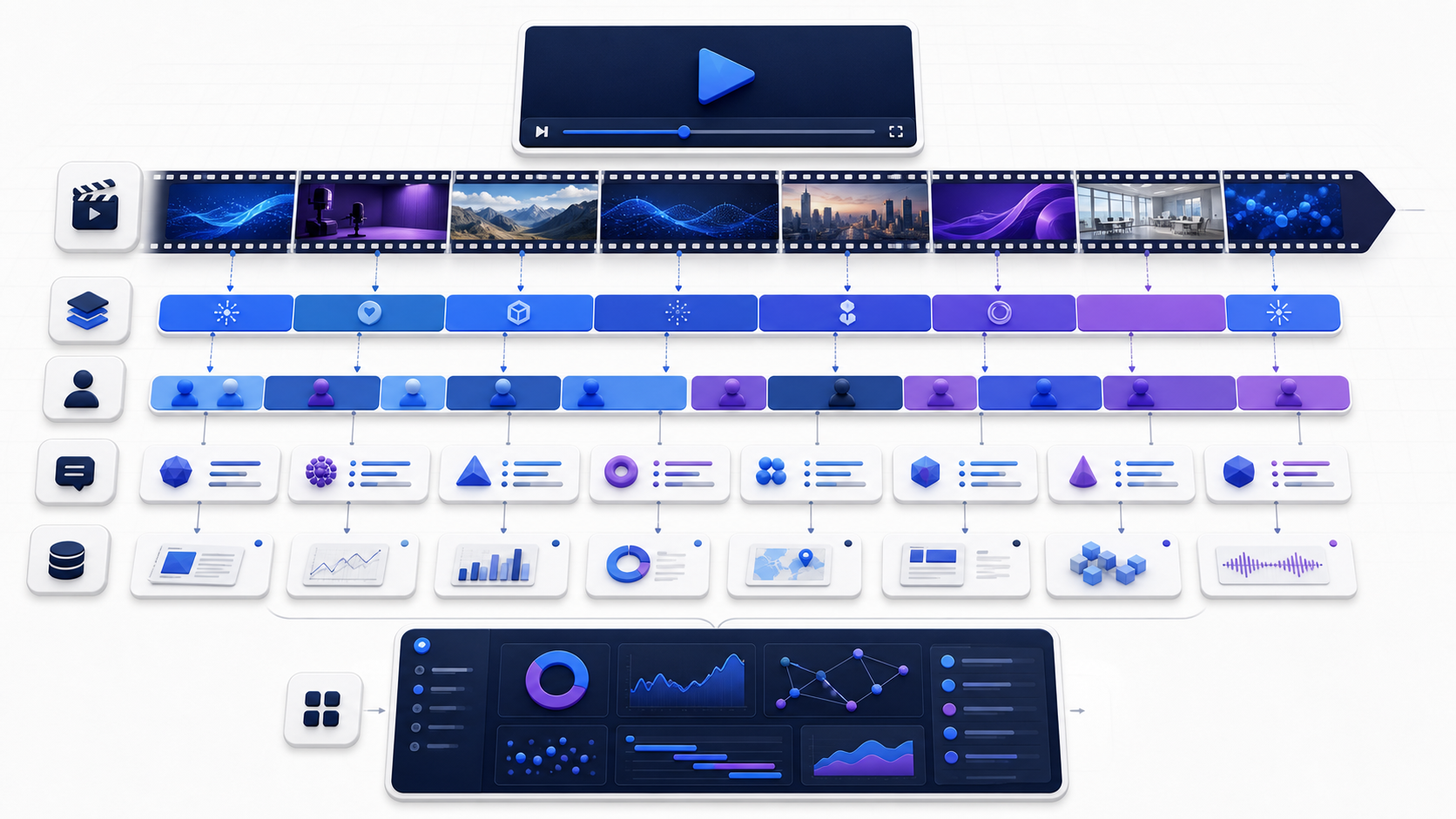
A YouTube video analyzer examines the recording as a timed source, combining speech, scenes, sequence, and user questions to produce findings that can be checked. Start with authorized video material, a specific analysis question, relevant context, and criteria for acceptable evidence; the working deliverable is findings organized by theme or event, each connected to transcript passages or video moments.
YouTube 视频分析器把录像视为带时间的证据源,结合语音、场景、顺序与用户问题,生成可被检查的结论。 开始前应准备获授权的视频、具体分析问题、相关背景和可接受证据标准;工作结果应形成按主题或事件组织并关联文字段落或视频时刻的结论。
Choose the step you need选择你需要的步骤
Start with the four core steps below, then continue into the deeper checks that match your task.
先完成下面四个核心步骤,再根据任务需要继续查看后续深度检查。
Select an analyzer by the question it must answer根据需要回答的问题选择分析器
A YouTube video analyzer can describe topics, structure, speakers, claims, engagement patterns, or learning value, but no single output serves every purpose. Define one decision first: whether to watch, what to study, where a claim appears, how a tutorial is organized, or which evidence supports a review. Then specify whether speech alone is sufficient. A screen tutorial, sports clip, or design critique requires visual inspection that a transcript-only analyzer cannot provide.
YouTube 视频分析器可以描述主题、结构、说话人、观点、互动模式或学习价值,但没有一种输出适合所有用途。应先定义一个决策:是否值得看、需要学习什么、某个观点在哪里、教程如何组织,或一项评审由哪些证据支撑。随后判断仅分析语音是否足够。屏幕教程、体育片段和设计点评都需要视觉检查,纯文字稿分析器无法覆盖。
Give the analyzer a task packet, not only a URL向分析器提供任务包,而不只是 URL
Include the intended audience, questions, required depth, language, output format, and evidence rule. If the video belongs to a series, add the relevant course or project context. Supply approved terminology and tell the system how to handle missing captions, private links, and visual-only segments. A URL says where the source is; it does not say what counts as a useful answer. Clear task constraints also make two analyzer runs easier to compare.
任务包应包括目标读者、问题、所需深度、语言、输出格式与证据规则。视频属于系列课程或项目时,还要补充相关背景;提供经确认的术语,并说明如何处理缺失字幕、私密链接和纯视觉片段。URL 只说明来源在哪里,并没有定义什么结果有用。清晰约束也能让两次分析更容易比较。
Inspect the route from finding to source moment检查从分析发现返回来源时刻的路径
Require major findings to include a time range, evidence description, and uncertainty note. For structure analysis, inspect whether boundaries match complete ideas. For claim analysis, separate the speaker's assertion, cited evidence, and the analyzer's interpretation. For learning-value analysis, state prerequisites and what the video does not teach. An output that lists plausible themes without showing where they occur may help brainstorming, but it is not sufficient for quotation, evaluation, or recommendation.
主要发现应包含时间范围、证据描述与不确定性说明。结构分析要检查边界是否对应完整观点;观点分析要区分说话人的主张、引用证据和分析器解释;学习价值分析则要说明前置知识以及视频没有教授什么。只列出看似合理主题却不说明出现位置的结果,可以用于头脑风暴,却不足以支持引用、评估或推荐。
Evaluate on one representative video before a batch批量处理前先用代表性视频评估
Choose a video that contains ordinary content and one known difficulty such as a dense slide, overlapping speakers, or a silent demonstration. Write expected answers before analysis. Measure missing sections, incorrect details, unsupported conclusions, timestamp drift, and minutes required to repair the output. Repeat with the same sample after tool updates. If the intended workflow is only personal triage, tolerances may be loose; public research or workplace evaluation requires much stronger evidence and review. Archive the expected answers separately so later system output cannot influence the benchmark. Keep the original sample unchanged for comparison.
选择同时包含普通内容与一种已知困难的视频,例如密集幻灯片、多人重叠或无声演示,并在分析前写出预期答案。测量遗漏部分、错误细节、无依据结论、时间偏移以及修正所需分钟数,工具更新后再用同一样本复测。个人筛选可以采用较宽容标准,公开研究或工作场所评估则需要更强证据与复核。
Test a YouTube video analyzer on representative material用代表性材料测试 YouTube 视频分析器
Select several videos that reflect real use: a clear lecture, a multi-speaker interview, a screen demonstration, a visually driven segment, and a recording with poor captions or domain terms. Write the questions and expected evidence before running the analyzer. Check whether each important finding links to the correct playback range, whether visual-only information is acknowledged, and whether uncertainty remains visible. Include a negative case where the requested topic is absent so unsupported confidence can be measured. Record missed claims, false findings, timing error, speaker confusion, correction effort, and export behavior. Test whether a reviewer can amend a result and preserve the change. A useful analyzer should reduce search and organization work while keeping a route to the source; it should not turn one fluent interpretation into an unquestionable record. Choose it only after the reviewed output, privacy handling, and operational cost fit the videos you actually process.
应选择能够代表真实用途的视频:清晰课程、多人访谈、屏幕演示、以画面为主的片段,以及字幕较差或包含领域术语的录像。运行分析器前先写明问题和预期证据,再检查每项重要发现是否关联正确播放区间、是否承认只有画面提供的信息,以及不确定性是否仍可见。还要加入一个请求主题并不存在的反例,以衡量系统是否会无依据地自信输出。记录漏掉的观点、错误发现、时间误差、说话人混淆、修正工作量和导出表现,并测试复核者能否修改结果且保留修正。有效分析器应减少搜索与整理工作,同时保留返回来源的路径,不能把一个流畅解释变成不可质疑的记录。只有复核后的结果、隐私处理和操作成本都适合真实材料时,才应选择。
Worked example具体示例
To analyze a product demo, ask where the presenter states the problem, performs the task, encounters friction, and confirms the result. Review each returned moment rather than accepting a generic synopsis.
分析产品演示时,可询问讲解者何时说明问题、执行任务、遇到阻力并确认结果。应逐个回看返回时刻,而不是接受泛化概述。
Before handoff, preserve the source identity, current edit, language, access date, and every time reference needed to reproduce the example. Visual interpretation and speaker intent are uncertain. Avoid inferring identity, emotion, causation, or compliance from a single frame or unsupported model label.
交付前应保留来源标识、当前剪辑版本、语言、访问日期,以及复现实例所需的时间信息。页面输出用于支持理解与整理,重要原话、数字、人物、边界和解释仍需返回原视频检查。
Define acceptance for this deliverable为这项交付物设定验收条件
Ask a question that requires video evidence. Review the result against the intended audience and the declared task of analyzing a video beyond a transcript-only summary. Confirm that the chosen structure preserves the distinctions the reader must act on, rather than simply shortening the recording. Mark missing source material and uncertainty openly. A reviewer should be able to identify which items came directly from speech or visuals, which were reorganized, and which are interpretations.
提出需要视频证据的问题。应围绕目标读者以及“在纯文字稿摘要之外分析完整视频”这一具体任务验收结果。检查结构是否保留读者行动所需的关键区分,而不是只把录像缩短;来源缺失与不确定性必须显式标记。复核者应能分辨哪些内容直接来自语音或画面、哪些经过重组、哪些属于解释。
Use a small handoff record containing source, purpose, output version, correction notes, tested links or time ranges, reviewer, and unresolved items. Review every name, number, quotation, formula, instruction, commitment, and people-related conclusion that could cause harm if wrong. Lower-risk descriptive material may be sampled, but the sampling rule should be written down. A result is accepted because it is fit for this declared use, not because its language sounds confident.
交接记录至少应包含来源、用途、输出版本、修正说明、已测试链接或时间范围、复核人和未解决事项。姓名、数字、引语、公式、指令、承诺以及涉及个人且出错会造成影响的结论都应逐项检查;低风险描述可以抽样,但抽样规则要写明。结果被验收是因为适合当前用途,而不是因为语言显得自信。
Try the complete video-learning workflow with 先鉴 Peek使用先鉴 Peek 体验完整视频学习工作流
Prepare a public video you are allowed to analyze and write down what you want to learn. 先鉴 Peek can help assess the video's learning value, surface a concise summary, organize a timestamped viewing route, and turn useful material into notes. Review important claims against the original video before relying on them.
请准备可公开访问且允许分析的视频,并写清学习目标。先鉴 Peek 可帮助判断视频学习价值、提炼精华摘要、整理可跳转的时间码观看路线,并把有用内容形成笔记。依赖重要结论前,仍应返回原视频复核。
Questions about this task本任务常见问题
What can a YouTube video analyzer examine?
YouTube 视频分析器能分析什么?
Depending on the system, it may examine transcript text, topics, structure, speakers, scenes, actions, timing, or learning relevance.
根据系统能力,它可能分析文字稿、主题、结构、说话人、场景、动作、时间关系或学习相关性。
Is a URL enough input?
只提供 URL 就够了吗?
A URL identifies the source. Add audience, question, depth, language, output, and evidence requirements to define the task.
URL 只标识来源,还应补充读者、问题、深度、语言、输出和证据要求。
How do I verify analyzer findings?
如何验证分析器结果?
Replay the cited time range, inspect the relevant speech and visuals, and separate recorded observations from model interpretation.
回放被引用的时间范围,检查相关语音与画面,并区分录像观察和模型解释。
When is transcript-only analysis insufficient?
什么时候只分析文字稿不够?
It is insufficient when slides, demonstrations, objects, movement, editing, or other visual evidence changes the answer.
当幻灯片、演示、物体、动作、剪辑或其他视觉证据会改变答案时,纯文字稿分析不够。
References and usage limits参考资料与使用边界
- NIST AI Risk Management FrameworkNIST AI Risk Management Framework
- YouTube Terms of ServiceYouTube 服务条款
- InfiniSynapse documentation: connect data sources and knowledge basesInfiniSynapse 文档:连接数据源与知识库
Interfaces, caption availability, and platform behavior can change. Verify the current watch page and official guidance before relying on a procedure.
界面、字幕可用性与平台行为可能变化。依赖具体流程前,应检查当前观看页面与官方说明。