
On this page本页目录
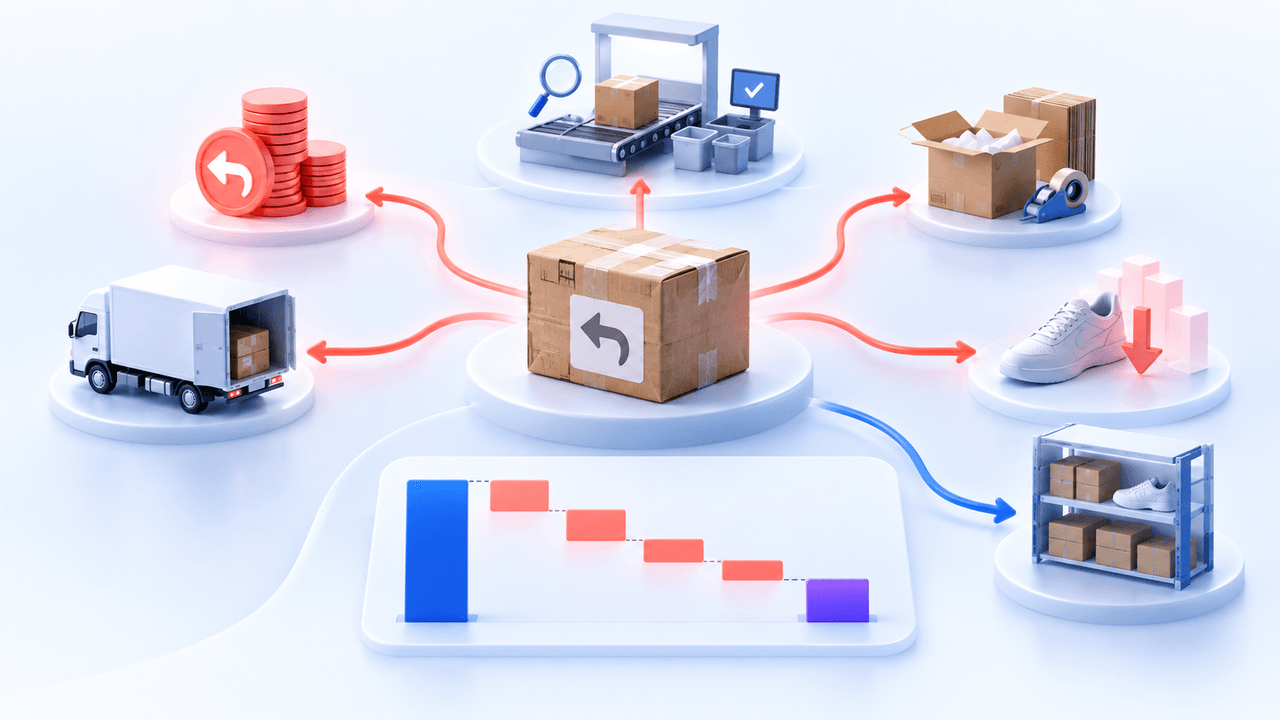
Cost of returns is the net financial impact of reversing a sale and processing the returned item. For operational comparison, use: return freight + receiving/inspection + repacking/refurbishment + customer service + nonrecoverable fees + disposition + inventory write-down − return fees and other recoveries. Divide that total by completed return cases to calculate cost per return.
退货成本是撤销销售并处理退回商品产生的净财务影响。用于运营比较时,可采用:退货运费 + 收货/质检 + 重新包装/翻新 + 客服 + 不可退回费用 + 处置成本 + 库存减值 − 退货费及其他回收价值。再除以已完成退货单数,即得到单次退货成本。
A refund is not automatically an extra operating cost. It is a reversal of customer revenue. Include it when building a profit bridge against the completed sale, but do not also add “lost sale value” as a second loss. The scope and accounting basis must be named beside the number.
退款并不自动等于额外运营成本,而是对客户收入的冲销。与“交易正常完成”情景对比利润时可以纳入退款,但不能再把“损失的销售额”作为第二笔损失相加。每个数字旁都应说明范围与会计口径。
What counts as the cost of ecommerce returns?电商退货成本包括哪些项目?
Refunded merchandise, shipping, tax, duties, discounts, and fees must remain separate fields. Shopify’s broader sales reversals can also include cancellations and order edits.
退款商品金额、运费、税费、关税、折扣和费用应分字段保存。Shopify 的广义销售冲销还可能包含取消和订单修改。
Return transport, receiving, inspection, grading, customer service, repacking, refurbishment, storage, and disposal.
包括退回运输、收货、质检、分级、客服、重新包装、翻新、仓储与处置。
The difference between the item’s relevant inventory value and the value actually recovered through restock, resale, liquidation, vendor credit, recycling, or salvage.
商品相关库存价值与通过重新入库、转售、清算、供应商抵扣、回收或残值实际收回金额之间的差额。
Customer-paid return or restocking fees, carrier claims, vendor credits, resale proceeds, and other verified offsets reduce net cost.
客户支付的退货费或补货费、承运商赔付、供应商抵扣、转售收入和其他已核验抵扣会降低净成本。
Use two formulas for two different decisions针对两类决策使用两种公式
| View视角 | Formula公式 | Use it for适用场景 |
|---|---|---|
| Incremental operational cost增量运营成本 | Return freight + handling + service + nonrecoverable fees + disposition + inventory write-down − recoveries退货运费 + 处理 + 客服 + 不可退回费用 + 处置 + 库存减值 − 回收项 | Process, carrier, warehouse, and policy comparison流程、承运商、仓库与政策比较 |
| Profit impact vs. completed sale相对完成交易的利润影响 | Refunded net merchandise revenue − recovered inventory value + incremental return expenses − other recoveries退款净商品收入 − 回收库存价值 + 增量退货费用 − 其他回收项 | SKU and order profitability analysisSKU 与订单盈利分析 |
Accounting note: these are management-analysis definitions, not a replacement for GAAP, tax, or ledger policy. Finance should approve the treatment of COGS, sales tax, duties, payment fees, gift cards, store credit, exchanges, and inventory valuation before publication.
会计说明:以上是管理分析定义,不能替代 GAAP、税务或账簿政策。正式发布前,应由财务人员确认 COGS、销售税、关税、支付费、礼品卡、店铺余额、换货和库存计价的处理方式。
Do not add the refund, lost sale, and inventory loss together不要把退款、损失销售额和库存损失直接相加
The most common error is combining different views of the same event. A $120 refund already describes the revenue reversal. Adding another $120 as “lost revenue” duplicates it. If a $48-cost item returns and $38 of value is recovered, the inventory write-down is $10—not $48 plus $10. Choose one baseline and build a bridge in which each amount appears once.
最常见的错误,是把同一事件的不同视角混在一起。120 美元退款已经描述了收入冲销,再加 120 美元“损失收入”就是重复。若成本为 48 美元的商品退回后可回收 38 美元,其库存减值是 10 美元,而不是 48 美元再加 10 美元。应先选定基准情景,再建立每个金额只出现一次的利润桥。
- Do not treat refunds, physical returns, cancellations, and chargebacks as one event type.
- Do not subtract recovered inventory value and then add the full COGS loss.
- Do not allocate monthly warehouse overhead to each return and also add the same labor invoice.
- Keep customer-paid return fees separate from carrier refunds and resale proceeds.
- 不要把退款、实体退货、取消和拒付当作同一事件类型。
- 不能既减去回收库存价值,又加上全部 COGS 损失。
- 不能既把月度仓库管理费用分摊到退货,又重复加入同一张人工账单。
- 客户支付退货费、承运商退款和转售收入应分别记录。
Worked example: reconcile a $120 returned order完整示例:对账一笔 120 美元的退货订单
This synthetic example is for method demonstration only. The original order has $120 net merchandise revenue, $48 COGS, $9 outbound fulfillment, and a $4 payment fee. Expected contribution before the return is $59.
以下为方法演示用的假设示例。原订单净商品收入 120 美元、COGS 48 美元、正向履约 9 美元、支付费 4 美元,退货前预期贡献利润为 59 美元。
| Return event退货事件 | Amount金额 | Treatment处理 |
|---|---|---|
| Full merchandise refund全额商品退款 | $120 | Revenue reversal收入冲销 |
| Inventory value recovered回收库存价值 | $38 | Offsets the $48 item value; write-down is $10抵扣 48 美元商品价值;减值为 10 美元 |
| Return shipping退货运费 | $8 | Incremental operation增量运营成本 |
| Inspection and repacking质检与重新包装 | $6 | Incremental operation增量运营成本 |
| Customer support客服 | $3 | Incremental operation增量运营成本 |
The bridge reconciles: expected contribution of $59 falls to −$40, a $99 change. Operational cost per return is still $17, because that metric deliberately excludes the refund and inventory-value movement.
该利润桥可以对账:预期贡献利润从 59 美元降至 −40 美元,变化为 99 美元。单次退货运营成本仍是 17 美元,因为该指标有意排除退款和库存价值变化。
Calculate cost per return with a matched numerator and denominator用匹配的分子与分母计算单次退货成本
Return cost rate = net return-related cost ÷ declared gross merchandise revenue × 100退货成本率 = 净退货相关成本 ÷ 已声明的商品销售额 × 100
Use return cases—not refund transactions—when the numerator contains physical processing costs. State whether the case is a return authorization, package, order, line item, or unit. Segment by SKU, reason, carrier, warehouse, condition, and disposition before comparing averages.
当分子包含实体处理成本时,分母应使用退货单,而不是退款交易。需说明一单是按退货授权、包裹、订单、订单行还是件数定义。比较均值前,应按 SKU、原因、承运商、仓库、商品状况和处置方式分组。
Measure the cost of free returns as a policy experiment把免费退货成本作为政策实验来衡量
“Free returns” means merchant-funded convenience, not a cost-free process. Track merchant-paid freight, handling, and recovery by eligible customer cohort. Compare them with conversion, exchange, retention, abuse, and recovered-inventory outcomes over the same window. NRF reports that 82% of consumers view free returns as an important consideration; that is market context, not proof that free returns are profitable for every category.
“免费退货”指商家承担成本的便利政策,并不代表流程没有成本。应按符合条件的客户群组跟踪商家支付的运费、处理费和回收价值,并在同一时间窗口比较转化、换货、留存、滥用和库存回收结果。NRF 报告称,82% 的消费者认为免费退货是重要考虑因素;这只是市场背景,并不能证明免费退货适合所有品类。
Connect return cost to profit margin, not revenue alone把退货成本连接到利润率,而不只看收入
A low return rate can still destroy margin when high-value products come back damaged; a higher rate can be manageable when items are quickly restocked and customers exchange instead of refunding. For returns profitability analysis, report the rate beside refunded value, operational cost per return, recovered inventory value, and contribution impact.
即使退货率低,如果高价值商品退回后受损,利润仍可能被严重侵蚀;反之,若商品能快速重新入库、客户优先换货,较高退货率也可能可控。做退货盈利分析时,应同时展示退货率、退款金额、单次退货运营成本、回收库存价值和贡献利润影响。
Use the companion return-rate calculation guide for a stable denominator, then connect the results to the broader ecommerce returns analytics workflow.
Build a reviewable return-cost dataset in five steps用五步建立可审核的退货成本数据集
- Define the view.确定视角。 Name the baseline, included event types, return window, currency, and accounting rules.说明基准情景、事件类型、退货窗口、币种和会计规则。
- Join the lifecycle.连接生命周期。 Connect order, fulfillment, return authorization, package, refund, line item, and disposition records.连接订单、履约、退货授权、包裹、退款、订单行和处置记录。
- Load actual costs.导入实际成本。 Use carrier invoices, warehouse activity, support time, payment records, and inventory adjustments; label estimates.使用承运商账单、仓库活动、客服工时、支付记录和库存调整;估算值必须标注。
- Subtract verified recovery once.只减一次已核验回收价值。 Use restock, resale, liquidation, claim, vendor-credit, and customer-fee records.使用重新入库、转售、清算、赔付、供应商抵扣和客户费用记录。
- Reconcile and segment.对账并分组。 Tie totals to finance and operations, surface missing joins, then compare SKU, reason, channel, and disposition.与财务和运营总数对账,披露缺失连接,再按 SKU、原因、渠道和处置方式比较。
Review where return losses are created and recovered复核退货损失在哪里产生、在哪里回收
Prepare order and line-item IDs, dates, quantities, refund components, return freight, processing activity, item cost, condition, disposition, recovered value, currency, and exception flags. Then use Return Compass to organize available files and review the loss composition. Verify the live tool, accepted inputs, security requirements, login conditions, and pricing before use; missing values must not be invented.
准备订单与订单行 ID、日期、数量、退款构成、退货运费、处理活动、商品成本、状况、处置方式、回收价值、币种和异常标记,再使用逆向罗盘整理已有文件并复核损失构成。使用前应核验在线工具、输入格式、安全要求、登录条件和收费方式;缺失值不能凭空补齐。
Open Return Compass打开逆向罗盘Download the return-cost ledger starter下载退货成本台账起始模板
Use this vendor-neutral CSV to preserve source identifiers, event distinctions, metric inputs, cost fields, coverage, evidence and ownership. Its example row is synthetic; remove it before loading authorized data and approve definitions with the responsible owners.
使用此厂商中立 CSV 保留来源标识、事件区别、指标输入、成本字段、覆盖、证据与责任。示例行为模拟数据;加载授权数据前请删除,并由相关负责人批准定义。
Download CSV starter下载 CSV 起始模板 ↓Sources, method, and commercial disclosure来源、方法与商业披露
The formulas are transparent management-analysis definitions created for this guide. They distinguish revenue reversal, incremental operations, inventory-value loss, and recovery. Every business should reconcile them to its ledger and operational systems.
本页公式是为本指南建立的透明管理分析定义,用于区分收入冲销、增量运营、库存价值损失和回收项。每家企业都应与自身账簿和运营系统对账。
- National Retail Federation: 2025 Retail Returns Landscape — reports an estimated 19.3% of online sales returned, $849.9 billion in total returns, and consumer views of free returns; these are U.S. market estimates, not universal targets.
- Shopify Help Center: Sales reports — distinguishes physical returns from broader sales reversals and defines return fees separately from returned item value.
- Shopify Help Center: Sales discrepancies — explains that sales reports include returns while payment finance reports include refunds.
- Google Analytics for Developers: Measure ecommerce — documents transaction- and item-level refund events.
- Stripe Documentation: Refunds — notes that refund fee treatment can vary and should be checked against pricing and account terms.
- 美国零售联合会:2025 年零售退货报告——给出线上销售退回比例 19.3%、总退货额 8,499 亿美元以及消费者对免费退货看法的估计;它们是美国市场估计值,不是通用目标。
- Shopify 帮助中心:销售报表——区分实体退货和广义销售冲销,并把退货费与退回商品价值分开定义。
- Shopify 帮助中心:销售差异——说明销售报表包含退货,而支付财务报表包含退款。
- Google Analytics 开发者文档:衡量电子商务——说明交易和商品层级退款事件。
- Stripe 文档:退款——说明退款费处理可能不同,应按定价和账户条款核验。
Commercial disclosure: InfiniSynapse publishes this educational page and promotes Return Compass. Product statements come from the supplied planning brief and are not an independent product review. No claim on this page promises reduced cost, recovered loss, or accounting accuracy. The $120 example is synthetic.
商业披露:本教育页面由 InfiniSynapse 发布,并推广逆向罗盘。产品说明来自提供的规划简报,不属于独立产品评测。本页不承诺降低成本、追回损失或保证会计准确性;120 美元案例为假设示例。
Frequently asked questions常见问题
A useful operational definition includes return freight, receiving and inspection, repacking or refurbishment, customer service, nonrecoverable fees, disposition, and inventory write-down, less verified recoveries.
实用的运营口径包括退货运费、收货与质检、重新包装或翻新、客服、不可退回费用、处置和库存减值,再减去已核验回收项。
Divide total incremental operational return costs by completed return cases for the same scope and period. Define what one case means.
用同一范围和周期内的增量退货运营总成本除以已完成退货单数,并说明“一单”的定义。
No. A refund reverses customer revenue; return costs include the extra operational and inventory-value losses. A profit bridge may include both, once each.
不等于。退款冲销客户收入;退货成本包括额外运营成本和库存价值损失。利润桥可同时包含二者,但每项只能计一次。
They can reverse revenue while adding freight, labor, fees, and write-down. The final impact depends on value recovered and costs already incurred before return.
退货可能在冲销收入的同时增加运费、人工、费用和减值;最终影响取决于回收价值和退货前已经发生的成本。
Track merchant-funded freight and handling separately, then compare them with conversion, exchange, retention, abuse, and inventory-recovery outcomes by cohort.
单独跟踪商家承担的运费和处理费,再按客户群组与转化、换货、留存、滥用和库存回收结果比较。
Publish the cost basis beside every result在每个结果旁发布成本口径
A credible dashboard lets another analyst reproduce the number. Keep the baseline, included costs, recovery rules, case definition, date basis, currency conversion, estimate flags, unmatched-record count, and last refresh beside the metric. After expert review, this P3 Hub can support separate cluster pages about cost benchmarks, free-return economics, and margin impact without duplicating the core formula.
可信的看板应允许另一位分析人员复算结果。把基准情景、纳入成本、回收规则、退货单定义、日期口径、币种换算、估算标记、未匹配记录数和最后刷新时间放在指标旁。完成专家审核后,该 P3 Hub 可支持成本基准、免费退货经济性和利润影响等独立集群页,而不重复核心公式。