
What Are Sales Pipeline Stages?什么是 Sales Pipeline Stages?
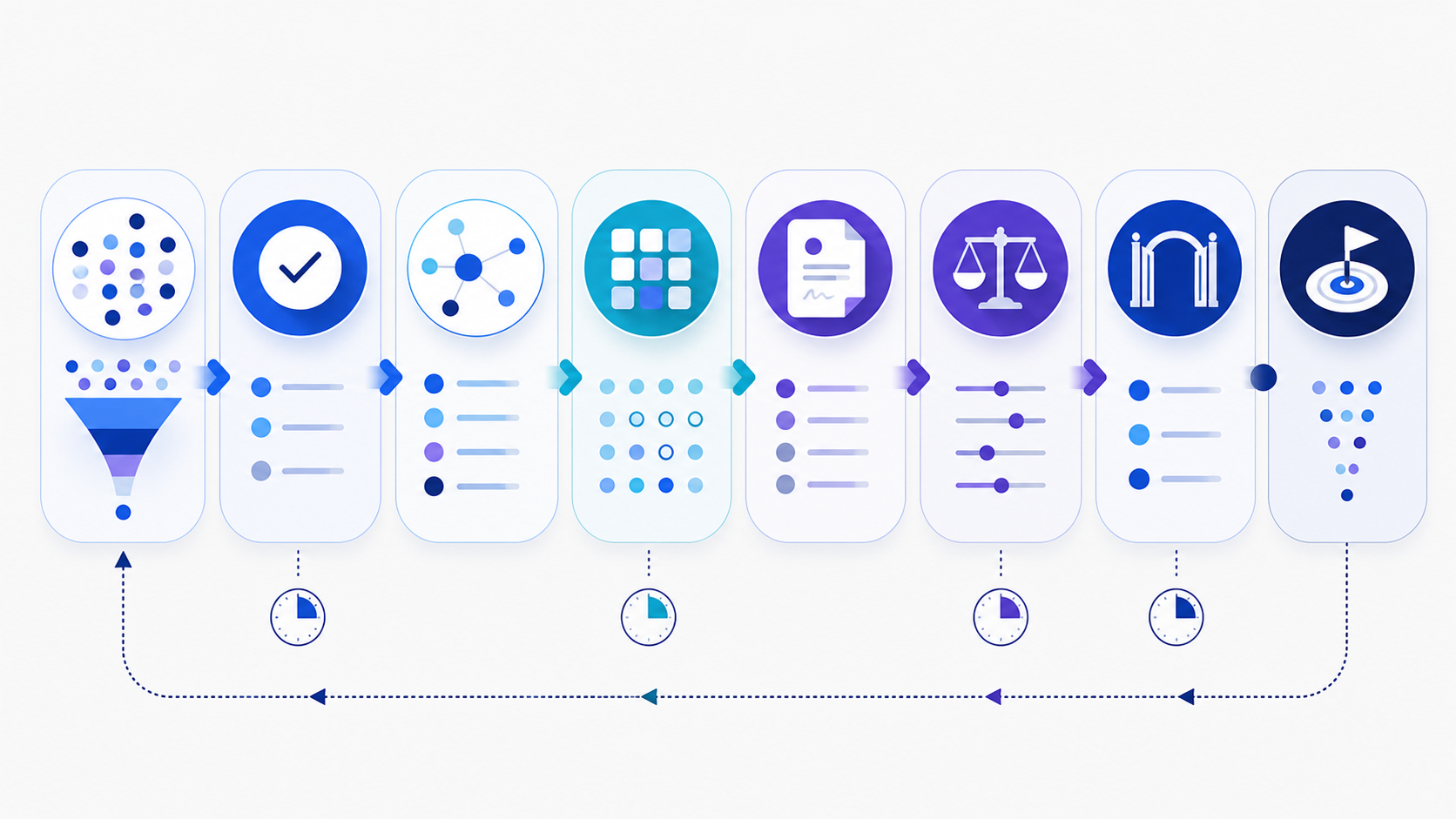
Sales pipeline stages are controlled opportunity states that show the verifiable progress of a potential deal from qualification to a closed outcome. Every stage should have a plain-language purpose, entry criteria, required evidence, an accountable owner, exit criteria, and a small set of health metrics. Stage movement should reflect a buyer commitment or completed decision milestone—not seller optimism or a completed activity alone.
Sales Pipeline Stages 是受控制的商机状态,用于表示潜在交易从资格确认到最终关闭的可验证进展。每个阶段都应具备清晰目的、进入标准、必需证据、责任人、退出标准与少量健康指标。阶段变化应反映买方承诺或已完成的决策里程碑,而不是销售人员的乐观判断或单一活动完成。
The usual list: Prospecting, Qualification, Discovery (or demo / meeting), Proposal, Negotiation, Closing, and optional Post-sale. The table below maps those names to the evidence gates on this page.
常见名单:Prospecting、Qualification、Discovery(或演示/会议)、Proposal、Negotiation、Closing,以及可选的 Post-sale。下表把这些名字对照到本页的证据门槛。
There is no universally correct number or naming convention. A short transactional motion may need four active stages; a regulated enterprise purchase may need seven or more. The useful question is whether each boundary marks a meaningful change in evidence, risk, ownership, or forecastability. This page provides an adaptable template. For the wider operating cadence, hygiene, coaching, and governance model, use the sales pipeline management process.
阶段数量与命名不存在唯一正确答案。短周期交易可能只需四个进行中阶段,受监管的企业采购可能需要七个或更多。真正重要的是每个边界是否代表证据、风险、所有权或可预测性的实质变化。本页提供可调整模板;更广泛的运营节奏、数据卫生、辅导与治理方法请参阅销售管道管理流程。
Pipeline Stage vs. Sales Process, Lifecycle, and Forecast CategoryPipeline 阶段与销售流程、生命周期和预测类别的区别
| Concept概念 | What it represents代表内容 | Example示例 |
|---|---|---|
| Pipeline stagePipeline 阶段 | Current opportunity progress supported by evidence由证据支持的当前商机进展 | Discovery complete需求发现完成 |
| Sales process销售流程 | Activities and responsibilities used to advance or close a deal用于推进或关闭交易的活动与职责 | Prepare discovery, run demo, obtain approval准备访谈、演示、取得批准 |
| Lifecycle stage生命周期阶段 | Broader relationship state for a person or account联系人或账户更广泛的关系状态 | Lead, opportunity, customerLead、商机、客户 |
| Forecast category预测类别 | Judgment about expected inclusion in a period关于某期间是否预计纳入结果的判断 | Pipeline, best case, commitPipeline、Best Case、Commit |
Keep these fields separate. Two opportunities can occupy the same stage but have different forecast categories because timing or commercial risk differs. Likewise, one account lifecycle can contain several opportunities at different stages. Combining the concepts destroys useful variance and makes historical analysis unreliable.
这些字段必须分开。两个商机即使处于同一阶段,也可能因时间或商业风险不同而拥有不同预测类别;同一账户生命周期也可包含处于不同阶段的多个商机。混用概念会消除有用差异,并使历史分析失真。
The 7 Sales Pipeline Stages销售管道的 7 个阶段
Guides usually list six or seven sales pipeline stages. Six stops at Close. Seven adds Post-sale as a customer state. Use the common name in the CRM if reps already search that way; keep the evidence gate even if you rename the label.
常见指南会列出六个或七个销售管道阶段。六个停在成交;七个把售后之外的客户状态算进去。CRM 里可用大家会搜的通用名;换标签也不要丢掉证据门槛。
| Common name通用名 | Buyer exit (example)买方退出(例) | Name on this page本页名称 |
|---|---|---|
| 1. Prospecting1. Prospecting | Two-way contact or a booked qualification step — not “we emailed them”双向联系或已约资格确认,而不是“发过邮件” | Target identified目标已识别 |
| 2. Qualification2. Qualification | Problem, fit, and timing pass the rule; buyer agrees to discovery问题、适配与时间通过规则,买方同意进入需求发现 | Qualified资格已确认 |
| 3. Discovery / demo / meeting3. Discovery / 演示 / 会议 | Needs, impact, stakeholders, and the next milestone are recorded需求、影响、利益相关者与下一里程碑已记录 | Discovery需求发现 |
| 4. Proposal4. Proposal | Buyer acknowledges a dated proposal and a review path — not “we sent a deck”买方确认带日期提案和评审路径,而不是“发过材料” | Solution evaluation, then proposal and business case方案评估,再到提案与商业论证 |
| 5. Negotiation5. Negotiation | Commercial, legal, and procurement workstreams have owners商务、法务与采购工作流均有负责人 | Negotiation and approval谈判与批准 |
| 6. Closing6. Closing | Signed agreement, explicit rejection, or a verified no-decision已签协议、明确拒绝或已验证的不决策 | Closed outcome关闭结果 |
| 7. Post-sale (optional)7. Post-sale(可选) | Handoff complete; treat as lifecycle or customer, not open pipeline交接完成;作为生命周期或客户状态,而不是进行中管道 | Not an open-pipeline row here本页不作为进行中阶段 |
A B2B motion often keeps Discovery and Proposal apart. A short B2C or transactional motion can merge them. Agency and SaaS teams share these names; they do not share cycle length or where deals die.
B2B 常把 Discovery 和 Proposal 分开;短周期或 B2C 可以合并。Agency 与 SaaS 共用这些名字,但不共用周期长度和死单位置。
An Adaptable Seven-Stage Sales Pipeline Framework可调整的七阶段 Sales Pipeline 框架
Use this as a design pattern, not a mandatory universal model. “Closed” is an outcome state rather than active pipeline. Prospecting may also live outside the opportunity object if marketing or SDR teams own pre-qualification.
这是设计模式,不是强制通用模型。“已关闭”是结果状态而非进行中 Pipeline;如果资格确认前的工作由营销或 SDR 团队负责,Prospecting 也可位于商机对象之外。
| Stage阶段 | Minimum entry evidence最低进入证据 | Objective exit evidence客观退出证据 |
|---|---|---|
| 1. Target identified1. 目标已识别 | Account fits the agreed profile and has a reachable contact账户符合目标画像且存在可联系对象 | Two-way contact or explicit response justifies qualification双向联系或明确回应支持进入资格确认 |
| 2. Qualified2. 资格已确认 | Problem, fit, potential value, and realistic timing pass the qualification rule问题、适配、潜在价值与现实时间通过资格规则 | Buyer agrees to a discovery step and an opportunity owner accepts accountability买方同意需求发现步骤,商机负责人接受责任 |
| 3. Discovery3. 需求发现 | Named business problem and scheduled buyer conversation明确业务问题并安排买方沟通 | Needs, impact, stakeholders, process, constraints, and next milestone are recorded需求、影响、利益相关者、流程、约束与下一里程碑已记录 |
| 4. Solution evaluation4. 方案评估 | Discovery evidence supports a plausible solution and evaluation plan需求发现证据支持可行方案与评估计划 | Buyer validates fit against agreed technical and business criteria买方按约定技术与业务标准确认适配 |
| 5. Proposal and business case5. 提案与商业论证 | Scope, value hypothesis, decision criteria, and buying group are understood范围、价值假设、决策标准与采购团队已明确 | Buyer acknowledges a dated proposal and confirms review or approval path买方确认带日期提案及审核或批准路径 |
| 6. Negotiation and approval6. 谈判与批准 | Commercial, legal, security, and procurement workstreams have owners商务、法务、安全与采购工作流均有负责人 | Required approvals and signatures are complete, or a documented loss occurs所需批准与签署完成,或形成书面输单结果 |
| 7. Closed outcome7. 关闭结果 | Signed agreement, explicit rejection, or verified no-decision event已签协议、明确拒绝或已验证的不决策事件 | Won, lost, or no-decision reason is coded; amount and date reconcile to the source of truth赢单、输单或不决策原因已编码,金额与日期和事实来源对账 |
How Many Sales Pipeline Stages Should You Use?Sales Pipeline 应该使用多少阶段?
Six-stage lists usually stop at Close. Seven-stage lists add Post-sale. Use the fewest stages that preserve meaningful control. Combine adjacent stages when teams cannot state different evidence, owners, actions, or conversion risk. Split a stage when it hides a long, measurable decision gate—such as security review in enterprise software—or when different owners need distinct service levels. Do not add stages merely to mirror every seller task.
六阶段名单通常停在成交;七阶段加上售后。应使用能够保留实质控制的最少阶段。如果相邻阶段无法说明不同证据、负责人、行动或转化风险,就应合并;如果某阶段隐藏了漫长且可衡量的决策门槛,例如企业软件的安全审核,或不同负责人需要独立服务时限,则可拆分。不要为了映射每项销售任务而增加阶段。
The same buyer evidence moves the deal, conversion rates are indistinguishable, or reps debate labels without changing action.
同一买方证据推动交易、转化率无明显差异,或销售人员争论标签却不改变行动。
A new stakeholder, approval, owner, SLA, or failure mode creates a distinct operational gate.
新的利益相关者、批准、负责人、SLA 或失败模式形成独立运营门槛。
Pipeline vs Funnel, and One Velocity Check管道与漏斗,以及一个流速检查
A funnel counts people moving through awareness to purchase. Sales pipeline stages count opportunities that already have an owner and a next evidence gate. Mixing the two wrecks the forecast: a marketing MQL is not a Discovery deal.
漏斗数的是从认知到购买的人。销售管道阶段数的是已有负责人和下一证据门槛的商机。混用会毁掉预测:营销 MQL 不是 Discovery 单。
Pipeline velocity is a check, not a trophy: opportunities × average value × win rate ÷ cycle length. Use your own cohort, not a published industry average. Illustrative only: 40 open deals × $12,000 × 0.25 ÷ 60 days is $2,000 per day — useful for spotting a stall after you change a stage gate, not as a benchmark.
管道流速是检查项,不是奖杯:商机数 × 均价 × 赢率 ÷ 周期。用自己的队列,不要抄行业平均数。仅作方法说明:40 个进行中商机 × $12,000 × 0.25 ÷ 60 天 = 每天 $2,000——用来看改门槛之后有没有堵住,不是基准。
Sales Pipeline Stage Definition TemplateSales Pipeline 阶段定义模板
Create one controlled record for every stage. Store it beside CRM configuration and version it when rules change. Copy the following fields into a worksheet, data catalog, or governance document:
为每个阶段建立一条受控定义,与 CRM 配置共同存放,并在规则变化时版本化。可将以下字段复制到工作表、数据目录或治理文档:
- Stage identity: name, code, order, active or outcome status, effective date, and applicable sales motion.阶段身份:名称、代码、顺序、进行中或结果状态、生效日期与适用销售模式。
- Business meaning: one-sentence purpose, buyer state, expected seller action, and accountable owner.业务含义:一句话目的、买方状态、预期销售行动与责任人。
- Entry gate: evidence that must exist before the record enters, including source, timestamp, and required fields.进入门槛:记录进入前必须存在的证据,包括来源、时间戳与必填字段。
- Exit gate: observable buyer milestone, required approver, next-step date, and allowed next states.退出门槛:可观察买方里程碑、所需批准人、下一行动日期与允许的下一状态。
- Control rules: maximum expected age, skip and regression policy, reopen rule, validation, and exception owner.控制规则:最长预期停留时间、跳过与回退政策、重新开启规则、验证与异常负责人。
- Measurement: entry cohort, conversion event, time basis, denominator, exclusions, and reporting owner.衡量:进入队列、转化事件、时间口径、分母、排除项与报告负责人。
Write Entry, Exit, Skip, and Regression Rules编写进入、退出、跳过与回退规则
Forward movement should require evidence, not a probability threshold. A meeting held is an activity; a buyer-confirmed problem, decision group, and next milestone are evidence. If a deal can skip a stage, specify the qualifying condition and retain the skipped-state flag. If new information invalidates an earlier gate, move the opportunity backward or close it rather than leaving a false late-stage label.
向前推进应要求证据,而不是概率阈值。已举行会议只是活动;买方确认的问题、决策团队与下一里程碑才是证据。如果交易允许跳过阶段,应明确适用条件并保留跳过标记;如果新信息推翻早期门槛,应将商机回退或关闭,而不是保留虚假的后期标签。
Store `stage_entered_at`, `stage_exited_at`, previous stage, change source, actor, reason, and definition version. A current-stage field alone cannot reconstruct historical conversion, time in stage, or slippage. Preserve snapshots or event history before changing the model.
应保存 `stage_entered_at`、`stage_exited_at`、前一阶段、变更来源、操作人、原因与定义版本。仅有当前阶段字段无法重建历史转化、阶段停留时间或延期;修改模型前应保留快照或事件历史。
Metrics for Measuring Pipeline Stage Health衡量 Pipeline 阶段健康度的指标
| Metric指标 | Definition定义 | Diagnostic use诊断用途 |
|---|---|---|
| Stage-to-stage conversion阶段间转化率 | Distinct opportunities reaching the next defined stage ÷ opportunities entering the starting-stage cohort到达下一定义阶段的独立商机数 ÷ 进入起始阶段队列的商机数 | Find loss concentrated at one gate发现集中于某门槛的损失 |
| Time in stage阶段停留时间 | Exit timestamp minus entry timestamp; report median and percentiles退出时间减进入时间;报告中位数与分位数 | Compare cycle delay without average distortion避免均值失真并比较周期延迟 |
| Stage aging阶段老化 | Current date minus current-stage entry date for open opportunities当前日期减进行中商机进入当前阶段的日期 | Flag stalled deals against segment-specific limits按分群限制识别停滞交易 |
| Regression or recycle rate回退或再循环率 | Opportunities moving backward ÷ opportunities exiting the stage向后移动的商机数 ÷ 离开该阶段的商机数 | Expose premature advancement or weak criteria揭示过早推进或薄弱标准 |
| Stage slippage阶段延期率 | Open opportunities whose close date moved beyond the selected period ÷ eligible starting cohort成交日期移出所选期间的进行中商机数 ÷ 合格起始队列 | Separate timing risk from conversion risk区分时间风险与转化风险 |
Segment by sales motion, market, product, source, deal size, and cohort age before comparing teams. Use governed definitions from the broader sales metrics framework. Do not interpret a late-stage conversion rate as a universal win probability without cohort and timing controls.
比较团队前,应按销售模式、市场、产品、来源、交易规模与队列年龄分群,并使用更广泛的销售指标框架中的受治理定义。缺少队列与时间控制时,不要把后期转化率解释为通用赢单概率。
Worked Example: Diagnose a Discovery Bottleneck示例:诊断需求发现阶段瓶颈
Hypothetical example: figures illustrate the method and are not a benchmark or customer result.
假设示例:数据仅用于说明方法,不是基准或客户结果。
During one quarter, 120 qualified opportunities enter Discovery. Within the agreed 90-day observation window, 66 reach Solution Evaluation, 18 close as lost, 12 return to qualification, and 24 remain open. The observed forward conversion is 66 ÷ 120 = 55%. Median time to evaluation is 16 days, but the 75th percentile is 38 days. Of the 24 open opportunities, 15 exceed the segment’s 30-day aging threshold.
某季度有 120 个已确认资格的商机进入需求发现。在约定的 90 天观察窗口内,66 个进入方案评估,18 个输单关闭,12 个回退到资格确认,24 个仍在进行。观察到的向前转化率为 66 ÷ 120 = 55%。进入评估的中位时间为 16 天,但第 75 分位为 38 天;24 个进行中商机中有 15 个超过该分群 30 天老化阈值。
The finding is not simply “conversion is low.” The combination of a long tail, high regression, and aging concentration suggests inconsistent discovery evidence or advancement. Review the 27 regressed or aged records, compare missing stakeholders and next-step dates, and test whether the exit gate predicts later progression. Do not change the stage model before validating the failure mechanism.
结论不能只是“转化率低”。长尾、较高回退与老化集中共同指向需求发现证据或推进规则不一致。应复核 27 条回退或老化记录,比较缺失的利益相关者与下一行动日期,并测试退出门槛能否预测后续推进;在验证失败机制前不要修改阶段模型。
How to Audit Sales Pipeline Stages如何审计 Sales Pipeline Stages
- Freeze the definitions.冻结定义。
Record current stage codes, rules, probabilities, owners, automations, required fields, and effective dates.
记录当前阶段代码、规则、概率、负责人、自动化、必填字段与生效日期。
- Reconstruct history.重建历史。
Use events or snapshots to rebuild entry, exit, skip, regression, close-date, amount, owner, and outcome changes.
使用事件或快照重建进入、退出、跳过、回退、成交日期、金额、负责人和结果变化。
- Profile data quality.分析数据质量。
Measure missing evidence, impossible sequences, same-day stage hopping, stale dates, duplicate opportunities, and reopened outcomes.
衡量证据缺失、不可能顺序、同日多阶段跳跃、过期日期、重复商机与重新开启结果。
- Calculate cohort metrics.计算队列指标。
Compare conversion, duration, aging, regression, slippage, win rate, and value by motion and segment.
按销售模式与分群比较转化、时长、老化、回退、延期、赢单率与价值。
- Sample the evidence.抽查证据。
Inspect won, lost, stalled, skipped, and regressed records; interview owners to distinguish system defects from behavior.
检查赢单、输单、停滞、跳过与回退记录,并访谈负责人以区分系统缺陷与行为问题。
- Pilot and backtest.试点并回测。
Map old to proposed stages, run both models on historical cohorts, then pilot one team before changing forecasts or compensation.
映射新旧阶段,在历史队列上并行运行,并在改变预测或薪酬前选择一个团队试点。
Use Stages in Forecasting Without False Precision在预测中使用阶段但避免虚假精确
Stage probabilities can provide a transparent weighted-pipeline baseline, but they should be estimated from mature historical cohorts and segmented where behavior materially differs. A 60% label does not make every deal 60% likely to close. Calibrate against outcomes, inspect drift, and preserve seller or manager forecast categories as separate signals. The sales forecasting guide explains how to compare weighted pipeline with historical, driver-based, and judgment methods.
阶段概率可以作为透明的加权 Pipeline 基线,但应基于成熟历史队列估计,并在行为存在实质差异时分群。标记为 60% 并不意味着每笔交易都有 60% 成交概率。应按结果校准、检查漂移,并将销售或经理预测类别作为独立信号保留。销售预测指南说明了如何比较加权 Pipeline、历史、驱动因素与判断方法。
Common Sales Pipeline Stage MistakesSales Pipeline 阶段常见错误
| Mistake错误 | Control控制措施 |
|---|---|
| Stages named after seller activity按销售活动命名阶段 | Require buyer evidence or a completed decision gate要求买方证据或已完成决策门槛 |
| No distinction between open and outcome states不区分进行中与结果状态 | Separate active pipeline from won, lost, and no-decision outcomes将进行中 Pipeline 与赢单、输单和不决策结果分开 |
| Probability used as exit criteria以概率作为退出标准 | Base transition on observable evidence; calibrate probability afterward以可观察证据推进,随后再校准概率 |
| Current-state reporting only只报告当前状态 | Preserve stage events or snapshots before analysis分析前保留阶段事件或快照 |
| One model forced on every motion所有销售模式强制使用同一模型 | Use separate pipelines only when evidence and ownership truly differ仅在证据与所有权确实不同时使用独立 Pipeline |
Analyze Pipeline Stage Performance with InfiniSynapse使用 InfiniSynapse 分析 Pipeline 阶段表现
Connect approved read access to CRM opportunity history, activities, targets, and governed booking or revenue outcomes. Use InfiniSynapse to reconstruct stage movement, calculate cohort conversion and aging, compare segments, trace anomalies to records, and retain a verifiable analysis path. Keep opportunity execution and stage updates in the CRM; InfiniSynapse is the cross-source analysis layer, not a sales execution CRM.
连接对 CRM 商机历史、活动、目标与受治理签约或收入结果的已批准只读访问。使用 InfiniSynapse 重建阶段变化,计算队列转化与老化,比较分群,将异常追溯到记录并保留可验证分析路径。商机执行与阶段更新仍在 CRM 中完成;InfiniSynapse 是跨源分析层,不是销售执行 CRM。
Try pipeline stage analysis试用 Pipeline 阶段分析Sales Pipeline Stages Implementation ChecklistSales Pipeline Stages 实施检查清单
- Every stage has a unique purpose, buyer state, owner, entry evidence, and exit evidence.每个阶段都有唯一目的、买方状态、负责人、进入证据与退出证据。
- Lifecycle, opportunity stage, process activity, and forecast category remain separate fields.生命周期、商机阶段、流程活动与预测类别保持为独立字段。
- Skip, regression, reopen, loss, no-decision, and exception rules are documented.跳过、回退、重开、输单、不决策与异常规则均已记录。
- Stage history, definition version, change actor, timestamps, and reasons are retained.阶段历史、定义版本、变更人、时间戳与原因均得到保留。
- Conversion, duration, aging, regression, and slippage use written cohorts and denominators.转化、时长、老化、回退与延期均使用书面队列和分母。
- The proposed model is backtested and piloted before forecasts, automation, or incentives change.在改变预测、自动化或激励前,拟议模型已经回测与试点。
Frequently Asked Questions常见问题
What are the typical sales pipeline stages?典型 Sales Pipeline 阶段有哪些?
The names people search are Prospecting, Qualification, Discovery (or demo / meeting), Proposal, Negotiation, Closing, and optional Post-sale. This page maps those to target identified, qualified, discovery, solution evaluation, proposal, negotiation and approval, and a closed outcome. Adapt boundaries to evidence and ownership; do not copy a list without gates.
大家会搜的名字是 Prospecting、Qualification、Discovery(或演示/会议)、Proposal、Negotiation、Closing,以及可选 Post-sale。本页把它们对照到目标已识别、资格已确认、需求发现、方案评估、提案、谈判与批准和关闭结果。按证据和所有权调整边界,不要无门槛照搬名单。
How many sales pipeline stages should a company have?企业应该设置多少个 Sales Pipeline 阶段?
Use the fewest stages that preserve meaningful differences in buyer evidence, risk, ownership, action, or measurement. Many teams use roughly four to seven active opportunity stages, but complexity should follow the sales motion—not an arbitrary benchmark.
应使用能够保留买方证据、风险、所有权、行动或衡量实质差异的最少阶段。许多团队使用约四到七个进行中商机阶段,但复杂度应服从销售模式,而不是任意基准。
What makes good pipeline stage exit criteria?良好的 Pipeline 阶段退出标准是什么?
Good exit criteria are observable, specific, auditable, and tied to buyer progress. They name the evidence, source, responsible owner, required fields, and next allowed state. A completed seller activity or subjective probability is not sufficient by itself.
良好的退出标准应可观察、具体、可审计,并与买方进展相关;它应明确证据、来源、责任人、必填字段与下一允许状态。仅完成销售活动或主观概率本身并不足够。
How do you calculate conversion between pipeline stages?如何计算 Pipeline 阶段间转化率?
Define an entry cohort and observation window, then divide distinct opportunities that reach the specified next stage by distinct opportunities that entered the starting stage. Document skips, regressions, reopened deals, still-open records, exclusions, and whether value-weighted conversion is reported separately.
先定义进入队列与观察窗口,再用到达指定下一阶段的独立商机数除以进入起始阶段的独立商机数。应记录跳过、回退、重开、仍进行中的记录、排除项,并将金额加权转化单独报告。
Is post-sale a sales pipeline stage?售后是销售管道阶段吗?
Only if you need a separate owner and SLA after signature. Most teams keep post-sale in lifecycle or customer success, so open-pipeline conversion is not diluted by onboarding work.
只有签字后还需要独立负责人和 SLA 时才单独设阶段。多数团队把售后放在生命周期或客户成功,避免进行中管道的转化被实施工作稀释。
Should pipeline stages determine forecast probability?Pipeline 阶段是否应决定预测概率?
Stages can support a transparent baseline, but a stage probability should be estimated from comparable historical cohorts and recalibrated over time. Keep forecast category, timing, deal-specific evidence, and manager judgment separate so the model does not create false precision.
阶段可以支持透明基线,但阶段概率应从可比历史队列估计并持续重新校准。预测类别、时间、交易特定证据与经理判断应保持独立,避免模型造成虚假精确。
Official Sources and Verification Notes官方来源与验证说明
The framework was checked against official guidance describing Salesforce pipeline stages and exit criteria, Microsoft sales cycles, stage requirements, and skip rules, Microsoft stage information requirements, HubSpot pipeline configuration, and HubSpot lifecycle stages. Vendor defaults are examples, not universal process standards. Validate definitions with your own sales motion and historical data.
本框架参考了关于 Salesforce Pipeline 阶段与退出标准、Microsoft 销售周期、阶段要求与跳过规则、Microsoft 阶段信息要求、HubSpot Pipeline 配置与 HubSpot 生命周期阶段的官方说明。供应商默认设置只是示例,并非通用流程标准;应使用本企业销售模式与历史数据验证定义。