 InfiniSynapse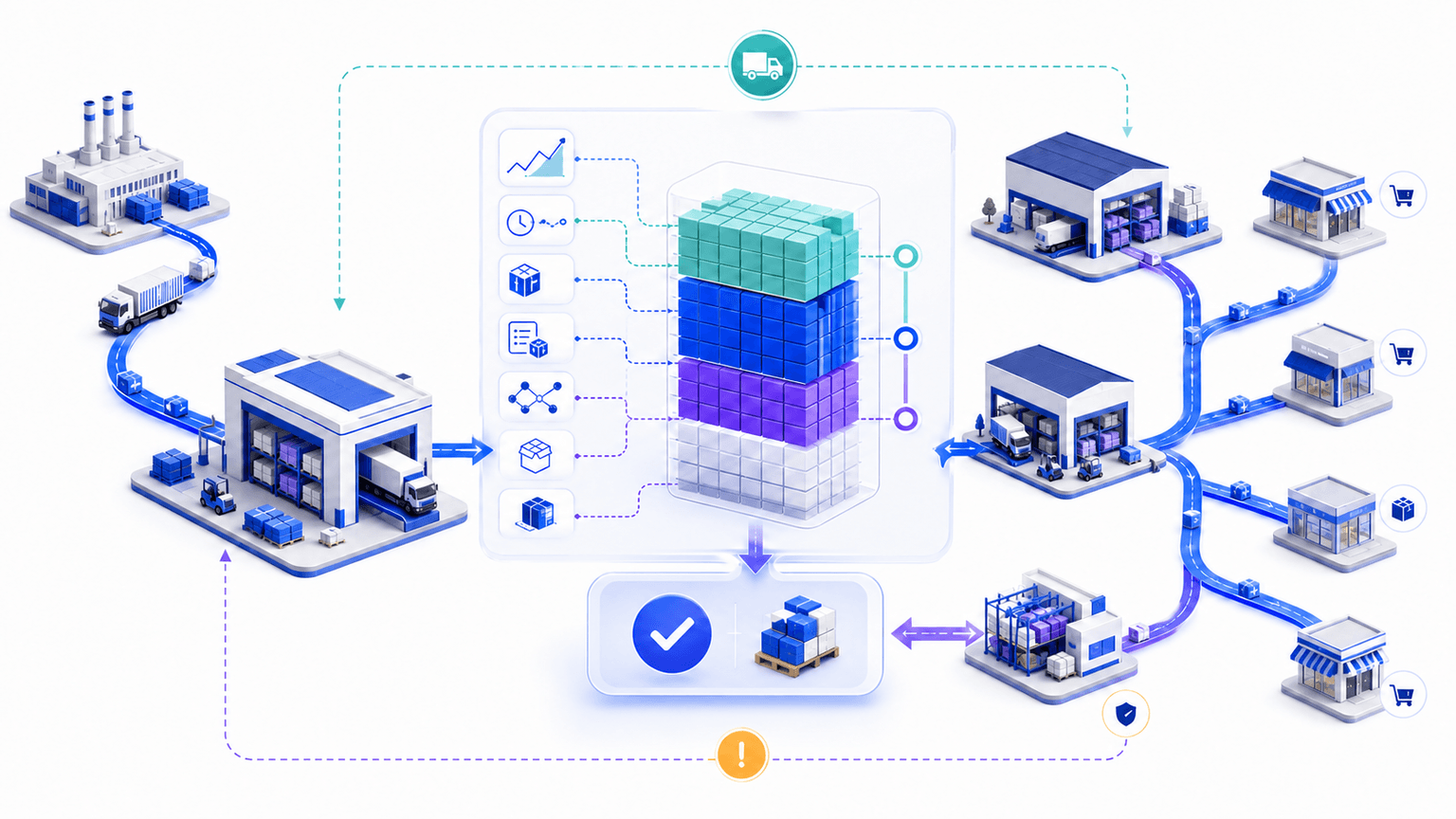
What inventory replenishment means什么是库存补货
Inventory replenishment is the governed process of deciding when and how much stock to purchase, produce, transfer, or move so a defined item-location can meet expected demand within service, cost, capacity, shelf-life, and cash constraints.
库存补货是一套受治理的决策流程:确定何时、以多少数量采购、生产、调拨或移动库存,使明确的物料—地点能够在服务、成本、能力、货架期与资金约束下满足预期需求。
The term covers several flows: supplier to plant or distribution center, central warehouse to regional node or store, reserve storage to a pick face, and component supply to production. The policy must name the exact item, stocking location, demand stream, source, review timing, and execution decision.
这个词涵盖多种流动:供应商到工厂或配送中心、中心仓到区域节点或门店、储备区到拣货位,以及零部件到生产。策略必须明确物料、库存地点、需求流、来源、复核时点与执行决策。
Replenishment is not simply “buy when stock looks low.” It links trusted inventory balances, demand and lead-time assumptions, service objectives, order constraints, exception rules, approval, and outcome feedback.
补货不是“看起来库存低了就买”。它把可信库存余额、需求与提前期假设、服务目标、订货约束、例外规则、审批与结果反馈连接起来。
Separate planning policy from physical execution区分计划策略与实物执行
Calculates trigger timing, target position, recommended quantity, date, source, and priority.
计算触发时点、目标库存位置、建议数量、日期、来源与优先级。
Creates, approves, communicates, changes, and receives purchase or production orders.
创建、审批、沟通、变更并接收采购单或生产单。
Decides how constrained available stock is assigned across customers, channels, or locations.
决定受限可用库存如何分配给客户、渠道或地点。
Creates physical work to move units from reserve or bulk storage into picking locations.
创建实物任务,把商品从储备区或大宗存储位移动到拣货位。
Software categories often combine these scopes. Verify whether a product recommends supply, releases orders, writes back to an ERP, allocates shortages, or creates warehouse work rather than assuming the label “replenishment” includes all functions.
软件品类经常组合这些范围。必须核实产品究竟是推荐供应、下达订单、回写 ERP、分配短缺,还是创建仓库任务,不能假设“补货”标签包含全部功能。
Prepare reliable inputs before applying a formula应用公式前先准备可靠输入
| Input输入 | Define需要定义 | Typical failure常见失败 |
|---|---|---|
| Demand需求 | Orders, shipments, consumption, forecast, horizon, grain, promotions, lost sales, returns订单、发货、消耗、预测、周期、粒度、促销、缺货损失、退货 | Treating stock-constrained sales as unconstrained demand把受缺货限制的销量当作无约束需求 |
| Lead time提前期 | Order release, supplier processing, transit, receiving, inspection, putaway, calendar订单释放、供应商处理、运输、收货、检验、上架、日历 | Using promised lead time while actual tail delays drive shortages使用承诺提前期,而实际尾部延迟导致缺货 |
| Inventory库存 | On hand, available, allocated, quarantined, expired, in transit, on order, backordered, cutoff现有、可用、已分配、隔离、过期、在途、在订、欠单、截点 | Mixing physical balance with planning position混用实物余额与计划库存位置 |
| Policy and constraints策略与约束 | Service objective, safety stock, review cycle, MOQ, pack multiple, shelf life, capacity, budget服务目标、安全库存、复核周期、MOQ、包装倍数、货架期、能力、预算 | Publishing a mathematically valid but operationally impossible recommendation发布数学正确但运营不可执行的建议 |
Every value needs source, unit, item-location scope, effective dates, refresh cadence, owner, missing-data rule, and version. Reconcile balances and order states to operational systems before trusting a recommendation.
每个数值都需要来源、单位、物料—地点范围、生效日期、刷新频率、责任人、缺失数据规则与版本。信任建议前,应把余额和订单状态与运营系统核对。
Calculate a policy-specific inventory position计算符合策略口径的库存位置
On-hand inventory is a physical or book balance at a point in time. Inventory position is a planning measure intended to represent stock available now plus eligible future supply, less demand already committed under the policy. It should not blindly include every purchase order: late, unconfirmed, quality-blocked, cancelled, or outside-horizon supply may not protect the decision.
现有库存是某时点的实物或账面余额;库存位置是一项计划指标,用于表示当前可用库存加符合条件的未来供应,再减去策略下已承诺需求。不能盲目纳入所有采购单:迟到、未确认、质量冻结、取消或超出周期的供应可能无法保护决策。
Likewise, define whether allocations, reservations, transfer demand, production demand, and backorders are deducted once. Double counting committed demand is as damaging as ignoring it.
同样要定义分配、预留、调拨需求、生产需求与欠单是否扣减以及扣减一次。重复计算承诺需求与忽略它同样有害。
Use the reorder point to answer when to replenish用补货点回答何时补货
Trigger a review or planned order when the governed inventory position reaches or falls below the reorder point. The formula assumes the demand rate, lead-time definition, units, calendar, and safety-stock policy are compatible. A weekly demand rate cannot be multiplied by calendar-day lead time without conversion.
当受治理的库存位置达到或低于补货点时,触发复核或计划订单。该公式假设需求速度、提前期定义、单位、日历和安全库存策略彼此兼容。周需求不能未经换算就乘以日历日提前期。
Safety stock protects against defined uncertainty and service objectives; it is not a universal percentage. See the separate safety stock formula for statistical and practical methods.
安全库存用于保护明确的不确定性与服务目标,不是通用百分比。统计与实操方法参见安全库存公式。
Use an order-up-to target to answer how much用目标库存回答补多少
In a min-max policy, the minimum commonly acts as the trigger and the maximum as the target. For periodic review, protection time normally includes the time until the next review plus replenishment lead time. The resulting raw quantity must then respect pack sizes, minimum and maximum order quantities, supplier or lane capacity, shelf life, truck or container logic, and budget.
在 Min-Max 策略中,最小值通常作为触发点,最大值作为目标。对周期复核策略,保护期一般包含下次复核前的时间加补货提前期。原始数量还必须满足包装量、最小与最大订量、供应商或路线能力、货架期、车辆或集装箱逻辑以及预算。
Rounding can push the post-order position above the target. Show both the raw and constrained recommendation so planners understand the difference rather than hiding it inside a black box.
取整可能使订货后的库存位置高于目标。应同时展示原始建议与受约束建议,让计划员理解差异,而不是把它隐藏在黑箱中。
Inventory replenishment calculator库存补货计算器
This educational calculator uses a deterministic min-max policy. Enter compatible units and include only supply and demand eligible under your planning rule.
本教学计算器采用确定性 Min-Max 策略。请输入兼容单位,并且只纳入符合计划规则的供应与需求。
Worked example: from trigger to constrained quantity计算示例:从触发点到受约束订货量
In the default hypothetical example, demand is 40 units per day, lead time is seven days, the review period is three days, and safety stock is 100 units. The reorder point is 380 and the order-up-to target is 500. With 300 on hand, 80 eligible on order, and 90 committed, inventory position is 290, so replenishment is triggered.
默认假设示例中,日需求为 40,提前期 7 天,复核周期 3 天,安全库存 100。补货点为 380,目标库存为 500。现有量 300、符合条件的在订量 80、承诺需求 90,因此库存位置为 290,触发补货。
The raw recommendation is 500 − 290 = 210 units. A 25-unit order multiple rounds it to 225; the 50-unit minimum does not bind. The result is an input-driven proposal, not a purchase approval. A planner should verify demand changes, receipt dates, constraints, shelf life, and known events before release.
原始建议为 500 − 290 = 210。按 25 的订货倍数向上取整为 225;50 的最小订量不会产生约束。结果只是输入驱动的建议,不是采购批准。释放前,计划员应核实需求变化、收货日期、约束、货架期与已知事件。
Choose a method by demand, review, and network behavior根据需求、复核与网络行为选择方法
| Method方法 | Core decision核心决策 | Best fit and caution适用与提醒 |
|---|---|---|
| Continuous review (r,Q)连续复核(r,Q) | At reorder point, order a governed quantity Q达到补货点时订购受治理数量 Q | Responsive with reliable event data; sensitive to inventory accuracy在事件数据可靠时响应快;对库存准确性敏感 |
| Min-max (s,S)Min-Max(s,S) | At or below minimum, order toward maximum达到或低于最小值时补到最大值 | Clear and practical; targets need regular calibration清晰实用;目标需要定期校准 |
| Periodic review周期复核 | At each review, order to cover review period plus lead time每次复核时覆盖复核周期加提前期 | Supports order consolidation; requires longer protection period支持订单合并;需要更长保护期 |
| Lot-for-lot逐批订货 | Match time-phased net requirement匹配分时净需求 | Useful for dependent or lumpy demand; can create many orders适合相关或跳跃需求;可能产生大量订单 |
| EOQ-supported lot sizingEOQ 辅助批量 | Balance simplified ordering and holding costs平衡简化的订货与持有成本 | A benchmark under restrictive assumptions, not a universal quantity在严格假设下作为基准,不是通用数量 |
| DDMRP | Use decoupling points and dynamic buffer zones使用解耦点与动态缓冲区 | Designed for demand-driven networks; requires disciplined buffer design适合需求驱动网络;要求严格设计缓冲区 |
The economic order quantity guide explains EOQ assumptions and cost inputs. Select methods at item-location level rather than applying one policy to every SKU.
经济订货量指南解释 EOQ 假设与成本输入。方法应在物料—地点层级选择,而不是对所有 SKU 应用同一策略。
Segment policies instead of micromanaging every item按策略分层,而不是逐项人工微调
Group item-locations using decision-relevant attributes: value or margin, demand volume and variability, lead time and variability, criticality, substitution, shelf life, lifecycle, supply reliability, order constraints, and service differentiation. ABC alone measures one dimension and should not dictate the entire policy.
使用与决策相关的属性对物料—地点分组:价值或毛利、需求量与波动、提前期与波动、关键性、可替代性、货架期、生命周期、供应可靠性、订货约束与差异化服务。ABC 只衡量一个维度,不应决定全部策略。
- Stable high runners: frequent review, reliable lead-time demand, tight exception limits.稳定高动销:高频复核、可靠的提前期需求、严格例外限制。
- Intermittent or lumpy: zero-safe forecasting, longer aggregation, event or requirement-based planning.间歇或跳跃需求:适配零值的预测、更长聚合、事件或需求驱动计划。
- Perishable or short lifecycle: shelf-life and markdown risk can dominate service-stock logic.易腐或短生命周期:货架期与降价风险可能高于服务库存逻辑。
- Critical low volume: consequence and recovery may justify targeted buffers despite low usage.低量关键品:即使用量低,后果与恢复要求也可能支持定向缓冲。
Model demand and lead-time uncertainty explicitly显式建模需求与提前期不确定性
Average lead-time demand alone covers the center of a distribution, not its variation. Safety stock should reflect the chosen service concept, demand and lead-time uncertainty, correlation, review policy, and lost-sales or backorder behavior. Cycle service level, item fill rate, order fill rate, and availability are not interchangeable.
平均提前期需求只覆盖分布中心,不覆盖波动。安全库存应反映所选服务概念、需求与提前期不确定性、相关性、复核策略以及丢失销售或欠单行为。周期服务水平、物料满足率、订单满足率与可得率不可互换。
Promotions, seasonality, new items, substitutions, closures, stockouts, and structural changes need explicit treatment. Do not let a moving average silently absorb a one-off event or use historical shipments as demand when availability constrained them.
促销、季节、新品、替代、停业、缺货与结构变化需要显式处理。不要让移动平均无痕吸收一次性事件,也不要在供应受限时把历史发货量当作需求。
Apply operational constraints transparently透明应用运营约束
A recommendation engine should preserve the unconstrained quantity and then show each adjustment: order multiple, case pack, pallet, minimum or maximum order, price break, truck or container capacity, supplier capacity, dock and storage capacity, shelf life, production campaign, budget, and contract calendar.
建议引擎应保留无约束数量,再逐项展示调整:订货倍数、箱规、托盘、最小或最大订量、价格阶梯、车辆或集装箱能力、供应商能力、月台与存储能力、货架期、生产批次、预算与合同日历。
Feasible does not mean optimal. Rounding 210 units to 225 makes the order executable, but it can also increase projected excess. Show the resulting position, days of supply, expiry exposure, cash effect, and next trigger.
可执行不等于最优。把 210 向上取整为 225 使订单可执行,但也可能增加预计过量。应展示结果库存位置、供应天数、过期暴露、资金影响与下次触发点。
Coordinate replenishment across the network跨网络协调补货
A warehouse and its stores should not each plan as if upstream stock were unlimited. Map source-destination lanes, transfer times, calendars, capacity, protected stock, allocation priority, in-transit ownership, and shared constraints. Avoid double counting downstream forecasts and store orders at the distribution center.
仓库与门店不能都假设上游库存无限。应映射来源—目的路线、调拨时间、日历、能力、保护库存、分配优先级、在途所有权与共享约束。避免配送中心重复计算下游预测与门店订单。
When supply is constrained, replenishment and allocation interact. A mathematically valid order-up-to quantity may be impossible for every node simultaneously; the network needs an explicit priority or optimization rule and an exception path.
供应受限时,补货与分配相互作用。对每个节点都数学正确的目标数量可能无法同时满足;网络需要明确优先级或优化规则与例外路径。
A repeatable inventory replenishment process可重复执行的库存补货流程
- Define item-location decisions.定义物料—地点决策。 Specify scope, source, demand, service, review, owner, and execution boundary.明确范围、来源、需求、服务、复核、责任人与执行边界。
- Reconcile inventory and orders.核对库存与订单。 Resolve units, statuses, duplicates, cutoffs, eligibility, allocations, and late supply.解析单位、状态、重复、截点、资格、分配与迟到供应。
- Prepare demand and lead time.准备需求与提前期。 Correct censored demand and events; use actual end-to-end lead-time evidence.修正受限需求与事件;使用实际端到端提前期证据。
- Select and version policy.选择并版本化策略。 Set method, trigger, target, safety stock, constraints, calendar, and approval.设定方法、触发点、目标、安全库存、约束、日历与审批。
- Calculate and explain.计算并解释。 Preserve inventory position, raw quantity, constrained quantity, date, source, and reason codes.保留库存位置、原始数量、受约束数量、日期、来源与原因代码。
- Review exceptions.复核例外。 Prioritize shortages, late supply, excess, stale parameters, constraint conflicts, and low confidence.优先处理短缺、迟到供应、过量、参数过期、约束冲突与低置信度。
- Approve and hand off.审批并交接。 Send authorized recommendations to purchasing, transfer, production, or warehouse workflows.把获批建议发送到采购、调拨、生产或仓库工作流。
- Measure and recalibrate.衡量并重新校准。 Compare predicted and realized demand, lead time, service, inventory, overrides, and constraints.比较预测与实际需求、提前期、服务、库存、人工调整与约束。
Manage decisions through a prioritized exception queue通过优先级例外队列管理决策
Planners need fewer actionable exceptions, not more alerts. Each exception should show business impact, item-location, timing, quantity, source data, parameter version, confidence, recommended action, constraint, owner, due date, and drilldown.
计划员需要更少但可执行的例外,而不是更多预警。每个例外应展示业务影响、物料—地点、时点、数量、源数据、参数版本、置信度、建议行动、约束、责任人与截止日,并支持下钻。
- Projected stockout before earliest feasible receipt.最早可行收货前预计缺货。
- Safety-stock breach, late or unconfirmed supply, or sudden demand shift.安全库存突破、供应迟到或未确认、需求突然变化。
- Excess, expiry, capacity, cash, MOQ, or order-multiple conflict.过量、过期、能力、资金、MOQ 或订货倍数冲突。
- Missing balance, stale parameter, forecast bias, or lead-time drift.余额缺失、参数过期、预测偏差或提前期漂移。
Record overrides with reason, approver, before-and-after values, expected effect, and outcome. Override rate is diagnostic; a high rate may indicate poor parameters, missing context, or unnecessary alerts.
人工调整应记录原因、审批人、调整前后值、预期影响与结果。调整率是一项诊断指标;高调整率可能说明参数不佳、背景缺失或预警不必要。
What inventory replenishment software should support库存补货软件应支持什么
Inventory states, demand, forecasts, orders, receipts, lead times, lanes, calendars, products, locations, suppliers, and units.
库存状态、需求、预测、订单、收货、提前期、路线、日历、产品、地点、供应商与单位。
Configurable item-location methods, safety stock, service, constraints, lifecycle, seasonality, and parameter versions.
可配置的物料—地点方法、安全库存、服务、约束、生命周期、季节与参数版本。
Trigger, inventory position, target, raw and constrained quantity, receipt date, confidence, reason codes, and source drilldown.
触发点、库存位置、目标、原始与受约束数量、收货日期、置信度、原因代码与源数据下钻。
Exception priority, roles, overrides, approvals, audit, scenario comparison, exports, APIs, and ERP handoff where in scope.
在产品范围内支持例外优先级、角色、调整、审批、审计、情景比较、导出、API 与 ERP 交接。
“AI replenishment” should be evaluated through reproducible out-of-sample and operational evidence. Verify how the product handles new items, intermittent demand, stockouts, promotions, substitutions, late orders, constraints, multi-echelon dependencies, model fallback, security, and total cost.
“AI 补货”应通过可复现的样本外与运营证据评估。核实产品如何处理新品、间歇需求、缺货、促销、替代、迟到订单、约束、多级依赖、模型回退、安全与总成本。
Run a proof of concept with frozen baselines使用冻结基线运行 POC
Use representative item-locations: stable, seasonal, promoted, new, intermittent, constrained, perishable, critical, multi-source, and transfer-supplied. Freeze historical decision cutoffs so the POC cannot use future information.
使用有代表性的物料—地点:稳定、季节、促销、新品、间歇、受限、易腐、关键、多来源与调拨供应。冻结历史决策截点,防止 POC 使用未来信息。
| Test测试 | Retain保留证据 |
|---|---|
| Reconciliation核对 | Balances, order states, units, timezones, cutoffs, eligible supply, committed demand, and duplicates余额、订单状态、单位、时区、截点、合格供应、承诺需求与重复 |
| Recommendation建议 | Formula trace, parameter version, raw and constrained quantity, date, source, confidence, and reason公式轨迹、参数版本、原始与受约束数量、日期、来源、置信度与原因 |
| Backtest and replay回测与重放 | Service, shortages, inventory, waste, expedites, order changes, baseline comparison, and leakage controls服务、短缺、库存、浪费、加急、订单变化、基线比较与泄漏控制 |
| Operation and economics运营与经济性 | Planner time, overrides, integration, roles, audit, administration, licensing, implementation, and exit cost计划员时间、调整、集成、角色、审计、管理、许可、实施与退出成本 |
Measure service, inventory, execution, and policy quality衡量服务、库存、执行与策略质量
Use decision-grain cohorts and frozen baselines. Track inventory turnover with consistent cost and balance definitions, but do not optimize one metric in isolation. Higher turns can coincide with poor availability; higher service can be purchased with excessive stock.
使用决策粒度分组与冻结基线。用一致成本和余额定义跟踪库存周转,但不要孤立优化单一指标。更高周转可能伴随较差可得率,更高服务也可能以过量库存为代价。
Link recommendations to realized orders, receipts, demand, stockouts, write-offs, and overrides. Otherwise, the organization cannot tell whether policy, execution, data, or external events caused the outcome.
把建议连接到实际订单、收货、需求、缺货、报废与人工调整,否则组织无法判断结果由策略、执行、数据还是外部事件造成。
Common inventory replenishment failures库存补货常见失败
- Triggering on on-hand stock while ignoring eligible supply and committed demand.按现有库存触发,却忽略合格供应与承诺需求。
- Using inconsistent units, calendars, item-location mappings, or order cutoffs.使用不一致的单位、日历、物料—地点映射或订单截点。
- Treating stock-constrained shipments as true demand.把受缺货限制的发货量当作真实需求。
- Using promised lead time instead of observed end-to-end variation.使用承诺提前期,而不是实际端到端波动。
- Applying one method, service target, or review cycle to every SKU.对所有 SKU 应用同一方法、服务目标或复核周期。
- Hiding MOQ, pack, capacity, shelf-life, or budget adjustments inside the final quantity.把 MOQ、包装、能力、货架期或预算调整隐藏在最终数量中。
- Optimizing a single node while ignoring upstream constraints and downstream double counting.优化单一节点,却忽略上游约束与下游重复计算。
- Automating parameter changes or order release without versioning, thresholds, and approval.在没有版本、阈值与审批时自动修改参数或释放订单。
Where InfiniSynapse can support replenishment analysisInfiniSynapse 可以支持哪些补货分析
InfiniSynapse can be considered as an analysis layer for exploring authorized sales, demand, forecasts, inventory snapshots and movements, purchase and transfer orders, receipts, supplier and lane lead times, item-location mappings, policy parameters, overrides, exceptions, notes, and supporting documents. Analysts can reconcile evidence, investigate recommendation drivers, compare segments, and prepare governed summaries.
InfiniSynapse 可作为分析层,探索获准使用的销售、需求、预测、库存快照与移动、采购与调拨订单、收货、供应商与路线提前期、物料—地点映射、策略参数、人工调整、例外、备注与支持文件。分析人员可核对证据、调查建议驱动因素、比较分组并准备受治理摘要。
Boundary: InfiniSynapse is not presented here as an MRP or DRP engine, demand forecast generator, replenishment optimizer, inventory allocation engine, purchasing or production workflow, warehouse execution system, autonomous order-release service, supplier communication platform, or ERP transaction/writeback tool. Operational recommendations and execution must be verified separately.
边界:本文不把 InfiniSynapse 描述为 MRP 或 DRP 引擎、需求预测生成器、补货优化器、库存分配引擎、采购或生产工作流、仓库执行系统、自动订单释放服务、供应商沟通平台或 ERP 交易/回写工具。运营建议与执行必须另行验证。
Prepare a governed replenishment analysis准备一项有治理依据的补货分析
Bring item-location mappings, inventory states, demand and forecast versions, purchase and transfer orders, receipts, actual lead times, supplier and lane calendars, service and safety-stock definitions, min-max parameters, order constraints, exceptions, overrides, and realized outcomes. Use InfiniSynapse to explore the connected evidence and determine where analysis can support your process.
准备物料—地点映射、库存状态、需求与预测版本、采购与调拨订单、收货、实际提前期、供应商与路线日历、服务与安全库存定义、Min-Max 参数、订货约束、例外、人工调整与实际结果。使用 InfiniSynapse 探索关联证据,并判断分析可以如何支持流程。
Try InfiniSynapse Online在线体验 InfiniSynapseInventory replenishment FAQ库存补货常见问题
It decides when and how much stock to purchase, produce, transfer, or move so an item-location can meet demand within defined constraints.
它决定何时、以多少数量采购、生产、调拨或移动库存,使物料—地点在明确约束下满足需求。
Calculate a governed inventory position, compare it with a reorder point, and, when triggered, order toward a target or by a governed lot size.
计算受治理的库存位置,与补货点比较,并在触发时补到目标或按受治理批量订货。
A common starting formula is expected demand during replenishment lead time plus safety stock, using compatible units and definitions.
常见起点是补货提前期内的预期需求加安全库存,并确保单位与定义兼容。
On-hand is a recorded balance; inventory position normally adds eligible on-order supply and subtracts backorders or committed demand under a published policy.
现有库存是记录余额;库存位置通常按公布策略增加合格在订供应并扣除欠单或承诺需求。
When inventory position reaches or falls below the minimum, the policy recommends supply toward the maximum, then applies operational constraints.
当库存位置达到或低于最小值时,策略建议补到最大值,再应用运营约束。
Set cadence by volatility, seasonality, lifecycle, supplier changes, service objectives, and data quality, with governed event-triggered updates.
按波动、季节、生命周期、供应商变化、服务目标与数据质量设定,并采用受治理的事件触发更新。
No. It is positioned here as an analysis layer, not an MRP engine, optimizer, purchasing workflow, allocation engine, warehouse system, or ERP writeback tool.
不是。这里将其定位为分析层,而不是 MRP 引擎、优化器、采购工作流、分配引擎、仓库系统或 ERP 回写工具。
Sources and limitations来源与局限
Primary references: Microsoft guidance on reordering policies and projected inventory, Microsoft safety-stock and min-max replenishment guidance, Microsoft DDMRP buffer formulas, and Oracle NetSuite inventory optimization calculations. Sources reviewed August 18, 2026.
主要参考:Microsoft 重订货策略与预计库存指南、Microsoft 安全库存与 Min-Max 补货指南、Microsoft DDMRP 缓冲区公式以及 Oracle NetSuite 库存优化计算。来源核验于 2026 年 8 月 18 日。
The formulas, example, bands, constraints, and methods are educational starting points, not universal policy, an optimized order, a service guarantee, financial projection, or procurement recommendation. Results depend on data, definitions, uncertainty, network interactions, constraints, model assumptions, and execution. Validate policy with responsible planning, finance, procurement, operations, quality, and systems owners.
本文公式、示例、区间、约束与方法是教学起点,不是通用政策、优化订单、服务保证、财务预测或采购推荐。结果取决于数据、定义、不确定性、网络互动、约束、模型假设与执行。应由负责计划、财务、采购、运营、质量与系统的人员验证策略。