
What a customer intelligence platform is—and is not客户智能平台是什么,又不是什么
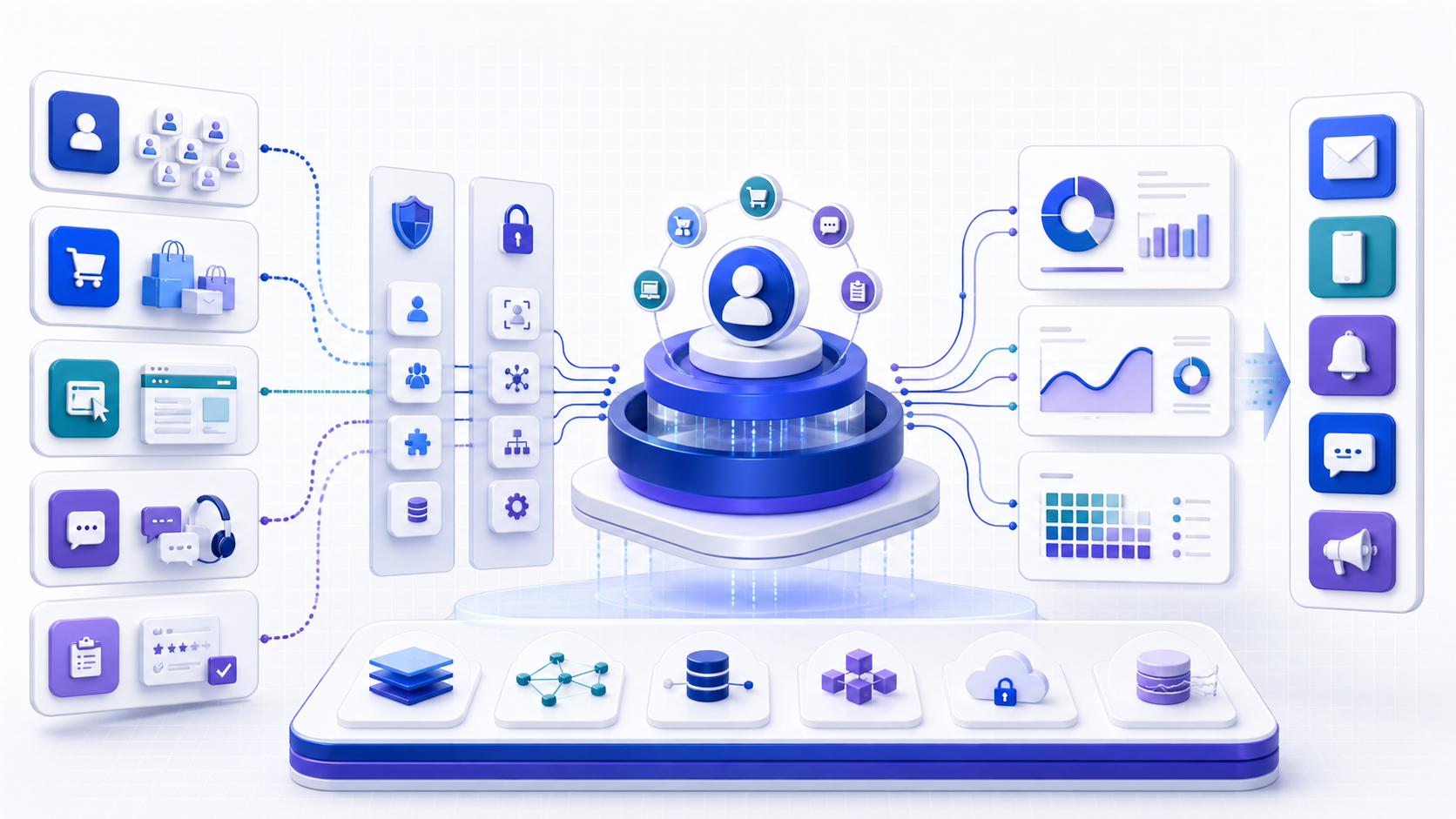
A customer intelligence platform is software that connects governed customer evidence from multiple sources with identity rules, analysis, insight review, activation, and outcome measurement. The category has no single universal feature boundary: one product may focus on go-to-market signals, another on customer-experience research, and another on analytics over an existing data stack. Evaluate the workflow and controls, not the label.
客户智能平台是一类软件,它把多来源、受治理的客户证据,与身份规则、分析、洞察复核、行动执行和结果测量连接起来。这一类别没有统一的功能边界:有的产品侧重市场与销售意向信号,有的侧重客户体验研究,也有的侧重分析现有数据栈。应评估实际工作流与控制能力,而不是只看类别名称。
The platform supports a wider customer intelligence capability; it does not create that capability by itself. A dashboard reports signals. A customer insight interprets evidence for one decision. The operating capability defines recurring questions, stewardship, evidence standards, human review, action ownership, and learning. Software can shorten the path, preserve lineage, or coordinate tasks, but it cannot repair an undefined customer, unlawful data use, biased samples, weak measurement, or a team that has no authority to act.
平台支撑更广泛的客户智能能力,却不会自动替组织建立这种能力。仪表板报告信号;客户洞察为某项决策解释证据;运行能力则定义重复问题、数据责任、证据标准、人工复核、行动负责人和学习机制。软件可以缩短路径、保留血缘或协调任务,但无法修复未定义的“客户”、不合法的数据使用、有偏样本、薄弱测量,或无权采取行动的团队。
A recorded signal: an event, response, order, transcript, or ticket.
被记录的信号:事件、回答、订单、访谈文本或工单。
A described pattern in those signals, without claiming why it occurred.
对信号中模式的描述,但尚未声称它为何发生。
An evidence-backed interpretation that connects a pattern, context, uncertainty, and a decision.
把模式、情境、不确定性与决策连接起来的证据型解释。
Owned action, outcome measurement, review date, and refreshed evidence that improves the next decision.
由负责人执行行动、测量结果、按期复盘并刷新证据,从而改善下一次决策。
When customer intelligence helps—and when it does not客户智能适用与不适用的场景
Teams usually need a customer intelligence strategy when a visible metric is not enough and the same decision recurs: activation falls but the dashboard does not explain why; survey scores improve while renewal conversations worsen; one segment adopts a feature and another ignores it; or support volume rises after a release. The need is a durable way to reconcile sources, assign ownership, preserve evidence, and close the learning loop—not another isolated chart.
当可见指标不足以解释问题时,团队通常会寻找客户智能:激活率下降但仪表板没有原因;问卷分数上升而续约对话变差;一个细分群体采用新功能、另一个却忽略;或发布后客服量上升。共同需求不是再做一张孤立图表,而是跨来源解释现象。
| Use case场景 | Useful question有用问题 | Poor substitute不应替代的工作 |
|---|---|---|
| Product discovery产品发现 | What job, barrier, or workaround explains the observed behavior?什么任务、障碍或变通方法解释了已观察到的行为? | Choosing a roadmap by vote count alone只按反馈票数决定路线图 |
| Experience improvement体验改进 | Where does expectation diverge from the actual journey?客户预期与实际旅程在哪里发生偏离? | Treating satisfaction as proof of causality把满意度当作因果证明 |
| Messaging信息表达 | Which outcomes and words recur among successful customers?成功客户反复提到哪些结果和用语? | Copying isolated quotes without context脱离情境复制个别原话 |
| Retention留存 | Which early behaviors and stated frictions precede churn?哪些早期行为与明确摩擦先于流失出现? | Assuming correlation identifies the cause假定相关性已经说明原因 |
Customer intelligence is a poor fit when the decision is purely technical and already specified, when the available sample excludes the people affected, or when the team cannot act on any likely finding. It cannot replace legal review, accessibility testing, controlled experiments, financial modeling, or domain expertise. A useful boundary is: customer data is recorded evidence, customer analytics measures patterns, customer insights interpret what a pattern means, and customer intelligence is the governed capability that connects all three to repeated decisions.
当决策纯属技术问题且规格已明确、现有样本排除了真正受影响的人,或团队无法对任何可能发现采取行动时,客户智能并不合适。它也不能替代法律审查、无障碍测试、对照实验、财务建模或领域专业知识。一个实用边界是:客户数据是已记录证据,客户分析衡量模式,客户洞察解释模式的意义,而客户智能是把三者连接到重复决策的受治理能力。
Customer intelligence platform vs CDP, CRM, and analytics tools客户智能平台与 CDP、CRM、客户分析工具的区别
Category names overlap because vendors bundle different layers. A useful architecture starts with the job each system owns. A CRM records managed relationships and operational activity. A customer data platform typically collects, resolves, and distributes first-party profiles. A warehouse retains modeled business data. Customer analytics tools examine behavior, funnels, cohorts, journeys, or value. Research repositories organize qualitative evidence. Activation systems deliver messages or operational tasks. A customer intelligence platform may span several of these layers, but buyers should never assume that “unified” means complete, accurate, real-time, or ready for every action.
这些类别经常重叠,因为不同供应商打包的层次并不相同。更可靠的架构方法,是先说明每种系统负责什么任务。CRM 记录受管理的客户关系与运营活动;客户数据平台通常收集、解析并分发第一方客户档案;数据仓库存放经过建模的业务数据;客户分析工具研究行为、漏斗、群组、旅程或价值;研究资料库组织定性证据;激活系统发送消息或创建运营任务。客户智能平台可能跨越多个层次,但采购者绝不能把“统一”自动理解为完整、准确、实时或适合所有行动。
| System role系统角色 | Primary job主要任务 | Question to verify必须验证的问题 |
|---|---|---|
| CRMCRM | Manage known accounts, contacts, opportunities, and service activity管理已知账户、联系人、商机和服务活动 | Does it retain the evidence needed for analysis, or only the latest operational state?它保留分析所需证据,还是只保留最新运营状态? |
| Customer data platform (CDP)客户数据平台(CDP) | Collect events, resolve profiles, build audiences, and send data downstream收集事件、解析档案、构建受众并向下游分发数据 | Which identity, consent, latency, and deletion rules are configurable and auditable?哪些身份、同意、延迟和删除规则可以配置并审计? |
| Customer analytics platform客户分析平台 | Measure behavior, cohorts, funnels, journeys, retention, or value衡量行为、群组、漏斗、旅程、留存或价值 | Can a reviewer reproduce a result from definitions, filters, and source records?审查者能否根据定义、筛选条件和源记录复现结果? |
| Customer intelligence platform客户智能平台 | Connect governed evidence to interpretations, reviewed decisions, activation, and learning把受治理证据连接到解释、人工复核的决策、行动与学习 | Which layers are native, which are integrations, and where does human approval occur?哪些层原生提供、哪些依赖集成,以及人工审批发生在哪里? |
Do not buy the diagram. Ask a vendor to demonstrate one of your decisions with representative data and failure cases. Verify whether identity merges can be reversed, definitions are versioned, source evidence remains accessible, permissions follow least privilege, deletion reaches derived artifacts, and actions can be paused. If the platform exports only a score or recommendation without its inputs, method, uncertainty, and review record, it may accelerate action while weakening accountability.
不要为一张架构图买单。要求供应商用具有代表性的数据和失败场景演示你的真实决策。验证身份合并能否撤回、定义是否有版本、原始证据是否可访问、权限是否遵循最小授权、删除请求是否覆盖衍生产物,以及行动能否暂停。如果平台只导出分数或建议,却没有输入、方法、不确定性和复核记录,它可能加快行动,同时削弱问责。
Inputs to prepare before customer insight analysis开展客户智能分析前需要准备的输入
Platform preparation begins with a source-and-control matrix. For each recurring decision, record the owner, required latency, system of record, permitted fields, identity key, refresh contract, expected totals, review gate, destination, and rollback path. This exposes integration and governance work before a vendor demonstration hides it.
平台准备应从“来源与控制矩阵”开始。针对每项重复决策,记录负责人、延迟要求、记录系统、允许字段、身份键、刷新契约、预期总数、复核关口、目标系统和回滚路径,从而在厂商演示掩盖问题前暴露集成与治理工作。
| Source来源 | What it contributes提供什么 | Preparation check准备检查 |
|---|---|---|
| Interviews and field notes访谈与现场笔记 | Goals, language, context, constraints, workarounds目标、用语、情境、限制与变通方法 | Consent, recruitment criteria, discussion guide, transcript quality同意、招募条件、访谈提纲、文本质量 |
| Surveys and feedback问卷与反馈 | Stated attitudes at wider scale and open-text themes更大范围的态度表达与开放文本主题 | Question wording, response rate, sampling and nonresponse risk问题措辞、回复率、抽样与未回复风险 |
| Product and web events产品与网站事件 | Observed sequences, frequency, funnels, and cohorts已观察序列、频次、漏斗与群组 | Event dictionary, identity rules, time zone, missing events事件字典、身份规则、时区与缺失事件 |
| CRM, billing, and supportCRM、账单与客服 | Lifecycle stage, value, outcomes, objections, and failure history生命周期、价值、结果、异议与故障历史 | Stable identifiers, status definitions, access controls, retention rules稳定标识、状态定义、访问控制与保留规则 |
Test governance as a platform capability. Verify field-level access, consent-state propagation, retention enforcement, derived-data deletion, reversible identity merges, export controls, and immutable audit events with representative records—not screenshots.
把治理作为平台能力测试。使用代表性记录验证字段级访问、同意状态传递、保存期限执行、衍生数据删除、可撤销身份合并、导出控制和不可篡改审计事件,而不是只看截图。
Choose customer insight methods by uncertainty根据不确定性选择客户智能方法
A platform should support the methods the operating team can govern, not merely list them in a feature catalog. Map each required question to its input grain, method, reviewer, reproducible output, uncertainty display, and activation boundary. Require a demonstration that preserves those controls across qualitative and quantitative evidence.
平台应支持运营团队能够治理的方法,而不只是把方法列进功能清单。把每类问题映射到输入粒度、方法、审查者、可复现输出、不确定性展示和行动边界,并要求演示定性与定量证据如何在这些控制下协同。
| Question type问题类型 | Strong starting method合适起点 | Main limitation主要限制 |
|---|---|---|
| Why is this happening?为什么会发生? | Interviews plus behavior or support evidence访谈结合行为或客服证据 | Recall, social desirability, and researcher interpretation记忆偏差、社会期许与研究者解释 |
| How common is it?有多普遍? | Representative survey or defined event/cohort analysis代表性问卷或定义清晰的事件/群组分析 | Coverage, missingness, instrumentation, and selection bias覆盖、缺失、埋点与选择偏差 |
| Where does the experience break?体验在哪里中断? | Journey review, usability test, support and funnel analysis旅程审查、可用性测试、客服与漏斗分析 | Lab behavior may differ from real-world behavior测试环境行为可能不同于真实行为 |
| Did our change work?改变是否有效? | Experiment or credible before/after design with guardrails实验或带护栏指标的可信前后对照设计 | Confounding, novelty, spillover, and short observation windows混杂、新奇效应、外溢与观察期过短 |
How to choose a customer intelligence platform如何选择客户智能平台:从决策任务出发
Start with a decision backlog, not a feature checklist. Select one recurring decision that is valuable, currently slow or unreliable, supported by accessible evidence, and safe to test. Write its owner, cadence, population, sources, required latency, action channel, review gate, and measurable outcome. This converts broad claims such as “customer 360,” “real-time intelligence,” or “AI recommendations” into tasks that a team can observe and score.
先建立决策任务清单,而不是先收集功能复选框。选择一项高价值、当前缓慢或不可靠、有可访问证据支持且可以安全测试的重复决策。写明负责人、频率、对象、来源、延迟要求、行动渠道、复核关口和可测量结果。这样就能把“客户 360”“实时智能”或“AI 建议”等宽泛承诺,转化成团队可以观察和评分的任务。
| Evaluation area评估领域 | Evidence to request要求提供的证据 | Warning sign警示信号 |
|---|---|---|
| Source coverage and data quality来源覆盖与数据质量 | Connector limits, refresh behavior, schema change handling, failed-record logs, reconciliation output连接器限制、刷新行为、模式变更处理、失败记录日志和对账输出 | A demo uses a clean sample but cannot show rejected or late records演示只用干净样本,却无法显示被拒绝或迟到的记录 |
| Identity and governance身份与治理 | Match rules, confidence, merge history, consent state, field permissions, retention, deletion, audit log匹配规则、置信度、合并历史、同意状态、字段权限、保留、删除和审计日志 | A single customer view is presented as certain and irreversible把单一客户视图呈现为确定且不可撤回的事实 |
| Analysis and explainability分析与可解释性 | Versioned definitions, filters, source links, model information, uncertainty, negative cases, reproducible exports带版本的定义、筛选、来源链接、模型信息、不确定性、反例和可复现导出 | Scores cannot be traced to evidence or independently checked分数无法追溯到证据,也无法独立检查 |
| Activation and control行动与控制 | Approval workflow, frequency caps, suppression, rollback, destination logs, holdout support审批工作流、频率限制、抑制规则、回滚、目标日志和留出组支持 | Recommendations trigger customer-facing actions without a review boundary建议在没有复核边界的情况下直接触发面向客户的行动 |
| Operations and economics运营与经济性 | Ownership model, implementation work, support scope, usage units, overages, exportability, exit plan责任模型、实施工作、支持范围、计费单位、超额费用、可导出性和退出计划 | The quoted license excludes required services, storage, or downstream tools报价未包含必需服务、存储或下游工具 |
Weight the scorecard before demonstrations so an attractive interface does not change priorities. Use pass/fail gates for security, privacy, data residency, accessibility, required sources, and export rights. Score workflow quality only after those gates pass. Include business, data, research, security, legal or privacy, operations, and frontline users in the review; no single team can evaluate the entire evidence-to-action chain.
应在演示前确定评分权重,避免漂亮界面改变优先级。安全、隐私、数据驻留、无障碍、必需来源和导出权应采用通过/不通过门槛;只有通过门槛后,才评分工作流质量。评审应包括业务、数据、研究、安全、法务或隐私、运营和一线用户,因为没有任何单一团队能够评估完整的“证据到行动”链路。
When an all-in-one platform is unnecessary: if a governed warehouse already holds reliable customer models, analysts can reproduce decisions, research evidence is organized, and existing systems activate reviewed outputs, a smaller analytical layer or workflow improvement may be enough. Prefer the least complex architecture that satisfies the decision, control, and learning requirements.
何时不需要一体化平台:如果受治理的数据仓库已经保存可靠的客户模型,分析师能够复现决策,研究证据已有组织方式,现有系统也能执行经复核的输出,那么较轻量的分析层或工作流改进可能就足够。应优先选择满足决策、控制和学习要求的最简架构。
How to gather customer intelligence in seven repeatable steps如何用七个可重复步骤获得客户智能
- Choose a pilot decision.选择试点决策。 Select one recurring customer decision with a named owner, deadline, target population, and measurable outcome. A bounded pilot reveals platform fit faster than a company-wide “single customer view” program.选择一项周期性客户决策,明确负责人、截止时间、目标人群和可衡量结果。边界清晰的试点比全公司“统一客户视图”计划更快检验平台适配度。
- Publish semantic contracts.发布语义契约。 Define customer, account, active, retained, segment, and outcome once, then assign owners and effective dates. The platform must show which version each analysis used.统一定义客户、账户、活跃、留存、细分和结果,并指定负责人和生效日期。平台必须显示每次分析使用的定义版本。
- Connect the minimum source set.连接最小数据源集合。 Bring only the behavioral, service, research, and outcome sources needed for the pilot. Configure purpose, access, retention, and deletion behavior before expanding coverage.只接入试点所需的行为、服务、研究和结果来源,并在扩大覆盖前配置用途、访问、保留和删除行为。
- Test identity and reconciliation.测试身份与对账。 Run known duplicate, household, account, and missing-ID cases through matching. Reconcile record and outcome totals by source and keep uncertain links visible.用已知重复、家庭、账户和 ID 缺失案例测试匹配,并按来源核对记录与结果总数,让不确定连接保持可见。
- Configure evidence workflows.配置证据工作流。 Require every published signal to retain source records, filters, cohort definition, excerpts, exceptions, and confidence. Separate high-frequency issues from high-severity cases in routing rules.要求每个发布信号保留源记录、筛选、同期群定义、原始片段、例外和置信度,并在路由规则中区分高频问题与高严重性案例。
- Run user acceptance on a live cycle.用真实周期开展用户验收。 Let operators investigate a real signal, challenge its explanation, assign an action, and produce an auditable decision record without vendor assistance.让运营人员在没有厂商协助的情况下调查真实信号、质疑解释、分配行动并生成可审计决策记录。
- Measure adoption and retire overlap.衡量采用并淘汰重叠流程。 Track decision use, time to evidence, unresolved joins, overrides, and review completion. Expand only after the pilot replaces a defined manual workflow and meets its guardrails.跟踪决策使用、取证时间、未解决连接、人工覆盖和复核完成率。只有试点替代了明确手工流程并满足护栏后,才扩大范围。
A decision framework for stronger customer intelligence让客户智能更可靠的决策框架
Use the framework as an acceptance test for platform output. A reviewer should be able to open the supporting records, inspect the transformation and model version, identify the covered population, see uncertainty and dissenting evidence, and route only an approved next action. Score the workflow on whether those steps remain possible after export and handoff.
应把该框架用作平台输出的验收测试。审查者必须能够打开支持记录、检查转换与模型版本、识别覆盖总体、查看不确定性与反向证据,并只路由获批的下一步行动;评分还要覆盖导出和交接后这些步骤是否仍然可行。
Confidence must survive the interface. Require structured fields for evidence strength, coverage, limitations, applicable segment and period, reviewer, and expiry date. A platform that collapses these fields into one opaque score makes downstream automation easier but weakens responsible review.
置信度不能在界面中丢失。应要求使用结构化字段记录证据强度、覆盖、限制、适用群组与时期、审查者和失效日期。若平台把这些信息压缩成一个不透明分数,虽然便于下游自动化,却会削弱负责任的复核。
Customer insights example: onboarding friction客户智能示例:新手引导摩擦
Hypothetical example: all names, thresholds, and values below are illustrative. They do not describe an InfiniSynapse customer or a measured product result.
假设示例:以下名称、阈值和数值仅用于说明,不代表任何 InfiniSynapse 客户或已测量的产品结果。
During a platform pilot, a collaboration company loads event, interview, survey, and support evidence for the same onboarding decision. The candidate must reconcile account counts, preserve source links, keep role-permission themes separate from billing issues, and show which identities cannot be matched. Reviewers then compare the platform’s synthesis with an independently prepared baseline.
在平台试点中,某协作产品围绕同一新手引导决策载入事件、访谈、问卷和客服证据。候选平台必须对账账户数量、保留来源链接、区分角色权限主题与账单问题,并显示无法匹配的身份;审查人员随后把平台综合结果与独立准备的基线比较。
| Layer层次 | Example output示例输出 | What remains uncertain仍不确定什么 |
|---|---|---|
| Observation观察 | Non-inviters revisit role help and mention unclear ownership in interviews.未邀请者反复查看角色帮助,并在访谈中提到所有权不清。 | Whether confusion causes lower retention or merely accompanies it.这种困惑究竟导致低留存,还是仅与其同时出现。 |
| Insight洞察 | For small-team owners, permanent-sounding role labels increase perceived risk at the moment collaboration should begin.对小团队所有者而言,听起来永久有效的角色标签,在应开始协作时提高了感知风险。 | The size of the affected segment and best corrective wording.受影响细分规模和最合适的修正文案。 |
| Test测试 | Explain permissions before invitation and offer a reversible default role.邀请前解释权限,并提供可逆的默认角色。 | Effect on invitations, setup completion, support contacts, and later access mistakes.对邀请、设置完成、客服联系及后续权限错误的影响。 |
The pilot succeeds only if a reviewer can reproduce the eligible-account denominator, trace each theme to evidence, approve a reversible permission-message test, and return outcome data to the same decision record. Faster summarization without reconciliation, traceability, or measured learning does not demonstrate platform value.
只有当审查者能够复现合格账户分母、把每个主题追溯到证据、批准可撤回的权限文案测试,并把结果数据写回同一决策记录时,试点才算成功。只有摘要更快,却没有对账、追溯和测量学习,不能证明平台价值。
Common mistakes, limits, and risks常见错误、限制与风险
A connector list does not prove required fields, history, refresh timing, deletions, and exportability. Test them at field level.
连接器清单不能证明必要字段、历史、刷新时点、删除和导出能力,应进行字段级测试。
A platform that forces uncertain people or accounts into one profile can create confident but false customer stories.
如果平台强行把不确定的个人或账户合并成一个档案,就可能制造看似确定却错误的客户叙事。
Summaries must retain excerpts, source versions, filters, exclusions, and counterexamples so operators can challenge them.
摘要必须保留原始片段、来源版本、筛选、排除和反例,运营人员才能质疑结论。
If teams continue reconciling exports in spreadsheets, the platform has not yet replaced the operational process it was purchased for.
如果团队仍在表格中手工对账,说明平台尚未替代采购时希望改善的运营流程。
Platform-specific failures include silent connector drops, irreversible identity merges, permissions that do not reach derived tables, inconsistent definitions across workspaces, inaccessible evidence exports, and recommendations that bypass approval. Test multilingual and assistive-technology workflows so the system does not exclude evidence or reviewers at the interface layer.
平台特有风险包括连接器静默丢数、不可撤销身份合并、权限未传递到衍生表、工作区之间定义不一致、证据无法导出,以及建议绕过审批。还应测试多语言和辅助技术工作流,避免系统在界面层排除证据或审查者。
How to validate customer intelligence before acting采取行动前如何验证客户智能
Validate the product at every handoff: ingestion totals, accepted and rejected records, identity resolution, transformation versions, analysis outputs, reviewer changes, exported audiences, destination receipts, and measured outcomes. Preserve a common test ID so one decision can be traced across the entire platform and connected systems.
应在每次交接处验证产品:摄取总数、接受与拒绝记录、身份解析、转换版本、分析输出、审查修改、导出受众、目标系统回执和测量结果。保留统一测试 ID,使同一决策能够跨平台及连接系统完整追踪。
- Lineage test: export a finding with its source identifiers, semantic version, filters, excerpts, and transformation history.血缘测试:导出一项发现及其来源标识、语义版本、筛选、原始片段和转换历史。
- Identity test: verify known duplicates, shared accounts, anonymous-to-known transitions, and deliberately unmatched records.身份测试:验证已知重复、共享账户、匿名到实名转换,以及有意保留的未匹配记录。
- Coverage test: quantify missing channels, silent churn, research nonresponse, accessibility gaps, and delayed sources.覆盖测试:量化缺失渠道、静默流失、研究未回应、无障碍缺口和延迟来源。
- Governance test: confirm role access, purpose restrictions, retention, deletion propagation, audit history, and export controls.治理测试:确认角色访问、用途限制、保留、删除传递、审计历史和导出控制。
- Workflow test: require a target user to move from alert to reviewed evidence, owned action, and scheduled follow-up unaided.工作流测试:要求目标用户独立完成从预警、证据复核到分配行动和安排跟进的全过程。
Require the platform to store a versioned decision record rather than only a dashboard tile. The record should retain input snapshot, definitions, reviewers, evidence links, changes, approvals, destination, outcome, expiry, and superseding record so audits do not depend on screenshots or personal memory.
应要求平台保存版本化决策记录,而不是只保留仪表板卡片。记录应包含输入快照、定义、审查者、证据链接、修改、审批、目标系统、结果、失效时间及替代记录,避免审计依赖截图或个人记忆。
Pilot a customer intelligence platform before rollout全面推广客户智能平台前先完成可验证试点
Design the pilot as a controlled implementation exercise. Freeze one decision contract and a representative data slice containing late records, duplicate identities, revoked consent, multilingual feedback, schema changes, and a simulated outage. Maintain an external control total and expected output so candidate results can be judged independently.
应把试点设计成受控实施演练。冻结一项决策契约和具有代表性的数据切片,其中包含迟到记录、重复身份、撤回同意、多语言反馈、模式变更和模拟中断;同时在平台外保留控制总数与预期输出,以便独立判断候选结果。
- Freeze the test contract.冻结测试契约。 Record the decision, data snapshot, definitions, expected totals, permitted users, excluded uses, acceptance thresholds, timeline, and who can approve changes.记录决策、数据快照、定义、预期总数、获准用户、禁止用途、验收阈值、周期以及谁可以批准变更。
- Reconcile every stage.逐阶段对账。 Compare extracted, accepted, rejected, matched, analyzed, exported, and activated records. Explain differences instead of silently adjusting the denominator.比较抽取、接受、拒绝、匹配、分析、导出和执行的记录数。解释差异,不要悄然调整分母。
- Test evidence traceability.测试证据可追溯性。 Ask a reviewer who did not build the workflow to reproduce one segment, theme, score, and recommendation from source evidence and versioned logic.让没有搭建工作流的审查者,根据源证据和带版本逻辑复现一个细分、主题、分数和建议。
- Exercise failure and rollback.演练失败与回滚。 Change a schema, revoke consent, split a mistaken identity merge, pause an activation, restore a prior definition, and export the audit history.改变模式、撤回同意、拆分错误身份合并、暂停行动、恢复旧定义并导出审计历史。
- Review value and total cost.复盘价值与总成本。 Measure time saved, decisions improved, error handling, adoption, and outcome quality against implementation work, data engineering, governance, training, support, usage, and exit costs.把节省时间、改善决策、错误处理、采用情况和结果质量,与实施、数据工程、治理、培训、支持、使用量及退出成本一起评估。
The rollout decision should separate hard gates from remediable gaps. Security, permission propagation, deletion, reconciliation, audit export, and action pause are blocking; lower-priority usability gaps need owners and dates. Recheck total cost and control performance after a defined operating period before expanding data or activation scope.
推广决策应区分硬性门槛与可整改缺口。安全、权限传递、删除、对账、审计导出和行动暂停属于阻断项;较低优先级的可用性缺口必须有负责人和日期。扩大数据或行动范围前,还应在明确运行周期后重新检查总成本与控制表现。
Use InfiniSynapse to analyze customer evidence across sources使用 InfiniSynapse 跨来源分析客户证据
InfiniSynapse can serve as the analytical workspace in a modular customer intelligence architecture. Use it with approved database connections and prepared research files to compare evidence across sources, while identity management, consent, activation, and operational controls remain in their designated systems.
在模块化客户智能架构中,InfiniSynapse 可作为分析工作区。可使用获批数据库连接和已准备研究文件进行跨来源证据比较,而身份管理、同意、行动执行和运营控制继续由各自专用系统承担。
Prepare the pilot decision contract, read-only source access, approved research files, identity crosswalk, metric versions, expected totals, evidence-review rubric, and acceptance thresholds. Use the workspace to reproduce the external baseline and document every discrepancy before scoring platform fit.
请准备试点决策契约、只读来源访问、获批研究文件、身份映射、指标版本、预期总数、证据审查标准和验收阈值。先在工作区复现外部基线并记录每项差异,再评价平台适配度。
Analyze prepared data with InfiniSynapse使用 InfiniSynapse 分析已准备的数据When evaluating the source and governance layer, continue with the customer data management guide. For a platform pilot centered on campaign and acquisition evidence, pair it with the marketing data analysis playbook.
Customer intelligence platform FAQ客户智能平台常见问题
What is a customer intelligence platform?
什么是客户智能平台?
A customer intelligence platform connects governed customer evidence from multiple sources with identity rules, analysis, insight review, activation, and outcome measurement. Products vary, so buyers must verify which layers are native and which require other systems.
客户智能平台把多来源、受治理的客户证据,与身份规则、分析、洞察复核、行动执行和结果测量连接起来。不同产品的范围并不一致,因此采购者必须确认哪些层为原生能力、哪些依赖其他系统。
How is a customer intelligence platform different from a CDP?
客户智能平台与 CDP 有什么区别?
A CDP primarily collects and unifies customer profiles for downstream use. A customer intelligence platform emphasizes analysis, interpretation, and decisions; some products overlap, so compare actual workflows rather than category labels.
CDP 主要收集和统一客户档案,供下游系统使用;客户智能平台更强调分析、解释与决策。部分产品功能重叠,因此应比较实际工作流,而不是只比较类别标签。
How do you choose a customer intelligence platform?
如何选择客户智能平台?
Start with one recurring decision, map required sources and controls, score candidates against evidence-based tasks, and run a time-boxed pilot with reconciliation, traceability, privacy, usability, and outcome criteria.
从一项重复决策开始,映射必需来源和控制,用基于证据的任务评分候选产品,并开展限时试点,检查对账、可追溯性、隐私、可用性和结果标准。
Do you need an all-in-one customer intelligence platform?
是否必须采用一体化客户智能平台?
Not always. A governed warehouse, analytics tools, research repository, and activation systems may already support the workflow. Add a platform only when it closes a defined operational gap without creating unacceptable duplication or lock-in.
不一定。受治理的数据仓库、分析工具、研究资料库和行动系统可能已经能够支撑工作流。只有当新平台能弥补明确的运营缺口,且不会造成不可接受的重复或锁定时,才应引入。
Can AI support a customer intelligence platform workflow?
AI 能支持客户智能平台工作流吗?
AI can organize mixed evidence, cluster feedback, compare segments, and suggest hypotheses, but people must verify source quality, privacy, definitions, alternative explanations, and decisions before acting.
AI 可以整理混合证据、聚类反馈、比较细分并提出假设,但人在行动前必须验证来源质量、隐私、定义、替代解释和决策。