
Customer churn: the quick answer客户流失:快速回答
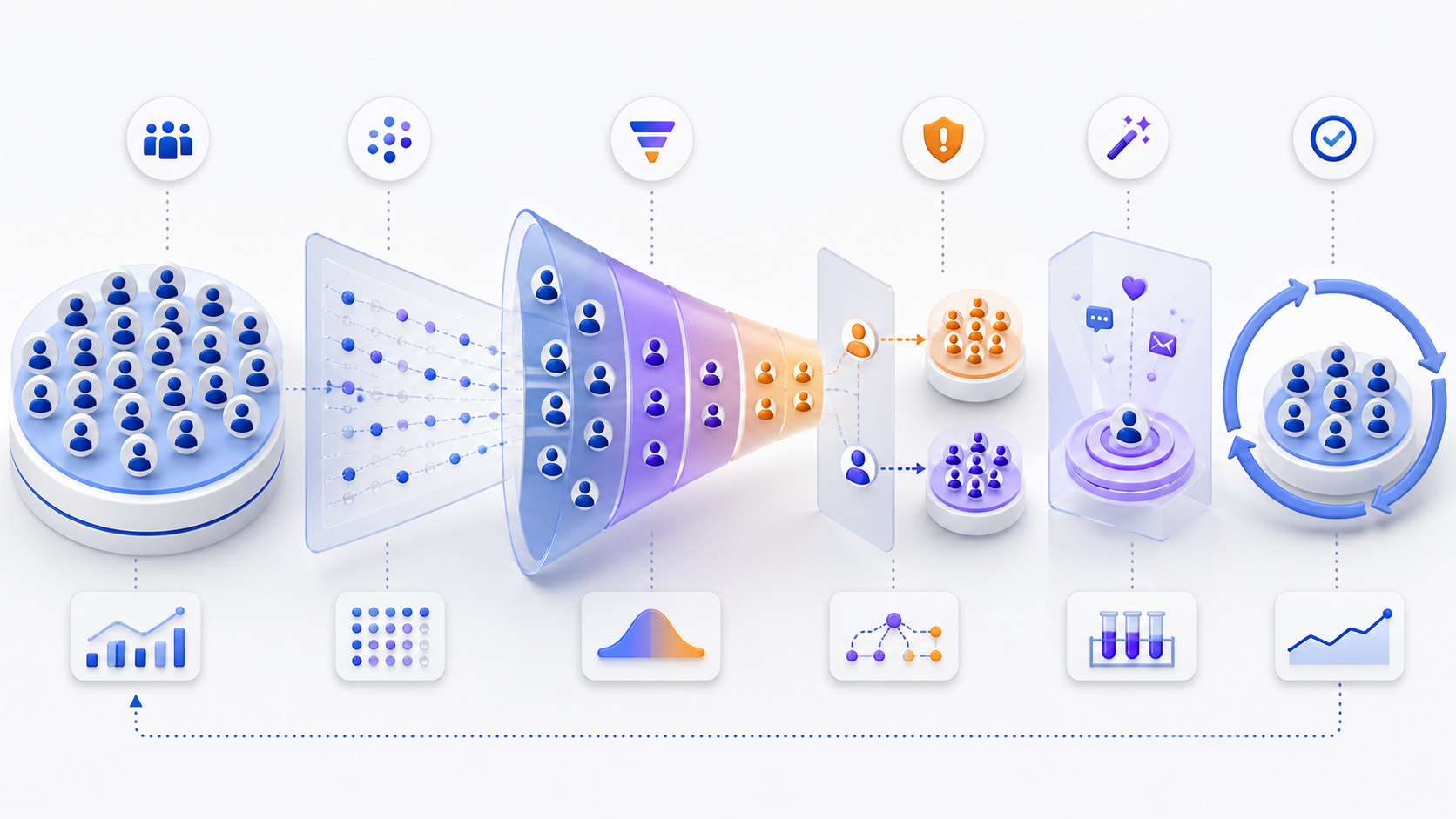
Customer churn is the loss of customers or accounts from a clearly defined eligible base during a stated period. A sound churn program first fixes the event definition and denominator, then finds where losses concentrate, investigates plausible causes, predicts risk only when a real preemptive action exists, and tests whether that action creates incremental retention.
客户流失是指在明确期间内,一部分客户或账户从清楚界定的合格客户群中离开。可靠的流失管理应先固定事件定义和分母,再定位损失集中位置、调查可能原因;只有存在可提前执行的行动时才预测风险,并检验该行动是否带来增量留存。
The basic logo-churn formula is customers lost during the period divided by eligible customers active at the start, multiplied by 100. The formula is simple; the measurement contract is not. Paused accounts, failed payments, downgrades, mergers, seasonal users, reactivations, and customers too new to have a full observation window can change the result.
最基础的客户数流失率公式是:期间内流失的客户数 ÷ 期初合格活跃客户数 × 100。公式很简单,衡量契约却不简单。暂停账户、支付失败、降级、合并、季节性用户、重新激活,以及观察窗口不足的新客户,都会改变结果。
What customer churn means—and what it does not客户流失的含义与边界
Customer attrition and customer turnover are common synonyms for customer churn. In a subscription product, churn may be a cancellation or nonrenewal. In a marketplace it may be a seller or buyer becoming inactive for a specified duration. In retail it may be an inferred lapse after no purchase within a category-specific window. Those events are not interchangeable, so the definition must match the operating decision.
客户流失也常被称为客户流失率、客户减损或客户周转。在订阅产品中,流失可能是取消或不续约;在平台业务中,可能是卖家或买家在指定时长内不再活跃;在零售中,可能是超过品类特定周期仍未购买而推断出的沉默。不同事件不能互换,定义必须服务于真实业务决策。
The customer chooses to leave because of weak fit, limited realized value, price, service experience, competition, a changed need, or an internal organizational event.
客户因匹配度不足、未实现价值、价格、服务体验、竞争选择、需求变化或自身组织事件而主动离开。
The relationship ends through payment failure, expired credentials, compliance constraints, operational errors, account closure, or another process outside the customer's immediate choice.
关系因付款失败、凭证过期、合规限制、操作错误、账户关闭或其他并非客户即时选择的流程而终止。
Churn is a lagging outcome, not a cause. A cancellation code such as “too expensive” is also not necessarily the root cause: it may reflect low adoption, missing capability, poor onboarding, a buyer change, or an account that never fit. Treat reason codes, interviews, support tickets, product events, and billing records as different evidence sources that can corroborate or contradict one another.
流失是滞后结果,不是原因。即使取消原因选择“太贵”,也未必是根因;它可能反映采用不足、能力缺口、入门体验差、采购方变化,或该账户从一开始就不匹配。应把原因代码、访谈、支持工单、产品事件和账单记录视为可以相互印证或矛盾的不同证据源。
How to calculate customer churn rate correctly如何准确计算客户流失率
Customer churn rate = customers lost during the period ÷ eligible customers active at the start × 100
客户流失率 = 期间内流失客户数 ÷ 期初合格活跃客户数 × 100
This start-of-period denominator prevents customers acquired midway through the period from making the original cohort look larger. A monthly figure should use a monthly event rule; an annual figure should not be produced by simply multiplying one month by twelve when risk, seasonality, renewals, and cohort composition vary. When the same starting population and mutually exclusive states are used, logo churn and the customer retention rate formula should sum to 100%.
使用期初分母可以避免期间新获客把原始群体人为放大。月度指标应配套月度事件规则;当风险、季节性、续约节奏与群体构成会变化时,不能简单把某个月乘以十二得到年度流失。期初人群相同、留存与流失状态互斥时,客户数流失率和客户留存率公式相加应为 100%。
| Metric指标 | Numerator分子 | Best use适合用途 | Main caution主要注意点 |
|---|---|---|---|
| Logo churn客户数流失 | Lost customers or accounts流失客户或账户数 | Customer-base health and operating load客户群健康度与运营负荷 | Treating a small and a large account as equal大小账户权重相同 |
| Gross revenue churn总收入流失 | Revenue lost to cancellations and contraction取消与收缩造成的收入损失 | Economic exposure before expansion不含扩张前的经济风险 | Requires stable currency and revenue rules需要统一币种与收入口径 |
| Net revenue retention净收入留存 | Starting revenue minus churn and contraction plus expansion期初收入减流失和收缩,再加扩张 | Combined account-base economics综合账户群经济表现 | Expansion can hide widespread logo losses扩张可能掩盖大量客户数流失 |
| Cohort retention群组留存 | Members still active after the same elapsed time相同经过时长后仍活跃的成员 | Comparing acquisition periods and onboarding changes比较获客期与入门改动 | Needs a consistent cohort entry event需要一致的入组事件 |
Hypothetical example: a subscription service begins April with 800 eligible accounts. During April, 24 cancel and 8 fail to renew under the documented churn rule. April logo churn is (32 ÷ 800) × 100 = 4%. Forty new April accounts are not added to the denominator. If three lost accounts later reactivate, the team should report reactivation separately or apply a documented restatement rule rather than silently editing history.
假设示例:某订阅服务 4 月初有 800 个合格账户。4 月内有 24 个取消,8 个按既定规则未续约,则 4 月客户数流失率为 (32 ÷ 800) × 100 = 4%。4 月新增的 40 个账户不加入分母。如果后来有 3 个流失账户重新激活,团队应单独报告重新激活,或按书面重述规则处理,而不是悄悄修改历史。
Prepare the inputs before churn analysis开展流失分析前准备输入
A model cannot repair an ambiguous outcome or an unstable customer table. Start with the business decision and a small measurement contract. Identify the customer grain, eligibility rules, churn event, observation period, outcome window, allowed data, exclusions, and the owner who can act.
模型无法修复含糊的结果标签或不稳定的客户表。先从业务决策和简明衡量契约开始,明确客户粒度、合格规则、流失事件、观察期、结果窗口、允许使用的数据、排除条件,以及真正能够行动的负责人。
- Write the decision.写清决策。 Replace “understand churn” with a choice such as whether to change first-month onboarding for new self-serve teams.把“了解流失”改写为具体选择,例如是否调整自助团队首月入门流程。
- Fix the entity and event.固定实体与事件。 Choose user, account, household, or contract; document cancellation, nonrenewal, or inactivity thresholds and effective timestamps.选择用户、账户、家庭或合同粒度,并记录取消、不续约或不活跃阈值及其生效时间。
- Build point-in-time features.构建时点一致特征。 Use only usage, billing, support, feedback, contract, and lifecycle facts that were available before the scoring time.仅使用评分时点之前已经可获得的使用、账单、支持、反馈、合同和生命周期事实。
- Reconcile the population.核对总体。 Tie row counts, customer counts, starting balances, losses, reactivations, and exclusions back to trusted operational totals.把行数、客户数、期初余额、流失、重新激活和排除项与可信运营总数对账。
Use governed identifiers and minimize personal data. Free-text tickets and interview notes may contain sensitive information; access, retention, redaction, and purpose limitations still apply. If teams cannot lawfully or reliably join sources, analyze them separately and compare aggregate patterns instead of forcing a customer-level merge.
使用受治理的标识符并尽量减少个人数据。自由文本工单和访谈笔记可能包含敏感信息,仍需遵守访问、保留、脱敏和目的限制。如果团队无法合法或可靠地关联数据源,应分别分析并比较汇总模式,而不是强行在客户层合并。
Diagnose why customers churn without confusing correlation and cause诊断客户为何流失,避免混淆相关与因果
Begin descriptively. Plot churn by entry cohort and time since entry; then compare product, plan, contract, acquisition source, geography, customer size, onboarding path, and support history. Look for when a gap first appears, whether it persists, and whether the denominator is large enough to support a decision. A rising aggregate rate can be a mix shift rather than a deterioration inside every segment.
先做描述性分析。按进入群组和进入后时长绘制流失,再比较产品、方案、合同、获客来源、地区、客户规模、入门路径和支持历史。观察差异首次出现的时间、是否持续,以及分母是否足以支持决策。汇总流失率上升可能只是客户组合变化,并不表示每个分群都在恶化。
| Evidence证据 | Question it can answer可回答问题 | What it cannot prove alone单独无法证明 |
|---|---|---|
| Product events产品事件 | Which behaviors changed before churn?流失前哪些行为发生变化? | Why the behavior changed行为为何变化 |
| Billing records账单记录 | Was loss voluntary, failed-payment, or contract-timed?损失是主动、付款失败还是合同到期? | Whether price caused voluntary churn价格是否导致主动流失 |
| Support conversations支持对话 | Which unresolved frictions were expressed?客户表达了哪些未解决摩擦? | Experience of silent customers沉默客户的体验 |
| Exit surveys and interviews退出调查与访谈 | How customers describe expectations and decisions客户如何描述预期与决策 | Population prevalence without sampling controls无抽样控制时的总体普遍性 |
Turn patterns into testable hypotheses. “Low week-one setup completion causes churn” is too broad. A better hypothesis states the eligible cohort, the specific friction, the proposed change, the primary outcome, the expected time window, and possible harms. Interviews can explain mechanisms; observational data can establish scale and timing; experiments or credible quasi-experimental designs are usually needed to estimate incremental impact.
把模式转化为可检验假设。“首周设置完成率低导致流失”过于宽泛。更好的假设应说明合格群体、具体摩擦、拟议改动、主要结果、预期时间窗口和潜在伤害。访谈可以解释机制,观察数据可以确认规模和时间;要估计增量影响,通常还需要实验或可信的准实验设计。
When customer churn prediction is worth building何时值得建立客户流失预测
Prediction is useful when an intervention can happen before the event, the label is observable soon enough, the cost of outreach is meaningful, and the team can respond at the scoring cadence. If every customer receives the same low-cost improvement, segmentation or experimentation may be more useful than a risk score.
当干预能在事件前发生、标签能及时观察、触达成本具有意义,并且团队能按评分频率响应时,预测才有价值。如果所有客户都应获得同一项低成本改进,分群或实验可能比风险评分更有用。
Predict a documented event within a fixed future horizon from a fixed scoring time. Avoid labels whose meaning changes across products or periods.
从固定评分时点预测固定未来窗口内的书面事件,避免标签含义随产品或期间变化。
Exclude cancellation confirmations, post-event refunds, closed-account states, and any feature created after the decision time.
排除取消确认、事件后退款、已关闭状态,以及决策时点之后才生成的任何特征。
Use time-based holdouts, calibration, precision and recall at operational capacity, lift, and expected decision value—not accuracy alone.
使用按时间留出、校准度、运营容量下的精确率和召回率、提升度及预期决策价值,而非只看准确率。
Track label delay, input drift, score calibration, coverage, intervention overlap, and performance across relevant customer groups.
跟踪标签延迟、输入漂移、评分校准、覆盖率、干预重叠,以及相关客户群之间的表现。
Important distinction: a model can rank customers who resemble previous churners; it does not tell you which action will retain them. High predicted risk, high expected customer value, and high treatment responsiveness are three different quantities. Retention resources should consider all three, plus fairness and customer experience.
重要区别:模型可以排序与历史流失者相似的客户,却不能直接告诉你哪项行动能留住他们。高预测风险、高预期客户价值和高干预响应性是三个不同量,还必须结合公平性和客户体验分配留存资源。
Customer churn analysis example: from signal to decision客户流失分析示例:从信号到决策
This example is hypothetical. A B2B subscription team wants to decide whether to redesign first-month onboarding for newly activated small-team accounts. It defines churn as contract cancellation or nonrenewal within 120 days of activation and excludes trials, internal accounts, fraud closures, and accounts without a full outcome window.
以下为假设示例。某 B2B 订阅团队要决定是否重新设计新激活小团队账户的首月入门流程。团队把流失定义为激活后 120 天内取消合同或不续约,并排除试用、内部账户、欺诈关闭以及结果窗口不足的账户。
- Measure.衡量。 The team builds activation-month cohorts and checks that each starting count, churn event, and exclusion reconciles with billing.团队按激活月份建立群组,并核对每个期初数量、流失事件和排除项是否与账单一致。
- Locate.定位。 The gap concentrates among accounts that do not complete a key setup dependency by day seven; no similar gap appears in larger managed accounts.差异集中在第七天前未完成关键设置依赖的小团队账户,大型托管账户中没有类似差异。
- Corroborate.印证。 Support themes and sampled interviews suggest unclear permissions block setup. The evidence supports a hypothesis, not yet a causal conclusion.支持主题和抽样访谈表明权限说明不清阻碍了设置;证据支持假设,但尚不是因果结论。
- Test.测试。 Eligible new accounts are randomly assigned to the existing flow or a clearer permissions checklist with guided recovery. The team predefines setup completion, 120-day retention, support burden, and opt-out complaints.合格新账户随机进入现有流程或带引导恢复的清晰权限清单。团队预先定义设置完成、120 天留存、支持负荷和退出投诉指标。
- Decide.决策。 The change ships only if the confidence interval, operational cost, and adverse indicators meet the decision rule. A higher completion rate alone is insufficient if retention does not improve.只有置信区间、运营成本和不利指标满足决策规则时才上线改动;若留存没有改善,仅完成率提高还不够。
How to reduce customer churn with testable actions如何通过可检验行动降低客户流失
Match the intervention to the diagnosed mechanism. Failed-payment churn may call for card-updater logic, retry timing, and clear recovery notices. Weak activation may call for removing setup friction or revealing value sooner. Product-fit churn may require sharper qualification and expectation setting rather than more reminders. Service failures may require root-cause repair, not a discount that masks recurring harm.
让干预与诊断机制匹配。付款失败流失可能需要更新银行卡逻辑、重试时机和清晰的恢复通知;激活不足可能需要消除设置摩擦或更早呈现价值;产品匹配问题可能需要更严格的资格判断与预期管理,而不是更多提醒;服务故障则需要根因修复,而非用折扣掩盖反复伤害。
| Situation情境 | Proportionate action适度行动 | Verification验证 |
|---|---|---|
| Payment failure付款失败 | Recovery workflow and clearer notices恢复流程与更清晰通知 | Recovered revenue, complaint rate, unintended duplicate charges恢复收入、投诉率、意外重复扣款 |
| First-value friction首次价值摩擦 | Simplify the blocked step and add contextual guidance简化受阻步骤并增加情境引导 | Task completion, later retention, support demand任务完成、后续留存、支持需求 |
| Poor initial fit初始匹配差 | Improve qualification and make limitations explicit改善资格判断并明确限制 | Cohort quality, conversion, refund and churn together同时看群组质量、转化、退款与流失 |
| Unresolved reliability issue未解决可靠性问题 | Fix failure mode and communicate recovery honestly修复故障模式并如实沟通恢复 | Incident recurrence, affected-customer retention, trust signals事故复发、受影响客户留存、信任信号 |
Avoid contacting customers merely because a score is high. Define who is eligible, frequency caps, sensitive attributes that must not drive treatment, manual review rules, and an opt-out path. Measure incremental outcomes against a comparison, including margin, support cost, customer satisfaction, complaints, and downstream behavior. Stopping a cancellation today can be harmful if the intervention creates confusion or traps a poorly matched customer.
不要仅因评分高就触达客户。应定义合格对象、频率上限、不得驱动干预的敏感属性、人工复核规则和退出路径。相对于比较组衡量增量结果,并同时考虑毛利、支持成本、客户满意度、投诉和下游行为。如果干预造成困惑或困住不匹配客户,即使今天阻止取消,也可能带来伤害。
Analyze prepared churn data with InfiniSynapse使用 InfiniSynapse 分析准备好的流失数据
Once the measurement contract and governed inputs are ready, a multi-source analytical workspace can help profile data quality, calculate cohort tables, compare segments, summarize support or interview themes, surface contradictions, create reproducible tables and charts, and document validation checks. Human owners remain responsible for lawful data use, label validity, causal claims, intervention design, and customer decisions.
当衡量契约和受治理输入准备完成后,多源分析工作区可以协助查看数据质量、计算群组表、比较分群、汇总支持或访谈主题、发现矛盾、生成可复现表格与图表并记录验证检查。合法数据使用、标签有效性、因果结论、干预设计和客户决策仍由人类负责人承担。
Prepare a customer- or account-level table, data dictionary, churn rule, observation and outcome windows, snapshot timestamp, eligibility and exclusion logic, permitted supporting files, and trusted reconciliation totals. Then use the InfiniSynapse data analysis app to examine those prepared sources and produce traceable analysis artifacts. The app is not presented here as a dedicated churn-prevention system and does not automatically prove causes or execute retention campaigns.
请准备客户或账户级表格、数据字典、流失规则、观察与结果窗口、快照时间、合格与排除逻辑、允许使用的支持文件,以及可信对账总数。随后可使用 InfiniSynapse 数据分析应用检查这些已准备的数据源并生成可追溯分析产物。本页不把该应用描述为专用流失预防系统;它不会自动证明原因或执行留存活动。
Open the InfiniSynapse data analysis app打开 InfiniSynapse 数据分析应用Adjacent methods include customer-insight work to combine qualitative and quantitative evidence, customer segmentation to define decision-relevant groups, and behavioral segmentation to structure event patterns. For a currently published companion page, use the marketing data analysis guide for acquisition and campaign measurement.
相邻方法包括:用客户洞察组合定性与定量证据,用客户细分定义与决策相关的群体,并用行为细分组织事件模式。当前已发布的配套页面可参考营销数据分析指南处理获客与活动衡量。
Common churn-analysis mistakes and a validation checklist常见流失分析错误与验证清单
A cancellation, nonrenewal, downgrade, and inactivity event should not be mixed without explicit reason and restatement.
取消、不续约、降级和不活跃事件不应在缺乏明确理由和重述时混合。
New customers, ineligible accounts, or partial-window observations can make a rate look better or worse.
新客户、不合格账户或窗口不完整的观察会让流失率被人为改善或恶化。
Post-cancellation status, refund events, and future support codes can create unrealistic model performance.
取消后状态、退款事件和未来支持代码会制造不现实的模型表现。
When churn is rare, predicting everyone will stay can look accurate while finding no actionable risk.
当流失稀少时,预测所有人留存也可能看似准确,却找不到任何可行动风险。
A feature associated with churn is not proof that changing it will improve retention.
与流失相关的特征并不能证明改变它会改善留存。
Discounts and outreach can reduce margin, create inequity, fatigue customers, or reward cancellation threats.
折扣和触达可能降低毛利、制造不公平、打扰客户或奖励取消威胁。
Before using a result: reproduce the starting population; reconcile churn events to operations; inspect missingness and duplicate entities; verify event timestamps; compare cohorts at equal tenure; test sensitivity to reasonable definitions; use a forward-looking holdout for models; inspect calibration and group performance; record intervention eligibility; and define when a result should not be used.
使用结果前:复现期初总体;把流失事件与运营系统对账;检查缺失和重复实体;验证事件时间戳;在相同客户年龄下比较群组;测试合理定义变化的敏感性;模型使用前瞻留出集;检查校准与分群表现;记录干预资格;并明确结果不应使用的情形。
Customer churn FAQ客户流失常见问题
Customer churn is the loss of customers or accounts from a defined eligible customer base during a stated period. Document the event and eligibility rules before comparing rates.
客户流失是指在明确期间内,客户或账户从定义好的合格客户群中离开。比较流失率之前,应先记录事件和合格规则。
For simple logo churn, divide eligible customers lost during the period by eligible customers active at the start and multiply by 100. Exclude new customers from the starting denominator and document reactivations, pauses, and exclusions.
简单客户数流失率为:期间内流失的合格客户 ÷ 期初活跃合格客户 × 100。期中新客户不进入期初分母,并记录重新激活、暂停和排除规则。
There is no universal good rate. A relevant comparison matches the business model, customer size, contract cadence, geography, product maturity, cohort age, and exact metric definition. Your own stable cohorts and decision economics are often more useful than a context-free benchmark.
不存在通用的“好”流失率。有效比较应匹配商业模式、客户规模、合同节奏、地区、产品成熟度、群组年龄和准确指标定义。自身稳定群组和决策经济性通常比脱离背景的基准更有用。
Customers may leave voluntarily because of fit, unrealized value, price, service, competition, or organizational change, or involuntarily because of payment and operational failures. A pattern is a hypothesis until other evidence or a suitable test corroborates it.
客户可能因匹配度、未实现价值、价格、服务、竞争或组织变化主动离开,也可能因付款和运营故障被动离开。数据模式只是一个假设,需由其他证据或适当测试印证。
Define an observable label and prediction horizon, build features only from information available before scoring, split by time, compare against a simple baseline, and evaluate calibration and decision value rather than accuracy alone.
定义可观察标签和预测窗口,仅用评分前可获得的信息构建特征,按时间划分数据,与简单基线比较,并评估校准和决策价值,而不是只看准确率。
Prioritize a diagnosed friction, select eligible customers, test a proportionate intervention against a suitable comparison, and measure incremental retention, cost, customer experience, and adverse effects. A risk score alone is not a retention strategy.
优先处理已诊断摩擦,选择合格客户,把适度干预与合适比较组进行测试,并衡量增量留存、成本、客户体验和不利影响。单独的风险评分不是留存策略。
Teams moving from churn definition to model selection can use the customer churn analysis model guide for cohort, survival, diagnostic, and predictive options.
Sources and further verification来源与进一步核验
- IBM overview of customer churn and voluntary versus involuntary churn
- Salesforce guide to customer churn and the start-of-period churn-rate formula
- scikit-learn model-evaluation documentation
- NIST AI Risk Management Framework
Formula conventions vary across organizations. Use these sources to understand common concepts, then retain the written rules, query version, snapshot date, and reconciliation results used by your own organization.
不同组织的公式口径会有差异。可用以上来源理解常见概念,但仍应保留本组织实际采用的书面规则、查询版本、快照日期和对账结果。