
What customer behavior analysis means客户行为分析是什么
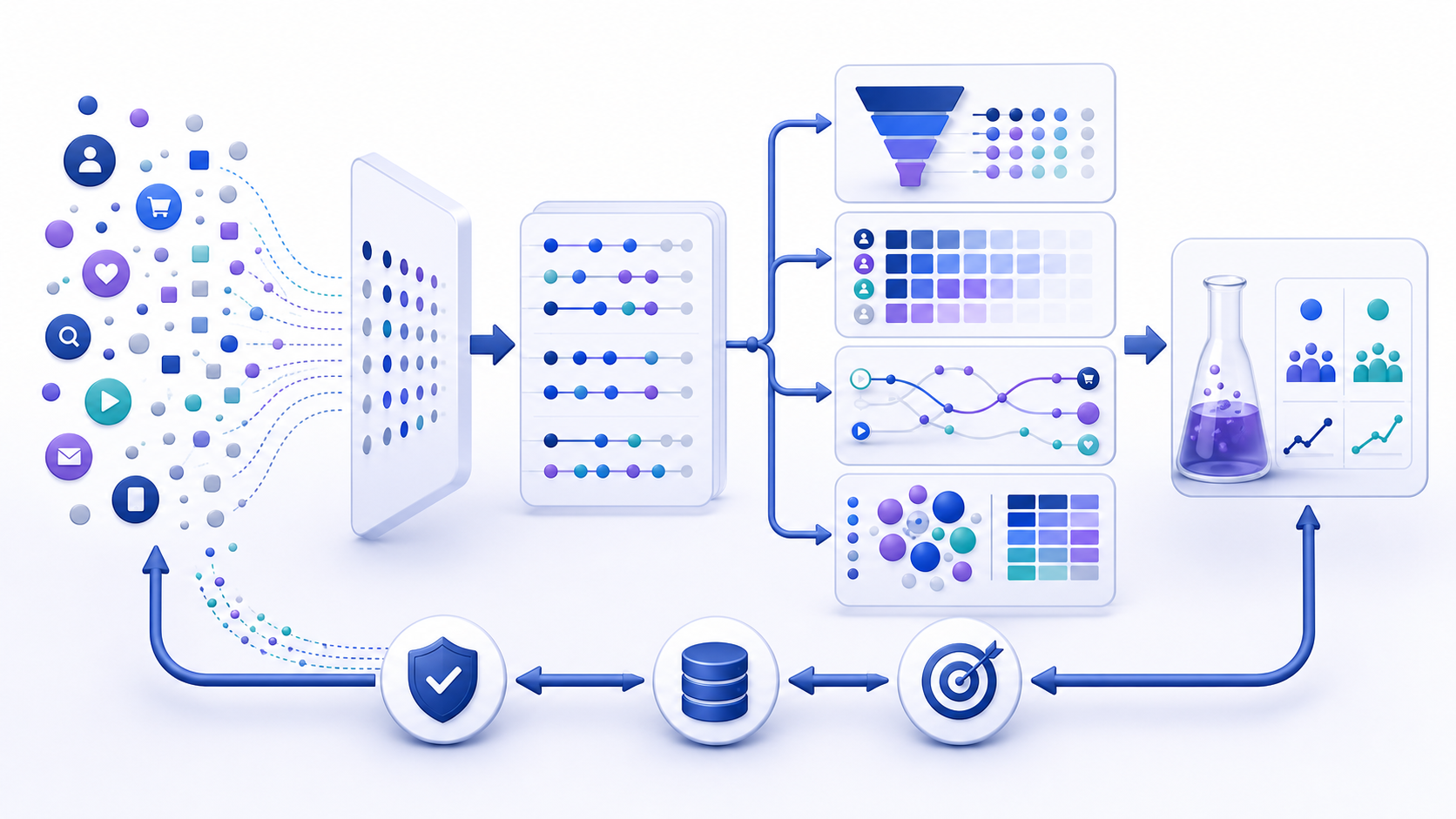
Customer behavior analysis is the systematic study of observable customer interactions across a defined journey and time period so a team can make and test a specific business decision. It organizes evidence such as product events, purchases, campaign responses, support contacts, returns, and research into comparable timelines, then uses methods such as funnel, cohort, retention, path, and RFM analysis to locate meaningful differences.
客户行为分析是在明确旅程与时间范围内,系统研究可观察的客户互动,从而帮助团队制定并检验一项具体业务决策。它把产品事件、购买、营销响应、客服接触、退货和研究资料等证据整理为可比较的时间线,再运用漏斗、队列、留存、路径与 RFM 等方法寻找有意义的差异。
The output is not a personality verdict or a guaranteed prediction. A click shows that an instrument recorded a click; it does not prove motivation, satisfaction, or causal influence. Good customer behavior analytics separates observation from interpretation, compares the pattern with an appropriate denominator, records measurement limitations, and turns the result into a falsifiable action such as a usability test, onboarding experiment, service change, or monitored retention offer.
分析结果不是对人格的判定,也不是必然准确的预测。一次点击只说明测量系统记录到了点击,不能证明动机、满意度或因果影响。可靠的客户行为分析会把观察与解释分开,使用合适分母比较模式,记录测量局限,并把结果转化为可证伪的行动,例如可用性测试、新手引导实验、服务调整或受监控的留存方案。
When customer behavior analysis is useful—and when it is not客户行为分析何时有用,何时不适用
A measurable behavior sits between a defined customer group and an actionable outcome: checkout completion, feature adoption, repeat purchase, renewal, support escalation, return, or reactivation.
在明确客户群与可执行结果之间,存在可测量的行为,例如完成结账、采用功能、重复购买、续约、客服升级、退货或重新激活。
The team lacks a decision, the behavior cannot be measured reliably, the sample excludes the relevant population, the intended action is prohibited, or leadership wants certainty about motivation from observational data alone.
团队没有明确决策,行为无法可靠测量,样本排除了相关人群,计划行动不被允许,或管理层想仅凭观察数据确定客户动机。
Common use cases include diagnosing where qualified customers leave an onboarding or purchase funnel; comparing retention by acquisition or activation cohort; identifying sequences that often precede a support escalation; evaluating purchase behavior by recency, frequency, and value; and checking whether a product or policy change altered behavior for an eligible population. Each question needs an explicit unit of analysis. A row may represent an event, order, session, customer, account, household, or experiment assignment; mixing those grains without a documented transformation creates misleading rates.
常见用途包括:诊断合格客户在哪个引导或购买漏斗环节退出;比较不同获客或激活队列的留存;识别经常发生在客服升级之前的行为序列;按最近购买时间、频率与价值评估购买行为;以及检查产品或政策变更是否改变了合格人群的行为。每个问题都需要明确分析单位。一行数据可能代表事件、订单、会话、客户、账户、家庭或实验分配;若没有记录转换逻辑就混用粒度,比例会产生误导。
Do not use behavioral traces as a substitute for listening. If the decision depends on unmet needs, perceived effort, reasons for cancellation, or the meaning customers assign to an experience, combine event data with interviews, surveys, usability research, or support evidence. Do not use customer behavior analysis to infer protected or highly sensitive traits, bypass consent, target vulnerable people unfairly, or make consequential automated decisions without appropriate legal, ethical, and human review.
不要用行为轨迹替代倾听客户。如果决策依赖未满足需求、感知费力度、取消原因或客户赋予体验的意义,应把事件数据与访谈、调查、可用性研究或客服证据结合。也不得借客户行为分析推断受保护或高度敏感特征、绕过同意、不公平地定向脆弱人群,或在缺少适当法律、伦理与人工复核时作出重大自动化决策。
Prepare customer behavior data before analysis分析前如何准备客户行为数据
Start with a one-page decision brief: the business question, population, observation window, outcome, action owner, allowed actions, prohibited uses, and success guardrails. Then inventory each source and ask whether it is necessary, permitted, current, and joinable at the required grain. Typical sources include website or app events, transactions, subscriptions, CRM stages, campaign exposure, service contacts, returns, survey responses, and experiment assignments. More sources are not automatically better; each join can introduce missingness, duplicates, timing conflicts, and privacy risk.
先写一页决策简报:业务问题、人群、观察窗口、结果指标、行动负责人、允许的行动、禁止用途与成功护栏。随后盘点每个数据源,确认它是否必要、获准使用、足够新,并能按所需粒度关联。常见来源包括网站或应用事件、交易、订阅、CRM 阶段、营销触达、客服接触、退货、调查回答与实验分配。数据源越多并不必然越好;每次关联都可能引入缺失、重复、时间冲突和隐私风险。
| Field字段 | Purpose用途 | Checks检查 |
|---|---|---|
| Pseudonymous customer or account key假名化客户或账户键 | Link permitted interactions across time跨时间关联获准使用的互动 | Uniqueness, stability, sign-in coverage, merge rules唯一性、稳定性、登录覆盖、合并规则 |
| Event name and timestamp事件名称与时间戳 | Construct sequence, elapsed time, funnels, and cohorts构建序列、耗时、漏斗与队列 | Time zone, clock precision, late arrival, duplicate retries时区、时间精度、延迟到达、重试重复 |
| Event parameters事件参数 | Describe product, channel, step, quantity, or context描述产品、渠道、步骤、数量或情境 | Allowed values, nulls, cardinality, version changes允许值、空值、基数、版本变化 |
| Outcome and eligibility结果与资格 | Define numerator, denominator, and who could convert定义分子、分母及具备转化可能的人群 | Window, censoring, refunds, reversals, exclusions窗口、截尾、退款、冲正、排除规则 |
| Governance fields治理字段 | Apply consent, region, retention, and access rules执行同意、地区、保留与访问规则 | Lawful basis, notice, consent state, minimization合法基础、告知、同意状态、数据最小化 |
Keep an event dictionary beside the data. For every event, define its trigger, actor, source system, timestamp rule, parameters, first release, known changes, owner, and test procedure. Google Analytics describes an event as a measured interaction or occurrence and recommends prescribed events and parameters where available. That illustrates a broader rule: consistent semantics matter more than a large event count. Do not place direct personal identifiers into analytics fields simply because a platform accepts a string.
数据旁应保留事件字典。对每个事件记录触发条件、执行主体、来源系统、时间规则、参数、首次发布版本、已知变更、负责人和测试方法。Google Analytics 把事件定义为被测量的互动或发生事项,并建议在适用时使用规定的事件及参数。这体现了一个更广泛的原则:语义一致性比事件数量更重要。不要因为平台能接收字符串,就把直接个人标识符写入分析字段。
Identity is a measurement choice, not ground truth. Anonymous devices, signed-in users, shared accounts, deleted cookies, offline purchases, and cross-device activity can produce different counts. Document when records are joined, never pretend a device equals a person, and report coverage beside customer-level results.
身份是一项测量选择,不是绝对事实。匿名设备、登录用户、共享账户、已删除 Cookie、线下购买与跨设备活动会产生不同计数。请记录何时关联记录,不要把设备假装成人,并在客户级结果旁报告身份覆盖率。
How to conduct customer behavior analysis step by step如何逐步开展客户行为分析
- Frame one decision and one observable outcome.明确一项决策与一个可观察结果。Replace “understand our customers” with a decision such as “reduce eligible trial abandonment before activation without increasing support contacts.” Define the population, window, baseline, action owner, and guardrails before opening a dashboard.把“了解客户”改写为可执行问题,例如“在不增加客服接触的前提下,降低合格试用客户在激活前的流失”。打开仪表板前,先定义人群、时间窗口、基线、行动负责人和护栏。
- Audit collection and permission.审计采集与使用权限。Trace each required field to its source, confirm the event trigger, consent or other applicable basis, retention rule, and allowed use. Remove unnecessary identifiers and exclude records that are not eligible for the decision.把每个必需字段追溯到来源,确认事件触发条件、同意或其他适用基础、保留规则及允许用途。移除不必要标识符,并排除不符合决策资格的记录。
- Build a canonical timeline.构建规范时间线。Normalize timestamps and currencies, map event versions, deduplicate retries, apply refund and cancellation logic, and produce one ordered interaction stream at the declared customer or account grain. Preserve raw values and transformation code for review.统一时间戳与币种,映射事件版本,去除重试重复,应用退款和取消规则,并按声明的客户或账户粒度生成有序互动流。保留原始值与转换代码供复核。
- Profile data quality before behavior.先分析数据质量,再分析行为。Reconcile row counts and revenue to trusted controls. Measure missing IDs, unknown events, duplicate keys, late arrivals, impossible sequences, and instrumentation gaps by date, channel, platform, and app version. A sudden behavioral shift may be a release defect.把行数与收入同可信控制值对账。按日期、渠道、平台和应用版本测量缺失 ID、未知事件、重复键、延迟到达、不可能序列和埋点缺口。行为突然变化可能只是发布缺陷。
- Choose the method that matches the question.选择与问题匹配的方法。Use funnels for ordered steps, cohorts for change across entry periods, retention for return behavior, paths for common sequences, RFM for purchase cadence and value, and experiments for causal effects. Do not select a method merely because a chart is available.有序步骤使用漏斗,进入时期差异使用队列,回访行为使用留存,常见序列使用路径,购买节奏与价值使用 RFM,因果影响使用实验。不要只因为系统提供某张图就选择方法。
- Segment comparisons without hiding denominators.比较细分时不要隐藏分母。Compare meaningful groups such as acquisition source, product plan, activation route, tenure, or documented behavioral segment. Show eligible customers, observations, uncertainty, and missingness beside every rate. Avoid dozens of exploratory cuts that manufacture chance findings.比较获客来源、产品套餐、激活路径、客户年限或有文档说明的行为细分等有意义群组。每个比例旁都展示合格客户数、观察数、不确定性与缺失情况。避免进行大量探索性切分而制造偶然发现。
- Investigate explanations with additional evidence.用额外证据调查解释。Inspect page or screen context, error logs, release history, campaign eligibility, support themes, survey responses, and interviews. Ask what else could produce the pattern. Separate a descriptive statement from a causal or motivational claim.检查页面或屏幕情境、错误日志、发布历史、活动资格、客服主题、调查回答与访谈。追问还有什么会产生该模式,并把描述性陈述与因果或动机主张分开。
- Turn the insight into a predeclared test.把洞察转化为预先声明的测试。Specify the change, target population, primary metric, guardrails, expected direction, analysis window, stopping rule, and owner. Prefer a randomized experiment when feasible; otherwise use a guarded rollout or quasi-experimental design and state its limitations.明确改动、目标人群、主要指标、护栏、预期方向、分析窗口、停止规则和负责人。可行时优先采用随机实验;否则使用受控发布或准实验设计,并明确局限。
- Monitor, document, and retire.监控、记录并淘汰。Track adoption, outcome, harms, data drift, and instrumentation health after launch. Save the decision, code, definitions, caveats, and result. Retire reports and behavioral segments when the decision ends or definitions become stale.上线后持续跟踪采用情况、结果、伤害、数据漂移与埋点健康。保存决策、代码、定义、注意事项和结果。当决策结束或定义过时时,停止使用相关报告与行为细分。
Choose a customer behavior analytics method如何选择客户行为分析方法
| Method方法 | Question answered回答的问题 | Minimum structure最低数据结构 | Main caution主要注意事项 |
|---|---|---|---|
| Funnel analysis漏斗分析 | Where do eligible customers stop in an ordered process?合格客户在有序流程的哪里停止? | Customer key, ordered steps, timestamps, eligibility window客户键、有序步骤、时间戳、资格窗口 | Open funnels and repeated steps can inflate conversion开放漏斗与重复步骤可能抬高转化 |
| Cohort analysis队列分析 | How does behavior differ by start period or shared exposure?行为如何随进入时期或共同暴露而变化? | Cohort rule, start date, elapsed periods, outcome队列规则、开始日期、经过周期、结果 | Seasonality and changing acquisition mix confound trends季节性与获客结构变化会混淆趋势 |
| Retention analysis留存分析 | Who returns or remains active after a defined start?谁在明确起点后返回或保持活跃? | Activation rule, return event, time buckets, censoring激活规则、返回事件、时间分桶、截尾 | “Active” must represent product value, not any event“活跃”应代表产品价值,而非任意事件 |
| Journey or path analysis旅程或路径分析 | Which sequences commonly occur before or after an outcome?哪些序列常出现在结果前后? | Ordered events, session rule, entry and exit boundaries有序事件、会话规则、入口与出口边界 | Frequent paths are not necessarily causal or desirable高频路径不必然具有因果性或理想性 |
| RFM analysisRFM 分析 | How recently and frequently did customers buy, and how much?客户最近何时购买、购买多频繁、价值多少? | Customer key, completed orders, date, comparable net value客户键、完成订单、日期、可比净值 | Thresholds are business rules, not universal truths阈值是业务规则,不是普遍真理 |
| Experiment实验 | Did a controlled change cause an outcome difference?受控改动是否导致结果差异? | Assignment, exposure, outcome, guardrails, analysis plan分配、暴露、结果、护栏、分析计划 | Noncompliance, spillover, peeking, and low power不遵从、溢出、偷看结果与统计功效不足 |
These methods complement rather than replace one another. A funnel can identify a large transition loss; path analysis can reveal the sequences surrounding it; interviews can explore perceived friction; and an experiment can test a proposed fix. Behavioral segmentation may summarize recurring patterns into groups, but labels should remain neutral and connected to the rule that produced them. For a dedicated grouping workflow, see the InfiniSynapse behavioral segmentation guide. For customer-level retention outcomes, see the customer retention rate calculation and analysis guide.
这些方法相互补充,而非互相替代。漏斗可以发现某次转换的大量流失;路径分析可以揭示其周围序列;访谈可以探索感知阻力;实验则能检验拟议修复。行为细分可以把重复模式总结为群组,但标签应保持中性,并关联到生成它们的规则。如需专门的分组流程,请参阅 InfiniSynapse 行为细分指南;如需客户级留存结果,请查看客户留存率计算与分析指南。
Customer behavior analysis example: trial activation客户行为分析示例:试用激活
Hypothetical example: a subscription product wants to improve trial activation. The team defines activation as an eligible new account completing an import and producing its first saved result within seven days. The intended action is to revise import guidance; the guardrails are import errors, support contacts per eligible account, and cancellation requests. All figures below are illustrative, not InfiniSynapse customer data or a performance claim.
假设示例:某订阅产品希望提高试用激活。团队把激活定义为:合格新账户在七天内完成一次导入并生成首个已保存结果。计划行动是修改导入引导;护栏指标是导入错误、每个合格账户的客服接触和取消请求。以下数字仅为示例,并非 InfiniSynapse 客户数据或性能声明。
After reconciling eligible trial starts to the billing system, the analyst builds a closed funnel: trial started → import opened → file validated → import completed → result saved. In an illustrative sample of 1,000 eligible accounts, 620 open import, 430 pass validation, 390 complete import, and 350 save a result. The largest absolute transition loss occurs before import opens, while the largest proportional loss among starters occurs between opening and validation. The distinction matters: the first may reflect discoverability; the second may reflect file requirements, but neither explanation is proven.
分析人员先把合格试用开始数与计费系统对账,再建立封闭漏斗:开始试用 → 打开导入 → 文件通过验证 → 完成导入 → 保存结果。在一个包含 1,000 个合格账户的假设样本中,620 个打开导入,430 个通过验证,390 个完成导入,350 个保存结果。绝对流失最多发生在打开导入之前,而已开始导入者中的比例流失最大处位于打开与通过验证之间。两者区别很重要:前者可能与入口发现性有关,后者可能与文件要求有关,但这些解释都尚未得到证明。
The team checks the pattern by app version, acquisition source, file type, account size, and week. It discovers that a release changed validation-event timing, so pre/post rates are not directly comparable until the event definition is repaired. Support-theme review and five usability sessions then suggest that some eligible users misunderstand the required column mapping. The analyst labels this a combined observation and research inference, not a causal result.
团队按应用版本、获客来源、文件类型、账户规模和周次复核模式,发现某次发布改变了验证事件的记录时机,因此修复事件定义前不能直接比较发布前后比例。随后,客服主题复核和五次可用性测试表明,一些合格用户误解了必需的列映射。分析人员把它标记为“观察结果与研究推断的组合”,而不是因果结论。
A randomized test compares revised guidance with the current flow for eligible new accounts. The analysis plan names activation as the primary outcome, the three guardrails, a fixed window, and a minimum sample rule. A useful result is not merely a higher activation percentage: the change must also avoid a material increase in errors, support burden, or cancellations. If randomization is impossible, a phased rollout can provide weaker evidence, but seasonality, acquisition mix, and concurrent releases must be reported as alternative explanations.
随机测试在合格新账户中比较新版引导与现有流程。分析计划预先指定激活为主要结果、三项护栏、固定窗口与最低样本规则。有用结果不仅是激活比例更高,还必须避免错误、客服负担或取消出现实质增加。若无法随机分配,可以分阶段发布获得较弱证据,但必须把季节性、获客结构和同期发布列为替代解释。
Validate customer behavior insights before acting行动前验证客户行为洞察
- Reconcile trusted totals. Match eligible customers, orders, net revenue, refunds, and major outcomes to the system of record. Explain differences instead of silently accepting them.对账可信总量。把合格客户、订单、净收入、退款和主要结果与记录系统核对。解释差异,不要默默接受。
- Repeat definitions. Recompute the result with sensible alternative windows, session rules, inclusion criteria, and deduplication logic. A conclusion that flips under a minor reasonable choice is fragile.复算定义。使用合理的替代窗口、会话规则、纳入标准与去重逻辑重新计算。如果结论因小幅合理选择而反转,它就不稳健。
- Inspect denominators and uncertainty. Show counts beside percentages, confidence intervals where appropriate, and warnings for sparse groups. Avoid ranking many small segments on noisy point estimates.检查分母与不确定性。在百分比旁展示数量,适用时给出置信区间,并对稀疏群组发出警告。不要按嘈杂点估计给许多小群体排名。
- Check measurement stability. Plot event volume, missing fields, app versions, and source coverage across time. Mark launches, outages, consent changes, and schema migrations.检查测量稳定性。随时间绘制事件量、缺失字段、应用版本与来源覆盖,并标记发布、故障、同意机制变化与 Schema 迁移。
- Seek disconfirming evidence. Examine customers who do not fit the pattern, compare holdout periods, review qualitative evidence, and ask another analyst to reproduce the transformation.寻找反证。检查不符合模式的客户,比较留出时期,复核定性证据,并请另一位分析人员复现转换。
- Validate the action, not just the chart. Measure the proposed change against a predeclared outcome and guardrails. If the action cannot be tested or monitored, the analysis is not yet decision-ready.验证行动,而不只是图表。根据预先声明的结果与护栏衡量拟议改动。若行动无法测试或监控,分析尚未达到决策就绪状态。
Record an evidence label beside every important statement: fact for a documented definition or verified count; observation for a pattern in the analyzed data; inference for a plausible explanation; and hypothesis for a claim that requires a test. This small discipline prevents a customer journey chart from becoming an unsupported story.
在每项重要陈述旁记录证据标签:有文档定义或已核验计数标为事实;分析数据中的模式标为观察;合理解释标为推断;需要测试的主张标为假设。这项小习惯能避免客户旅程图演变为缺少支持的故事。
Common customer behavior analysis mistakes客户行为分析的常见错误
A dashboard answers the questions encoded by its collection and definitions. Begin with a decision, then determine whether the metric is valid for it.
仪表板只能回答其采集与定义编码的问题。应先明确决策,再判断指标对该决策是否有效。
Cookie loss, shared devices, multiple devices, and sign-in coverage distort identity. Report the identity rule and coverage.
Cookie 丢失、共享设备、多设备与登录覆盖都会扭曲身份。必须报告身份规则与覆盖率。
Only customers eligible and observed long enough should enter a conversion or retention denominator. New cohorts may be right-censored.
只有符合资格且观察时间足够的客户才能进入转化或留存分母。较新队列可能存在右截尾。
The same action can reflect value, confusion, habit, constraint, or an instrumentation bug. Pair behavior with research or experiments.
同一动作可能来自价值、困惑、习惯、约束或埋点错误。应结合研究或实验。
Refunds, cancellations, offline behavior, blocked tracking, and non-use can change the conclusion. Define what is not observed.
退款、取消、线下行为、跟踪受阻与未使用都会改变结论。需要定义哪些内容未被观察。
More clicks or messages may worsen trust, effort, service burden, or long-term value. Use guardrails and monitor harms.
更多点击或消息可能损害信任、提高费力程度与服务负担,或降低长期价值。应设置护栏并监控伤害。
Privacy and governance are part of method quality. Apply data minimization, access control, retention limits, purpose limitation, and appropriate notice or consent before analysis. Google’s Analytics policy, for example, requires necessary rights and authorizations, proper notice, consent or an opt-out where applicable, and prohibits sending data that lets Google personally identify an individual. Regulatory requirements differ by jurisdiction and use case, so involve qualified privacy and legal reviewers rather than treating this guide as legal advice.
隐私与治理属于方法质量的一部分。分析前应执行数据最小化、访问控制、保留期限、目的限制,以及适当的告知或同意。例如,Google Analytics 政策要求具备必要权利与授权、提供适当告知,并在适用时取得同意或提供退出机制,同时禁止发送可让 Google 识别个人身份的数据。监管要求因司法辖区和用途而异,因此应让合格的隐私与法律人员参与,而不能把本指南当作法律意见。
Analyze prepared customer behavior data with InfiniSynapse用 InfiniSynapse 分析已准备的客户行为数据
Once definitions, permissions, and files are ready, InfiniSynapse can support analysis across connected databases and data sources using natural-language analytical workflows. For this customer behavior analysis task, use it to profile tables, reconcile counts, transform event streams, calculate funnel or cohort summaries, compare documented segments, produce reviewable tables and charts, and preserve an analytical trail. The product does not repair missing instrumentation, obtain consent, determine legal compliance, infer motivation with certainty, or prove causality from observational data.
当定义、权限与文件准备完成后,InfiniSynapse 可以通过自然语言分析工作流支持跨已连接数据库和数据源的分析。在本客户行为分析任务中,可用它检查表结构、对账计数、转换事件流、计算漏斗或队列摘要、比较有文档说明的群组、生成可复核的表格和图表,并保留分析轨迹。产品不会修复缺失埋点、取得同意、判断法律合规性、确定性推断动机,也不会仅凭观察数据证明因果。
Prepare a CSV, spreadsheet, or permitted database connection with a documented grain; pseudonymous keys; event names and timestamps; eligibility and outcome fields; consent and exclusion rules; event-version notes; and control totals for customers, orders, revenue, refunds, or other relevant outcomes. Then ask for a reproducible quality audit before requesting patterns or recommendations.
准备 CSV、电子表格或获准使用的数据库连接,并提供有文档说明的粒度、假名化键、事件名称与时间戳、资格与结果字段、同意与排除规则、事件版本说明,以及客户、订单、收入、退款或其他相关结果的控制总量。先要求执行可复现的数据质量审计,再请求模式或建议。
Open the InfiniSynapse data analysis app打开 InfiniSynapse 数据分析应用A strong first request is: “Profile row counts, date coverage, missing customer keys, duplicate event keys, unknown events, event volume by source and version, impossible sequences, and reconciliation differences against these approved totals. Do not interpret customer behavior until unexplained quality issues are listed.” Keep domain owners responsible for metric meaning, governance, interpretation, and action approval.
一个稳健的首个请求可以是:“检查行数、日期覆盖、缺失客户键、重复事件键、未知事件、按来源与版本统计的事件量、不可能序列,以及与这些批准总量的对账差异。在列出无法解释的质量问题前,不要解释客户行为。”指标含义、治理、解释和行动批准仍由领域负责人承担。
Best practices for repeatable customer behavior analysis可重复客户行为分析的最佳实践
- Version definitions with code. Store the event dictionary, identity logic, eligibility rule, metric formula, time zone, window, and transformations beside the analysis.随代码管理定义版本。把事件字典、身份逻辑、资格规则、指标公式、时区、窗口与转换同分析一起保存。
- Preserve raw evidence. Build derived customer timelines from immutable or auditable sources; do not overwrite raw fields to make a pattern cleaner.保留原始证据。从不可变或可审计来源构建派生客户时间线;不要为了让模式更整洁而覆盖原始字段。
- Use decision-specific metrics. Define activation, engagement, conversion, retention, and value around the product’s actual value exchange, not generic platform defaults.使用决策专属指标。围绕产品真实价值交换定义激活、参与、转化、留存与价值,而不是照搬平台默认值。
- Triangulate methods. Combine quantitative behavior with qualitative research and experiments when the decision requires motivation or causality.三角验证方法。当决策需要理解动机或因果时,把定量行为与定性研究、实验结合。
- Monitor instrumentation. Test event payloads, alert on volume or null-rate changes, annotate releases, and assign owners for broken tracking.监控埋点。测试事件载荷,对事件量或空值率变化告警,标注发布,并为跟踪故障指定负责人。
- Close the decision loop. Every recurring report should name an owner, review cadence, action threshold, guardrail, and retirement condition.闭合决策循环。每份周期报告都应指定负责人、复核频率、行动阈值、护栏与淘汰条件。
For the broader customer evidence system, use the InfiniSynapse customer insights guide. To compare platforms and governance requirements, see the customer analytics software selection workflow.
如需建立更广泛的客户证据体系,请参阅 InfiniSynapse 客户洞察指南;如需比较平台与治理要求,请查看客户分析软件选型流程。
Customer behavior analysis FAQ客户行为分析常见问题
Customer behavior analysis is the systematic study of observable customer interactions across a defined journey and time period to find patterns that can inform a specific decision. It uses evidence such as events, transactions, support contacts, and research, while treating motivation and causality as separate questions.
客户行为分析是在明确旅程和时间范围内,系统研究可观察的客户互动,以发现能够支持具体决策的模式。它使用事件、交易、客服接触与研究等证据,同时把动机和因果视为需要另外回答的问题。
Define one decision and outcome, inventory permitted data, document event and identity rules, build a clean customer timeline, choose a method such as funnel, cohort, journey, retention, or RFM analysis, test alternative explanations, and validate the resulting action with an experiment or monitored rollout.
先定义一项决策和结果,盘点获准使用的数据,记录事件与身份规则,构建干净的客户时间线,选择漏斗、队列、旅程、留存或 RFM 等方法,检验替代解释,再通过实验或受监控发布验证由分析产生的行动。
Useful inputs include a stable pseudonymous customer or account key, event name and timestamp, channel or source, product or content identifiers, transaction amounts and currencies, outcome fields, eligibility rules, consent status, and a data dictionary. Collect only fields that are necessary and permitted.
有用输入包括稳定的假名化客户或账户键、事件名称与时间戳、渠道或来源、产品或内容标识、交易金额与币种、结果字段、资格规则、同意状态和数据字典。只收集必要且获准使用的字段。
Use funnel analysis for ordered conversion steps, cohort analysis for change over time, journey or path analysis for sequence differences, retention analysis for return behavior, and RFM for purchase recency, frequency, and monetary value. Choose the method that matches the decision and data grain.
有序转化步骤用漏斗分析,随时间变化用队列分析,序列差异用旅程或路径分析,回访行为用留存分析,购买最近时间、频率与金额用 RFM。应选择与决策和数据粒度匹配的方法。
Not by itself. Behavioral data records what occurred under a measurement system. Interviews, surveys, usability research, or experiments are usually needed to examine motivation and causality. A pattern is a hypothesis source, not proof of intent.
单靠它不能。行为数据记录测量系统下发生了什么。研究动机与因果通常还需要访谈、调查、可用性研究或实验。模式是假设来源,不是意图证明。
Reconcile totals to trusted controls, check missing and duplicate records, repeat results across time windows and segments, inspect uncertainty and small samples, look for instrumentation changes, test alternative explanations, and measure a predeclared outcome in a controlled experiment or guarded rollout.
把总量与可信控制值对账,检查缺失和重复记录,在不同时间窗口与群组中复算结果,检查不确定性与小样本,寻找埋点变化,检验替代解释,并在受控实验或受保护发布中衡量预先声明的结果。
Authoritative sources权威来源
- Google Analytics official definition of an event — first-party documentation explaining events as measured interactions or occurrences.Google Analytics 对事件的官方定义——第一方文档说明事件是被测量的互动或发生事项。
- Google Analytics recommended events — prescribed event names, parameters, and verification guidance for common interactions.Google Analytics 推荐事件——常见互动的规定事件名称、参数与验证指导。
- Google Analytics SDK and User ID policy — first-party requirements covering authorization, notice, consent or opt-out, identity data, and session stitching.Google Analytics SDK 与 User ID 政策——涵盖授权、告知、同意或退出、身份数据与会话关联的第一方要求。
- Google Analytics guidance for sending User IDs — official implementation and reporting cautions for connecting signed-in activity.Google Analytics 发送 User ID 的指导——关联登录活动时的官方实施与报告注意事项。