 InfiniSynapse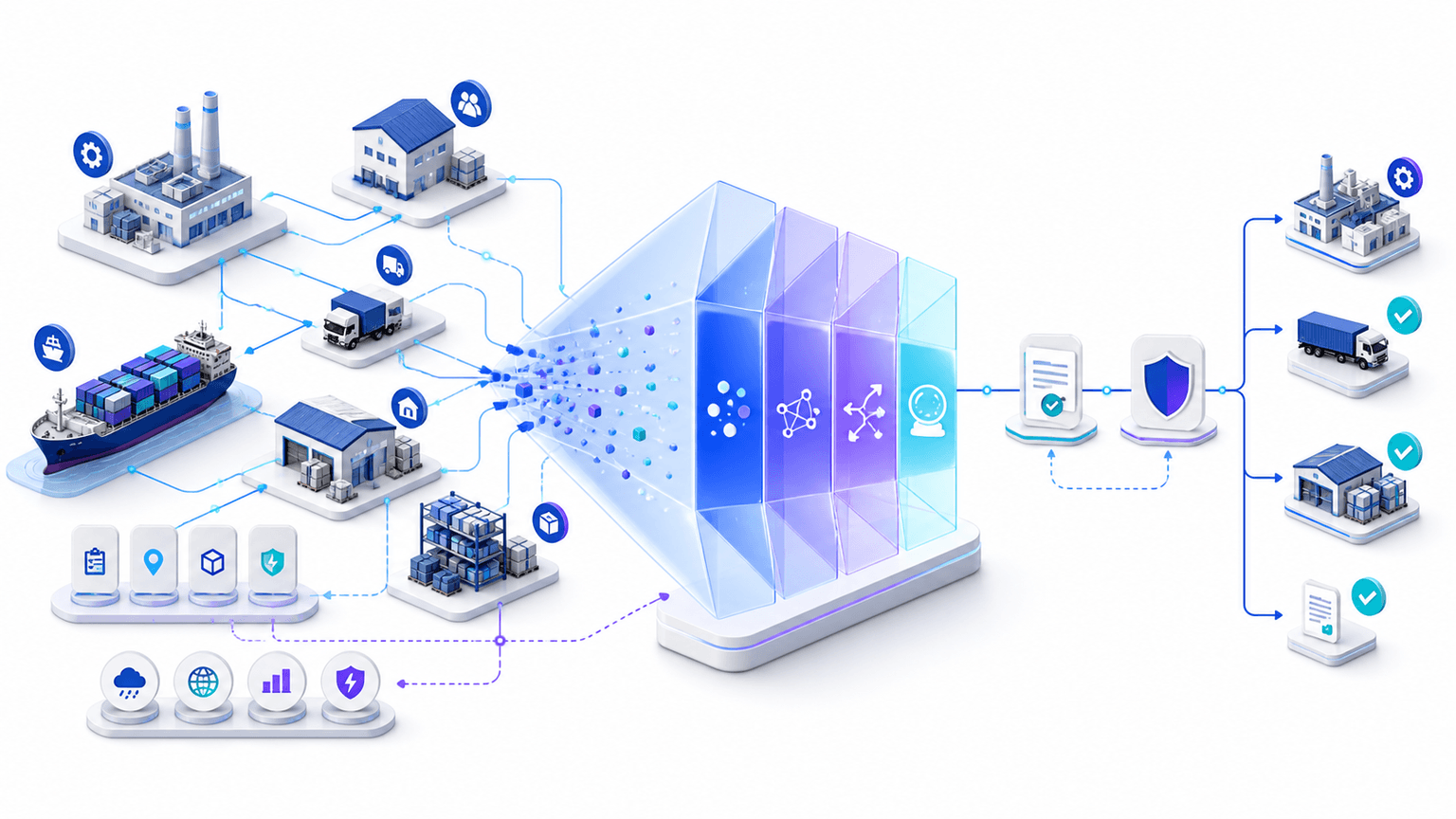
What is supply chain intelligence?什么是供应链智能?
Supply chain intelligence is a governed capability that combines internal and external supply chain evidence with business context, analytics, uncertainty, and decision rules to produce traceable insights and reviewed actions.
供应链智能是一项受治理能力:把内外部供应链证据与业务情境、分析、不确定性和决策规则结合,形成可追溯洞察与经过复核的行动。
An event becomes intelligence only when a team can explain what happened, which object and decision it affects, how reliable the evidence is, what may happen next, which options exist, and who is authorized to act. A late carrier milestone is data. A verified delay linked to a critical order, production dependency, customer promise, alternative route, expected impact, confidence level, and named owner is decision intelligence.
只有当团队能够解释发生了什么、影响哪个对象和决策、证据是否可靠、接下来可能发生什么、有哪些选项以及谁有权行动时,事件才成为智能。承运里程碑延迟只是数据;把已核实延迟连接到关键订单、生产依赖、客户承诺、替代路线、预期影响、置信度和明确责任人,才构成决策智能。
The term is not a single standard product category. Vendors may use it for supplier risk, trade data, logistics visibility, planning, analytics, control towers, or AI assistants. Define the decision capability before evaluating a label.
该术语不是统一的软件品类。厂商可能用它指供应商风险、贸易数据、物流可视化、计划、分析、控制塔或 AI 助手。评估标签前,应先定义所需决策能力。
Intelligence vs analytics, visibility, control tower, and execution智能与分析、可视化、控制塔及执行的区别
| Capability能力 | Primary question主要问题 | Typical output典型输出 |
|---|---|---|
| Visibility可视化 | What, where, when, and in what condition?什么对象、在哪里、何时、处于何种状态? | Status, event timeline, location, ETA, exception状态、事件时间线、位置、ETA、异常 |
| Analytics分析 | What happened, why, what may happen, or what optimizes an objective?发生了什么、为什么、可能发生什么,或如何优化目标? | Metric, diagnosis, forecast, scenario, optimization result指标、诊断、预测、情景、优化结果 |
| Intelligence智能 | What does the evidence mean for this decision now?这些证据现在对该决策意味着什么? | Prioritized insight, evidence, uncertainty, options, owner优先洞察、证据、不确定性、选项、责任人 |
| Control tower控制塔 | How will functions monitor, coordinate, and resolve?跨职能如何监控、协调与解决? | Operational view, collaboration, workflow, escalation运营视图、协作、工作流、升级 |
| Execution system执行系统 | How is the approved transaction or operation performed?获批交易或运营动作如何执行? | Order, plan, booking, pick, shipment, receipt, writeback订单、计划、订舱、拣选、发运、收货、回写 |
A mature architecture may combine all five, but do not hide boundaries. An intelligence recommendation should identify the evidence and approved policy; an execution system should preserve the authorized transaction and outcome.
成熟架构可以组合五类能力,但不能隐藏边界。智能建议应标明证据与获批政策;执行系统应保留授权交易与结果。
Start with a decision charter, not a dashboard从决策章程开始,而不是先做仪表板
Choose one recurring decision with economic and operational consequences: expedite an inbound order, reallocate inventory, revise a production sequence, investigate a supplier, change a forecast assumption, or escalate a customer promise. Record the decision owner, reviewers, cadence, deadline, alternatives, constraints, evidence required, materiality threshold, approval boundary, and outcome measure.
选择一个具有经济和运营后果的重复决策,例如加急入库订单、重新分配库存、调整生产顺序、调查供应商、修改预测假设或升级客户承诺。记录决策责任人、复核人、频率、截止时间、备选方案、约束、必要证据、重要性阈值、审批边界与结果指标。
Decision window controls freshness. A port closure affecting tomorrow's production may need event-driven signals. A quarterly network design review does not need second-level updates. “Real time” without a response window creates cost and noise.
决策窗口决定数据新鲜度。影响明日生产的港口关闭可能需要事件驱动信号;季度网络设计评审不需要秒级更新。没有响应窗口的“实时”只会增加成本与噪声。
Map the evidence needed for supply chain intelligence映射供应链智能所需证据
| Domain数据域 | Examples示例 | Frequent control issue常见控制问题 |
|---|---|---|
| Master and reference主数据与参考数据 | Item, supplier, site, location, lane, calendar, unit, currency物料、供应商、站点、位置、线路、日历、单位、币种 | Duplicate or changing identifiers重复或变化的标识符 |
| Plans and transactions计划与交易 | Forecast, order, PO, production plan, inventory, invoice预测、订单、采购订单、生产计划、库存、发票 | Version, status, unit, and posting-date ambiguity版本、状态、单位与过账日期歧义 |
| Operational events运营事件 | Production, pick, ship, carrier, customs, receipt, inspection生产、拣选、发运、承运、海关、收货、检验 | Missing events, latency, sequence, or false timestamps事件缺失、延迟、顺序或虚假时间戳 |
| Performance and quality绩效与质量 | OTIF, defects, lead time, cost variance, service casesOTIF、缺陷、提前期、成本差异、服务案例 | Inconsistent formula, grain, target, or attribution公式、粒度、目标或归因不一致 |
| External context外部情境 | Weather, port, policy, commodity, FX, sanctions, public risk天气、港口、政策、大宗商品、汇率、制裁、公开风险 | Entity matching, license, provenance, relevance, freshness实体匹配、许可、来源、相关性与新鲜度 |
Document what each source observes rather than what its field name suggests. Keep source timestamp, ingestion timestamp, effective time, correction history, access rights, and lineage. Never infer a supplier or shipment match from a name alone when a governed key is available.
应记录每个来源实际观察到什么,而不是只看字段名称。保留源时间戳、摄取时间、有效时间、更正历史、访问权限与血缘。在存在受治理键时,不应仅凭名称推断供应商或运输匹配。
Use a six-layer supply chain intelligence framework使用六层供应链智能框架
- Observe.观察。 Capture eligible master, transaction, plan, event, document, and external signals with provenance.采集符合资格的主数据、交易、计划、事件、文件与外部信号,并保留来源。
- Resolve context.解析情境。 Link objects, hierarchies, locations, partners, time, dependencies, contracts, and promises.连接对象、层级、位置、伙伴、时间、依赖、合同与承诺。
- Measure.衡量。 Apply versioned metric contracts, baselines, tolerances, eligibility, and confidence rules.应用版本化指标口径、基线、容差、资格与置信规则。
- Interpret.解释。 Detect deviations, diagnose drivers, forecast outcomes, and compare scenarios without presenting correlation as cause.检测偏差、诊断驱动因素、预测结果并比较情景,不把相关性呈现为因果。
- Decide.决策。 Rank material options using approved constraints, evidence, uncertainty, costs, service impacts, and human review.使用获批约束、证据、不确定性、成本、服务影响与人工复核,对重要选项排序。
- Learn.学习。 Record action, approval, outcome, override, false alert, and model or rule feedback for later validation.记录行动、审批、结果、覆盖、误报及模型或规则反馈,供后续验证。
Define intelligence metrics before building alerts构建预警前先定义智能指标
Every KPI should have a purpose, owner, object grain, eligible population, numerator, denominator, unit, source, event-time rule, refresh target, baseline, threshold, direction, aggregation, exclusions, missing-data rule, version, effective date, and drill path. A red indicator without these contracts is an opinion disguised as measurement.
每个 KPI 都应包含目的、责任人、对象粒度、合格总体、分子、分母、单位、来源、事件时间规则、刷新目标、基线、阈值、方向、聚合、排除项、缺失数据规则、版本、生效日期与下钻路径。缺少这些口径的红色指示器只是披着衡量外衣的意见。
Do not optimize operational outcomes while ignoring intelligence quality. A lower alert count may reflect better precision—or missing data. Track system quality beside business results.
不能只优化运营结果而忽略智能质量。预警数量减少可能表示精度提高,也可能意味着数据缺失。应把系统质量与业务结果并列衡量。
Supply chain intelligence KPIs供应链智能 KPI
| KPIKPI | Illustrative formula示例公式 | What it reveals揭示内容 |
|---|---|---|
| Event timeliness事件及时率 | Events received inside decision latency ÷ received events决策延迟内收到事件 ÷ 已收事件 | Whether evidence arrives in time to matter证据是否及时到达 |
| Identity match rate身份匹配率 | Correctly linked records ÷ records requiring linkage正确连接记录 ÷ 需连接记录 | Whether objects can be joined reliably对象能否可靠连接 |
| Alert precision预警精度 | Reviewed actionable alerts ÷ reviewed alerts已复核可行动预警 ÷ 已复核预警 | Noise reaching decision owners到达决策责任人的噪声 |
| Decision lead time决策提前期 | Approved decision time − first eligible signal time获批决策时间 − 首个合格信号时间 | Response speed, including review delay包括复核延迟在内的响应速度 |
| On-time action closure行动按时关闭率 | Actions closed by due date ÷ actions due到期前关闭行动 ÷ 到期行动 | Whether insight becomes governed follow-through洞察是否转化为受治理后续 |
| Outcome validation结果验证 | Decisions with measured outcome ÷ eligible decisions已衡量结果决策 ÷ 合格决策 | Whether value and failure can be learned能否从价值与失败中学习 |
Supply chain intelligence readiness calculator供应链智能成熟度计算器
Use the educational weighted score below to expose weak foundations before a pilot. Enter normalized scores from zero to 100 and weights totaling 100%. Keep critical governance requirements as a separate gate so a high average cannot hide an unacceptable failure.
使用以下教学型加权分数,在试点前暴露薄弱基础。输入0–100的标准化得分,权重合计100%。把关键治理要求作为独立门槛,避免高平均分掩盖不可接受的失败。
Worked example: an inbound disruption signal实操示例:入库中断信号
Hypothetical example: a manufacturer receives a carrier delay event for a component shipment. The event alone does not justify expediting. The intelligence workflow verifies the shipment and PO match, checks whether the promised milestone is late, links the component to two production orders, compares inventory and approved substitutes, estimates the service and cost impact under three scenarios, and exposes missing supplier confirmation.
假设示例:某制造商收到零部件运输延迟事件。该事件本身不足以支持加急。智能工作流核实运输与采购订单匹配,检查承诺里程碑是否延迟,把零部件连接到两个生产订单,比较库存与获批替代品,在三个情景下估计服务和成本影响,并显示缺少供应商确认。
The output might state: “Evidence indicates a likely two-day production exposure if the current ETA holds; confidence is medium because the carrier event is fresh but supplier confirmation is missing. Options are expedite, re-sequence, substitute, or wait. Operations owns the review by 14:00.” Those figures are scenario inputs, not facts, until reconciled with authorized data.
输出可以表述为:“若当前 ETA 成立,证据显示可能出现两天生产暴露;由于承运事件较新但缺少供应商确认,置信度为中等。选项包括加急、重排、替代或等待,由运营团队在14:00前复核。”在与授权数据核对前,这些数字是情景输入而非事实。
Separate observation, inference, forecast, and recommendation区分观察、推断、预测与建议
A source recorded an event or value. Preserve provenance, timestamp, and corrections.
来源记录了事件或数值。保留出处、时间戳与更正。
A rule or model connected evidence to a state. Show method and confidence.
规则或模型把证据连接到某种状态。显示方法与置信度。
A future outcome is conditional on assumptions. Show horizon, range, and calibration.
未来结果取决于假设。显示时间范围、区间与校准。
An option is ranked under approved objectives and constraints. Keep human authority explicit.
在获批目标和约束下对选项排序。明确保留人工权限。
Display missing evidence, stale sources, conflicts, estimates, overrides, and out-of-scope entities. Suppressing uncertainty makes a polished interface less trustworthy, not more intelligent.
显示缺失证据、陈旧来源、冲突、估计、覆盖和范围外实体。隐藏不确定性只会让精美界面更不可信,而不是更智能。
How to build supply chain intelligence如何建立供应链智能
- Select a bounded decision.选择有边界的决策。 Define owner, value, response window, alternatives, and prohibited automation.定义责任人、价值、响应窗口、备选项与禁止自动化边界。
- Freeze representative history.冻结代表性历史数据。 Include normal, disrupted, missing, disputed, and late-arriving cases.包括正常、中断、缺失、有争议及迟到案例。
- Build the object and event model.建立对象与事件模型。 Resolve identifiers, hierarchy, grain, timestamps, dependencies, and lineage.解析标识、层级、粒度、时间戳、依赖与血缘。
- Publish metric and signal contracts.公布指标与信号口径。 Define eligibility, thresholds, missing rules, confidence, version, and owner.定义资格、阈值、缺失规则、置信、版本与责任人。
- Replay decisions.重放决策。 Evaluate whether historical evidence would have supported timely, correct, and useful review without using future data.评估历史证据能否在不使用未来数据时支持及时、正确且有用的评审。
- Pilot with human review.在人工复核下试点。 Log acceptance, rejection, override, action, outcome, effort, and unintended effects.记录接受、拒绝、覆盖、行动、结果、工作量与意外影响。
- Scale only after controls pass.控制通过后再扩展。 Monitor quality, drift, permissions, cost, response capacity, and business outcomes.监控质量、漂移、权限、成本、响应能力与业务结果。
High-value supply chain intelligence use cases高价值供应链智能场景
Explain forecast changes, inventory exposure, stockout risk, excess, and replenishment tradeoffs.
解释预测变化、库存暴露、缺货风险、过剩与补货权衡。
Connect performance, risk, spend, quality, capacity, contracts, and corrective evidence.
连接绩效、风险、支出、质量、产能、合同与整改证据。
Prioritize shipment exceptions using customer promise, materiality, cost, alternatives, and confidence.
结合客户承诺、重要性、成本、备选项与置信度确定运输异常优先级。
Relate downtime, constraints, schedule, material availability, quality, and scenario effects.
关联停机、约束、计划、物料可用性、质量与情景影响。
Related methods include inventory forecasting, freight analytics, supplier risk assessment, and a governed supplier scorecard.
Evaluate supply chain intelligence software by evidence and decisions按证据与决策评估供应链智能软件
A polished demonstration can hide weak coverage and expensive operating work. Ask vendors to identify which capabilities are native, configured, custom, partner-provided, or roadmap. Require the proof of concept to use representative objects, history, hierarchies, exceptions, late events, corrections, missing data, disputes, and permissions.
精美演示可能掩盖覆盖不足和高昂运营工作。要求厂商说明哪些能力是原生、配置、定制、伙伴提供或路线图内容。POC 应使用代表性对象、历史、层级、异常、迟到事件、更正、缺失数据、争议与权限。
| Dimension维度 | Evidence to request应索取证据 |
|---|---|
| Integration and model集成与模型 | Connectors, APIs, event handling, entity hierarchy, lineage, correction, latency连接器、API、事件处理、实体层级、血缘、更正、延迟 |
| Intelligence quality智能质量 | Metric contracts, rule/model versions, precision, calibration, scenario replay, explainability指标口径、规则/模型版本、精度、校准、情景重放、可解释性 |
| Decision governance决策治理 | Roles, approvals, overrides, evidence links, audit, retention, segregation of duties角色、审批、覆盖、证据链接、审计、保留、职责分离 |
| Operations and security运营与安全 | Monitoring, recovery, access, tenant isolation, export, deletion, administration监控、恢复、访问、租户隔离、导出、删除、管理 |
| Economics经济性 | Implementation, data fees, licenses, usage, support, change, internal labor, exit cost实施、数据费、许可、使用、支持、变更、内部人力、退出成本 |
Do not score a platform only by feature count. Weight the dimensions to the target decision and define a hard gate for unacceptable security, data rights, audit, or decision-control failures.
不要只按功能数量给平台打分。应根据目标决策设置维度权重,并为不可接受的安全、数据权利、审计或决策控制失败设置硬门槛。
Validate intelligence with a historical decision replay用历史决策重放验证智能
Freeze data at each historical decision time so the system cannot use future information. Reconcile source events and metric results, compare alerts with reviewed outcomes, test boundary values and missing data, then measure time-to-insight, analyst effort, false positives, missed material cases, action capacity, and decision quality.
在每个历史决策时点冻结数据,避免系统使用未来信息。核对源事件与指标结果,把预警与已复核结果比较,测试边界值与缺失数据,再衡量洞察时间、分析工作量、误报、漏掉的重要案例、行动能力与决策质量。
- Backtest: reproduce what was knowable at the time, not the final outcome.回测:复现当时可知内容,而不是最终结果。
- Stress test: change latency, coverage, thresholds, demand, lead time, and constraints.压力测试:改变延迟、覆盖、阈值、需求、提前期与约束。
- Shadow run: generate recommendations without executing them and compare human review.影子运行:生成但不执行建议,并与人工复核比较。
- Outcome review: distinguish verified benefit, transferred cost, delayed impact, and unintended effect.结果复盘:区分已验证收益、转移成本、延迟影响与意外后果。
Govern AI-assisted supply chain intelligence治理 AI 辅助供应链智能
Models can prioritize, summarize, forecast, classify, or recommend, but their output must remain inside an approved use boundary. Record training or reference data where applicable, feature and prompt versions, evaluation set, performance by relevant segment, drift, access, human override, and prohibited decisions. Protect confidential supplier, price, customer, employee, security, trade, and contract information.
模型可以排序、总结、预测、分类或建议,但输出必须位于获批用途边界内。在适用时记录训练或参考数据、特征与提示版本、评估集、相关分组性能、漂移、访问、人工覆盖与禁止决策。保护机密供应商、价格、客户、员工、安全、贸易与合同信息。
Human review is a control, not a slogan. Assign authority, response time, evidence access, override reasons, escalation, and accountability. A reviewer who cannot inspect the basis of a recommendation cannot provide meaningful oversight.
人工复核是一项控制,而不是口号。应分配权限、响应时间、证据访问、覆盖原因、升级与问责。无法检查建议依据的复核人不能提供有意义的监督。
Common supply chain intelligence mistakes供应链智能常见错误
- Starting with a platform label before defining a decision, owner, and response window.先选择平台标签,却没有定义决策、责任人和响应窗口。
- Calling a dashboard or raw event feed intelligence without context and evidence.把缺少情境和证据的仪表板或原始事件流称为智能。
- Joining suppliers, items, sites, or shipments through unreliable names.通过不可靠名称连接供应商、物料、站点或运输。
- Treating missing or late data as a normal value and hiding coverage.把缺失或迟到数据视为正常值并隐藏覆盖。
- Presenting correlation, forecast, or generated narrative as verified cause or fact.把相关性、预测或生成叙述呈现为已验证因果或事实。
- Optimizing alert volume without measuring precision, action capacity, or outcomes.只优化预警量,不衡量精度、行动能力或结果。
- Automating high-impact decisions without authority, gates, rollback, and audit.在缺少权限、门槛、回滚与审计时自动执行高影响决策。
- Claiming avoided cost as savings without a defensible baseline.在缺少可辩护基线时把避免成本称为节省。
Where InfiniSynapse fits in supply chain intelligenceInfiniSynapse 在供应链智能中的定位
InfiniSynapse can be considered as an analysis layer for exploring authorized supplier, item, location, order, inventory, production, quality, shipment, cost, risk, document, metric, scenario, and action evidence. Analysts can connect relevant sources, inspect relationships, compare periods and cohorts, investigate anomalies, test calculations, and prepare traceable summaries for responsible decision owners.
InfiniSynapse 可作为分析层,探索获准使用的供应商、物料、位置、订单、库存、生产、质量、运输、成本、风险、文件、指标、情景与行动证据。分析人员可以连接相关来源、检查关系、比较期间与分组、调查异常、测试计算,并为负责决策人准备可追溯摘要。
Boundary: InfiniSynapse is not presented here as a supply chain execution suite, ERP, WMS, TMS, planning engine, supplier portal, external data provider, control-tower workflow, autonomous procurement or allocation engine, or transaction/writeback system.
边界:本文不把 InfiniSynapse 描述为供应链执行套件、ERP、WMS、TMS、计划引擎、供应商门户、外部数据提供商、控制塔工作流、自动采购或分配引擎,亦非交易/回写系统。
Explore a bounded supply chain intelligence question探索一个有边界的供应链智能问题
Prepare the decision charter, object hierarchy, representative source extracts, metric contracts, known exceptions, historical outcomes, permissions, and review rules. Use the InfiniSynapse analytical workspace to explore connected evidence, or book a demo to discuss the analysis boundary.
准备决策章程、对象层级、代表性来源提取、指标口径、已知异常、历史结果、权限与评审规则。使用 InfiniSynapse 分析工作区探索关联证据,或预约演示讨论分析边界。
Try the analytical workspace试用分析工作区Supply chain intelligence FAQ供应链智能常见问题
It combines governed internal and external evidence with context, analytics, uncertainty, and decision rules to produce traceable insights and reviewed actions.
它把受治理的内外部证据与情境、分析、不确定性和决策规则结合,形成可追溯洞察与经过复核的行动。
Visibility describes status, location, timing, and condition. Intelligence adds context, interpretation, scenarios, uncertainty, priorities, and decision support.
可视化描述状态、位置、时间与状况;智能增加情境、解释、情景、不确定性、优先级与决策支持。
It may use master, transaction, event, plan, quality, cost, supplier, logistics, manufacturing, and external risk data selected for a defined decision.
它可以使用为明确决策选择的主数据、交易、事件、计划、质量、成本、供应商、物流、制造与外部风险数据。
Coverage, timeliness, identity match, alert precision, evidence completeness, scenario calibration, action closure, and outcome validation are useful measures.
覆盖、及时性、身份匹配、预警精度、证据完整性、情景校准、行动关闭与结果验证是有用指标。
No. Freshness should match the decision window; required latency may be event-driven, hourly, daily, or weekly.
不需要。新鲜度应匹配决策窗口;所需延迟可以是事件驱动、小时、每日或每周。
Test representative history for integration, quality, context, analytics, explainability, workflow boundaries, security, auditability, effort, and decision outcomes.
用代表性历史测试集成、质量、情境、分析、可解释性、工作流边界、安全、可审计性、工作量与决策结果。
No. It is positioned here as an analysis layer, not an autonomous execution, procurement, warehouse, transport, planning, or ERP writeback system.
不可以。这里将其定位为分析层,而不是自动执行、采购、仓储、运输、计划或 ERP 回写系统。
Sources and limitations来源与局限
Primary references: the GS1 EPCIS and CBV implementation guideline for a common visibility event model and implementation controls; IBM's supply chain analytics overview for the role of cross-source analytics in forecasting, optimization, and decision-making; and NIST's publication on causal machine learning in supply chain management for the caution that correlation-based models can produce spurious decision signals. Sources reviewed August 18, 2026.
主要参考:GS1 EPCIS 与 CBV 实施指南,用于共同可视化事件模型和实施控制;IBM 供应链分析概览,用于跨源分析在预测、优化与决策中的作用;以及 NIST 关于供应链管理因果机器学习的出版物,用于说明相关性模型可能产生虚假决策信号的风险。来源核验于2026年8月18日。
The framework, formulas, readiness score, thresholds, examples, and evaluation criteria are educational starting points, not a universal architecture, certification, forecast, legal conclusion, risk acceptance, procurement instruction, production decision, allocation order, or autonomous action. Validate them with responsible supply chain, operations, procurement, planning, finance, risk, compliance, legal, security, data, and model owners.
本文框架、公式、成熟度得分、阈值、示例与评估标准是教学起点,不是通用架构、认证、预测、法律结论、风险接受、采购指令、生产决策、分配命令或自动行动。应由负责供应链、运营、采购、计划、财务、风险、合规、法务、安全、数据与模型的人员验证。