Direct answer直接回答
YouTube chapters divide one video into named, selectable sections so viewers can understand its structure and move to the part they need. Start with a stable video edit, a content outline, and clear topic transitions; the working deliverable is a chapter architecture with meaningful boundaries and titles, ready for manual or assisted timestamping.
YouTube 章节把一段视频划分为可命名、可选择的部分,让观众理解内容结构并快速前往所需位置。 开始前应准备稳定的视频最终版、内容提纲和清晰主题转换;工作结果应形成具有有意义边界与标题并可用于时间标记的章节结构。
Choose the step you need选择你需要的步骤
Start with the four core steps below, then continue into the deeper checks that match your task.
先完成下面四个核心步骤,再根据任务需要继续查看后续深度检查。
Chapters are a public navigation structure章节是一种公开导航结构
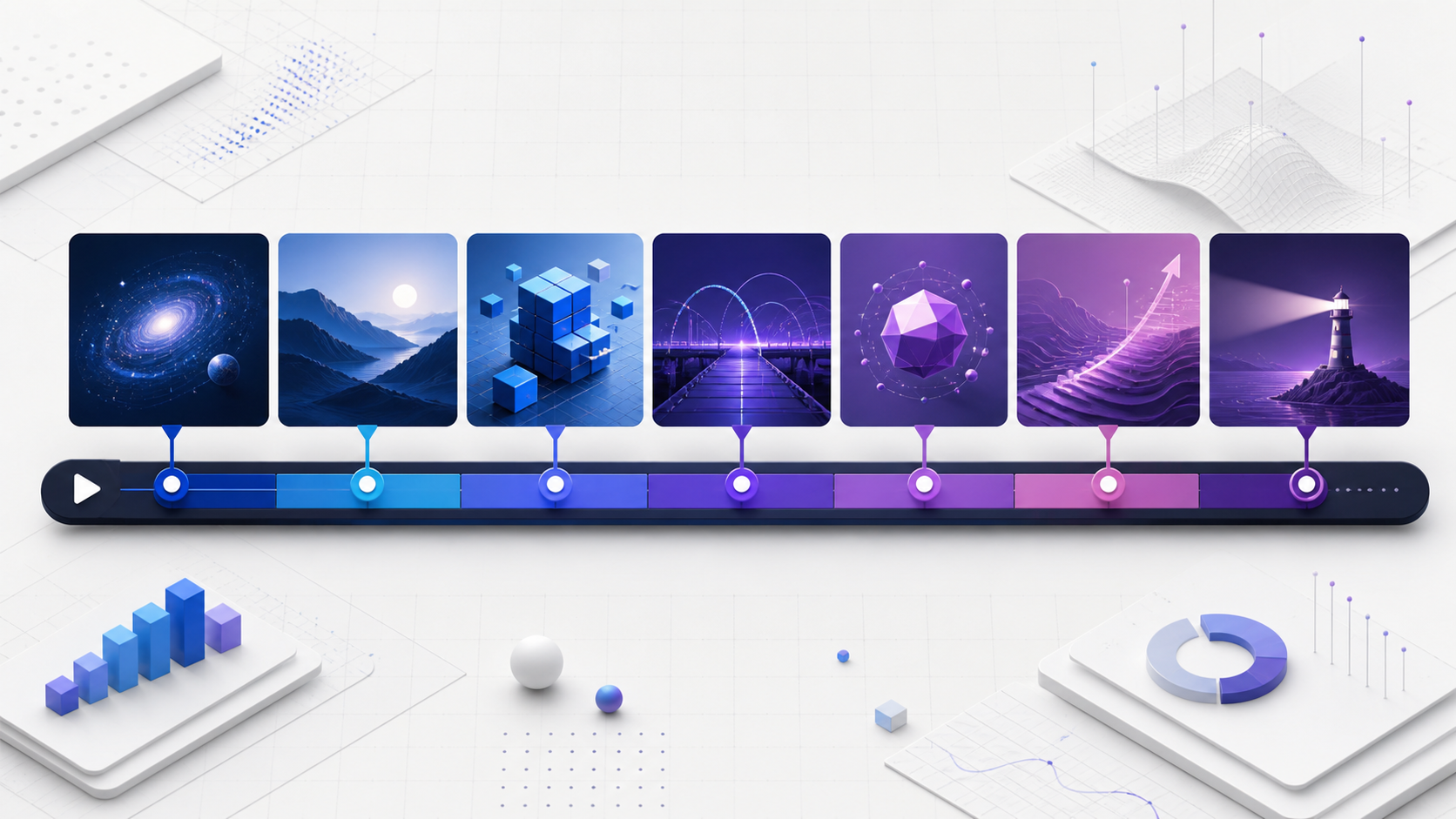
YouTube chapters divide one continuous video into labeled ranges that viewers can select from the progress bar or description. They are not separate uploads, transcript paragraphs, or a hidden indexing system. A chapter begins at one timestamp and continues until the next marker. The complete list tells viewers what the recording contains, where a topic begins, and how detailed the route will be. This makes chapters especially useful for tutorials, lectures, reviews, webinars, and interviews with clear topic changes.
YouTube 章节把一段连续视频划分为带标题的时间范围,观众可从进度条或说明中选择。章节不是独立上传的视频,也不是文字稿段落或隐藏索引。一个章节从某个时间点开始,并持续到下一个标记。完整列表能说明录像包含什么、主题从哪里开始以及导航有多细,因此特别适合教程、课程、评测、网络研讨会和主题变化清晰的访谈。
Understand manual and automatic chapter sources理解手动章节与自动章节的来源差异
Manual chapters are written by the creator in the description and can reflect the intended teaching or narrative structure. Automatic chapters are inferred by YouTube when eligible and may use different boundaries or titles. Creators who need precise labels, terminology, or sequencing should publish and test a manual list. Automatic segmentation can still be useful as a draft, but it should not be treated as an editorial decision made by the creator. Availability and eligibility may change, so the watch page is the final place to verify behavior.
手动章节由创作者写入说明,可体现预期教学或叙事结构;自动章节则在符合条件时由 YouTube 推断,边界和标题可能不同。需要准确术语、标签或顺序的创作者应发布并测试手动列表。自动分段可以作为初稿,却不能被视为创作者亲自做出的编辑判断。功能可用性与资格可能变化,因此最终应以观看页面实际表现为准。
Choose chapter granularity from viewer decisions根据观众决策选择章节粒度
A chapter should represent a meaningful choice: skip the setup, jump to an example, compare one option, or revisit a conclusion. Too few chapters hide useful structure; too many turn the progress bar into noise. Start with the video's natural outline, then merge sections that answer the same question and split a long section only when a viewer has a distinct reason to enter midway. Consistent granularity matters more than equal duration. A two-minute warning and a twenty-minute demonstration can both be valid chapters.
章节应代表一个有意义的选择,例如跳过设置、直接看案例、比较某个选项或复习结论。章节太少会隐藏结构,太多则让进度条变成噪声。先从视频自然提纲出发,合并回答同一问题的区段;只有观众确实有理由从中间进入时,才拆分较长部分。粒度一致比时长相等更重要,两分钟警告与二十分钟演示都可以成为合理章节。
Treat chapter lists as versioned editorial data把章节列表视为有版本的编辑数据
Keep the chapter list beside the final video version and retain a brief note on how boundaries were chosen. If an upload is replaced, trimmed, or receives a new introduction, retest every marker. Translate titles for the target audience rather than mechanically translating isolated nouns; a chapter name should remain useful in context. Review viewer questions and support requests over time—repeated requests for one hidden step may justify a new boundary or clearer label. Maintenance keeps navigation aligned with the actual recording.
章节列表应与最终视频版本一起保存,并简要记录边界选择依据。上传内容被替换、裁剪或增加新片头后,应重新测试每个标记。面向不同语言受众时,要按语境翻译标题,而不是机械替换孤立名词。还可持续观察观众问题与支持请求:若很多人反复寻找某个隐藏步骤,可能需要新增边界或改写标签。维护能让导航始终对应真实录像。
Find boundaries from changes in viewer purpose根据观众任务变化寻找章节边界
A chapter should begin when the viewer's reason for watching changes. Topic shifts are useful, but purpose is more precise: moving from explanation to demonstration, from setup to troubleshooting, or from evidence to recommendation. Review the final edit at normal speed and place rough markers, then inspect the thirty seconds around each marker. Move the boundary to the first complete sentence or visible action that belongs to the new section. Avoid cutting after a question but before its answer, during a multi-step operation, or between a claim and the chart that supports it.
Use a boundary log for difficult cases. Record the candidate time, previous purpose, next purpose, and why the chosen point is less confusing than nearby alternatives. In conversations, a speaker change is not automatically a new chapter if the subject remains stable. In tutorials, a short warning may belong to the step it protects rather than receiving its own section. Read the finished list without playing the video: it should form a coherent outline with no unexplained gaps. Then test whether each jump gives a new viewer enough setup to understand what begins there.
章节应在观众观看目的发生变化时开始。主题变化是线索,但用途更准确,例如从解释转到演示、从设置转到排错,或从证据转到建议。按正常速度查看最终剪辑并放置粗略标记,再检查每个标记前后三十秒,把边界移动到属于新段落的第一个完整句子或可见动作。不要把问题与答案切开,不要在多步操作中间切分,也不要把观点与支撑图表分离。
困难边界可以记录候选时间、前一段用途、后一段用途,以及为什么当前位置比邻近位置更清楚。对话中说话人变化并不自动等于新章节,只要主题仍然稳定;教程中的短警告通常应归入它所保护的步骤,而不是单独成章。完成后先不播放视频,只阅读章节列表,它应形成连续提纲且没有无法解释的缺口。随后测试每个跳转是否给新观众足够铺垫,使其理解接下来发生什么。
Write labels that promise a specific outcome使用承诺明确结果的章节标题
Chapter labels work best when they combine a differentiating subject with an action or answer. Replace Background with Why the migration failed, Demo with Connect the data source, and Questions with Pricing and security questions. Put the important noun early because long labels may be truncated on mobile. Keep terminology consistent with the language used in the video and with other chapters; alternating between setup, configuration, and installation for the same operation creates unnecessary uncertainty. Avoid exaggerated labels that promise a conclusion the section does not deliver.
Test labels with someone who has not watched the recording. Show only the chapter list and ask where they would go to solve a specific problem. If two labels attract the same answer, sharpen the distinction or reconsider the boundary. For multilingual audiences, publish labels in the video's primary language unless a deliberate bilingual convention remains readable within the available space. Numbers can help in sequential lessons, but pair them with meaningful words. A chapter list should function as a compact navigation interface, not as a record of the producer's internal scene names.
章节标题最好同时包含有区分度的主题和动作或答案。例如把“背景”改为“迁移失败的原因”,把“演示”改为“连接数据源”,把“问题”改为“价格与安全问题”。重要名词应放在前面,因为长标题在手机上可能被截断。术语要与视频语言及其他章节保持一致;同一操作交替使用“设置、配置、安装”会制造不必要的不确定性。标题也不能夸张承诺本段没有提供的结论。
可让没有看过录像的人只看章节列表,并询问他们会去哪里解决某个具体问题。如果两个标题都会吸引同一个答案,应加强区分或重新考虑边界。面向多语言受众时,通常使用视频主要语言;若采用双语规则,也要确保在有限空间内仍可读。顺序课程可以使用编号,但必须配合有意义的文字。章节列表应成为紧凑的导航界面,而不是制作团队内部场景名称的记录。
Decide when manual chapters should replace automatic ones判断何时应使用手动章节
Automatic chapters can provide a draft when the structure is conventional and speech clearly signals transitions. They are less reliable when a video uses domain terminology, visual demonstrations, repeated section phrases, or deliberate callbacks. Compare automatic boundaries with the final edit and the viewer-facing outline. Keep an automatic segment only when its start, scope, and label accurately describe a useful unit. For courses, compliance material, product support, and any video where navigation affects completion, manual chapters usually deserve stronger control.
Do not mix manual and automatic decisions without recording which source is authoritative. If manual chapters are published, keep the reviewed timestamp list with the production files. When automatic suggestions reveal a transition the outline missed, inspect it rather than accepting or rejecting it by default. The goal is not to defeat automation but to assign editorial responsibility. A creator can explain why a manual boundary exists, correct it after an edit, and coordinate it with descriptions, transcripts, and learning materials. Availability of automatic chapters may change, while a maintained manual list remains explicit.
当视频结构常规且口头转折清晰时,自动章节可以作为草稿;遇到领域术语、视觉演示、重复段落用语或刻意回扣时,它通常不够可靠。应把自动边界与最终剪辑及面向观众的提纲对照,只有开始位置、覆盖范围和标题都准确描述一个有效单元时才保留。课程、合规材料、产品支持,以及导航会影响完成情况的视频,通常更需要手动章节控制。
不能在不记录权威来源的情况下混用人工与自动决定。发布手动章节后,应把经过复核的时间列表与制作文件一起保存。自动建议若发现提纲遗漏的转折,也应检查,而不是默认接受或拒绝。目的不是排斥自动化,而是明确编辑责任。创作者能够解释手动边界为何存在,在剪辑变化后修正,并与说明、文字稿和学习材料协调。自动章节的可用性可能变化,而被维护的手动列表始终是明确的。
Test chapter navigation as a viewer would按照观众真实使用方式测试章节导航
After publishing, test more than whether the chapter strip appears. Open the first, middle, and final entries from the description, player, and copied URL on desktop and mobile. Confirm that playback begins before the promised content, the title remains readable, and the selected section does not require an explanation hidden in the previous chapter. Test at least one boundary near an advertisement, transition, or fast edit. If the video is embedded elsewhere, verify whether the same chapter behavior is available there rather than assuming the watch page and embed are identical.
Record defects with the actual landing time, expected content, device, and fix. A one-second shift may be harmless for a lecture but damaging for a rapid software action. Recheck the list after captions, descriptions, or edits are updated, because production changes often occur together. If a chapter is rarely useful, inspect whether its title is unclear, its scope overlaps another section, or the content is too short to deserve separate navigation. Quality assurance should optimize comprehension and retrieval, not merely satisfy formatting rules.
发布后不能只检查章节条是否出现。应在桌面端和手机端分别从说明、播放器及复制链接打开开头、中间和最后章节,确认播放位置位于承诺内容之前、标题可读,并且新段落不依赖上一章中被隐藏的解释。至少测试一个靠近广告、转场或快速剪辑的边界。视频被嵌入其他位置时,也要实际确认是否具有相同章节行为,不能假设观看页与嵌入播放器完全一致。
缺陷记录应包含实际落点、预期内容、设备和修正。对课程来说一秒偏移可能无关紧要,但对快速软件操作可能造成明显问题。字幕、说明或剪辑更新后要重新检查,因为制作变化常常同时发生。章节使用价值低时,应判断是标题不清、范围与其他章节重叠,还是内容太短不值得独立导航。质量检查的目标是改善理解与定位,而不仅是满足格式规则。
Maintain chapters when the recording changes录像变化后维护章节
Treat the chapter list as versioned content tied to one edit. Store the video identifier, duration, publication date, chapter times, labels, and reviewer. When footage is inserted or removed, do not shift every later timestamp mechanically unless the change is a clean, verified offset. Rewatch boundaries around cuts because narration and context may also have changed. Update related timestamp links, lesson plans, support documents, and notes that point to the old positions. Mark the previous list as superseded instead of leaving two apparently current versions.
Schedule maintenance according to risk. Evergreen lectures may need review only after an edit, while product tutorials should be checked when the interface or recommended procedure changes even if the video file remains unchanged. Viewer questions can reveal missing sections or misleading labels, but use them as evidence for review rather than automatically adding a chapter for every comment. Keep a brief change log so collaborators know why labels or times moved. Well-maintained chapters remain dependable entry points instead of becoming clickable coordinates to outdated instructions. As a final acceptance test, ask a first-time viewer to choose a section from labels alone, open it, and explain what that section promises. Record confusing choices and revise the title or boundary before treating the list as complete. Repeat this test after any substantial edit, translation, or change to the supporting materials that rely on chapter navigation.
章节列表应被视为与某个剪辑版本绑定的内容。保存视频标识、时长、发布日期、章节时间、标题和复核人。插入或删除画面后,不能机械地平移所有后续时间,除非变化确实是干净且经过验证的固定偏移;剪切附近的边界要重新观看,因为叙述与上下文也可能改变。同时更新指向旧位置的时间链接、课程计划、支持文档和笔记,并把旧列表标为已被替代,不能保留两个看似都有效的版本。
维护频率应与风险相匹配。长期有效的课程通常只需在剪辑变化后复核;产品教程即使视频文件不变,也应在界面或推荐流程变化时检查。观众问题可能暴露缺失章节或误导标题,但应作为复核证据,不能因每条评论就自动增加章节。保留简短变更记录,让协作者知道标题或时间为何移动。维护良好的章节应始终是可靠入口,而不是指向过时说明的可点击坐标。最后可让第一次观看的人只根据标题选择一个区段,打开后说明该章节承诺解决什么。记录选择中的困惑,并在列表完成前修正标题或边界。视频发生重大剪辑、翻译或依赖章节导航的配套材料变化后,应重复这项测试。
Worked example具体示例
A 20-minute software walkthrough may need chapters for goal, setup, first task, result review, and troubleshooting. It does not need a new chapter for every click.
一段 20 分钟的软件演示可按目标、设置、首次任务、结果检查和故障处理划分章节,不必为每一次点击单独创建章节。
Before handoff, preserve the source identity, current edit, language, access date, and every time reference needed to reproduce the example. More chapters are not always better. Very short segments, vague titles, and boundaries placed mid-sentence make navigation harder.
交付前应保留来源标识、当前剪辑版本、语言、访问日期,以及复现实例所需的时间信息。页面输出用于支持理解与整理,重要原话、数字、人物、边界和解释仍需返回原视频检查。
Define acceptance for this deliverable为这项交付物设定验收条件
Chapters describe the content model. Review the result against the intended audience and the declared task of designing a useful chapter structure before publishing timestamps. Confirm that the chosen structure preserves the distinctions the reader must act on, rather than simply shortening the recording. Mark missing source material and uncertainty openly. A reviewer should be able to identify which items came directly from speech or visuals, which were reorganized, and which are interpretations.
章节表达内容结构。应围绕目标读者以及“在发布时间码前设计有用的章节结构”这一具体任务验收结果。检查结构是否保留读者行动所需的关键区分,而不是只把录像缩短;来源缺失与不确定性必须显式标记。复核者应能分辨哪些内容直接来自语音或画面、哪些经过重组、哪些属于解释。
Use a small handoff record containing source, purpose, output version, correction notes, tested links or time ranges, reviewer, and unresolved items. Review every name, number, quotation, formula, instruction, commitment, and people-related conclusion that could cause harm if wrong. Lower-risk descriptive material may be sampled, but the sampling rule should be written down. A result is accepted because it is fit for this declared use, not because its language sounds confident.
交接记录至少应包含来源、用途、输出版本、修正说明、已测试链接或时间范围、复核人和未解决事项。姓名、数字、引语、公式、指令、承诺以及涉及个人且出错会造成影响的结论都应逐项检查;低风险描述可以抽样,但抽样规则要写明。结果被验收是因为适合当前用途,而不是因为语言显得自信。
Continue this workflow with 先鉴 Peek完成当前步骤后使用先鉴 Peek 继续分析
Once the transcript, cleaned text, timestamps, or chapters are ready, provide the public video and your learning goal to 先鉴 Peek to assess content value, build a concise summary, plan a timestamped viewing route, and organize study notes. This does not promise direct transcript or subtitle downloading.
准备好文字稿、清理后的文本、时间码或章节后,可向先鉴 Peek 提供公开视频与学习目标,用于判断内容价值、形成精华摘要、规划时间码观看路线并整理学习笔记。此入口不承诺直接下载文字稿或字幕。
Questions about this task本任务常见问题
What exactly is a YouTube chapter?
YouTube 章节究竟是什么?
It is a labeled time range within one video, beginning at one timestamp and ending when the next chapter starts.
它是一段视频中的带标题时间范围,从一个时间点开始,到下一个章节开始时结束。
Are automatic chapters the same as manual chapters?
自动章节与手动章节一样吗?
No. Automatic chapters are inferred by the platform; manual chapters are creator-authored timestamps placed in the description.
不一样。自动章节由平台推断,手动章节则是创作者在说明中编写的时间列表。
How detailed should chapters be?
章节应该划分多细?
Use one chapter per meaningful viewer choice. Keep boundaries consistent, but do not force every section to have equal duration.
每个有意义的观众选择可设一个章节。边界粒度应一致,但不必强求所有区段时长相等。
Do chapters need maintenance?
章节需要维护吗?
Yes. Recheck them after edits, new intros, translations, or repeated viewer confusion about where a topic begins.
需要。视频剪辑、新片头、翻译或观众反复找不到主题时,都应重新检查章节。
References and usage limits参考资料与使用边界
- YouTube Help: video chaptersYouTube Help: video chapters
- YouTube Terms of ServiceYouTube 服务条款
- InfiniSynapse documentation: connect data sources and knowledge basesInfiniSynapse 文档:连接数据源与知识库
Interfaces, caption availability, and platform behavior can change. Verify the current watch page and official guidance before relying on a procedure.
界面、字幕可用性与平台行为可能变化。依赖具体流程前,应检查当前观看页面与官方说明。