
On this page本文目录
What is a Google Search Console SEO audit?什么是 Google Search Console SEO 审计?
A Google Search Console SEO audit checks whether Google's search evidence for your site is complete enough, correctly scoped, and interpreted safely. It reviews property coverage and permissions, validates indexing and crawl signals, reconciles performance data, tests representative URLs, and converts verified findings into prioritized actions.
Google Search Console SEO 审计用于检查 Google 提供的网站搜索证据是否覆盖充分、范围正确且解释安全。它审查属性覆盖与权限,验证索引和抓取信号,核对效果数据,测试代表性 URL,并把已验证发现转化为按优先级排列的行动。
Google Search Console SEO is not a complete technical SEO audit. Search Console shows what Google reports about properties and URLs it knows; it does not replace a crawler, server logs, rendered-page inspection, analytics, or business context. Treat Google Search Console SEO as a first-party evidence layer inside a broader audit.
这不等于完整的技术 SEO 审计。Search Console 展示 Google 对其已知属性和 URL 的报告,但不能替代爬虫、服务器日志、渲染页面检查、分析工具或业务背景。应把它视为更广泛审计中的第一方证据层。
Audit four layers before diagnosing individual URLs诊断单个 URL 前先审计四个层级
A Google Search Console SEO property can show accurate numbers and still support a wrong decision because the wrong host, protocol, subdomain, country, search type, or date window was selected. Work from scope to detail so configuration errors are not mistaken for site problems.
即使数字本身准确,如果选择了错误的主机、协议、子域、国家、搜索类型或日期窗口,也会支持错误决策。应从范围走向细节,避免把配置错误误当成网站问题。
Domains, URL-prefix properties, verification, owners, users, associations, and data retention.
域名、URL 前缀属性、验证、所有者、用户、关联与数据保留。
Known URLs, indexed and excluded groups, sitemaps, canonicals, and representative inspections.
已知 URL、已索引与排除组、站点地图、规范页及代表性检查。
Clicks, impressions, CTR, position, dimensions, aggregation, completeness, and comparisons.
点击、曝光、CTR、排名、维度、聚合、完整性与比较。
Host status, response codes, crawl purpose, file types, HTTPS, robots, and server incidents.
主机状态、响应码、抓取目的、文件类型、HTTPS、robots 与服务器故障。
For every finding, save an evidence record: property, report, filter, date range, affected URL set, observed state, expected state, confidence, owner, and next validation step. Screenshots without scope are weak evidence because they cannot be reproduced.
每项发现都应保存证据记录:属性、报告、筛选、日期范围、受影响 URL 集合、观察状态、预期状态、置信度、负责人和下一步验证。没有范围信息的截图无法复现,因此证据价值很弱。
Verify property coverage, ownership, and access验证属性覆盖、所有权与访问权限
Domain versus URL-prefix properties域名属性与 URL 前缀属性
Inventory every production host that can appear in search: the apex domain, www and non-www variants, international or mobile subdomains, legacy hosts, and protocol variants. A Domain property is useful for broad coverage; URL-prefix properties remain useful when teams need a precise view or when a specific verification method is required.
盘点所有可能出现在搜索中的生产主机:根域、www 与非 www 版本、国际或移动子域、旧主机和协议变体。Domain 属性适合广泛覆盖;当团队需要精确视图或特定验证方式时,URL 前缀属性仍然有用。
Production host list reconciled to verified properties生产主机列表与已验证属性核对
VERIFIEDAt least two current organizational owners; no orphaned vendor account至少两名当前组织所有者;不存在孤立供应商账号
REVIEWUsers retain only the access required for their role用户仅保留角色所需权限
VERIFIEDUnrecognized verification token or account requires immediate investigation无法识别的验证令牌或账号需要立即调查
CRITICALGoogle states that verified owners have the highest permission level and can perform actions affecting a site's presence. Audit verification methods, delegated owners, full and restricted users, and associations. Remove departed staff and obsolete agencies only after confirming organizational continuity and another valid owner.
Google 说明已验证所有者拥有最高权限,并可执行影响网站搜索呈现的操作。审计验证方式、委派所有者、完整与受限用户及关联。确认组织连续性和另一名有效所有者后,再移除离职员工或过期代理商。
Reconcile index coverage with the URLs that matter把索引覆盖与真正重要的 URL 核对
Define the intended index set first先定义预期索引集合
In Google Search Console SEO, do not grade the Page indexing report by the percentage indexed. “Not indexed” is not automatically an error: redirects, duplicates, alternate canonicals, removed pages, parameters, and low-value discovery paths may be intentionally excluded. The audit question is whether URLs intended for search are indexed and whether excluded URLs match policy.
不要只按索引比例给 Page indexing 报告打分。“未索引”并不自动等于错误:重定向、重复页、替代规范页、已删除页面、参数和低价值发现路径可能本来就应排除。审计问题是:计划用于搜索的 URL 是否已索引,排除 URL 是否符合策略。
- Define the intended index set.定义预期索引集合。 Use canonical, indexable, business-relevant URLs from the CMS, sitemap, catalog, or routing system—not the report total.使用 CMS、站点地图、目录或路由系统中规范、可索引且有业务价值的 URL,而不是报告总数。
- Group by page purpose.按页面用途分组。 Separate products, categories, articles, tools, local pages, parameters, pagination, and retired content.区分商品、分类、文章、工具、本地页面、参数、分页和退役内容。
- Map GSC reasons to policy.把 GSC 原因映射到策略。 Mark each exclusion group as expected, unexpected, mixed, or not yet sampled.将每个排除组标记为预期、意外、混合或尚未抽样。
- Inspect representative URLs.检查代表性 URL。 Choose high-value, newly published, declining, and edge-case examples; compare indexed and live states.选择高价值、新发布、下滑和边缘案例,对比已索引状态与实时状态。
- Validate fixes by group.按组验证修复。 A single successful URL inspection does not prove a template or internal-linking problem is resolved across the population.单个 URL 检查成功并不能证明模板或内链问题已在整个页面群中解决。
Remember that the report covers URLs Google knows about. It cannot report important URLs that Google has never discovered. Reconcile sitemaps, internal crawl results, canonical targets, and business inventories to find those silent gaps.
还要记住,报告只覆盖 Google 已知的 URL;Google 从未发现的重要 URL 不会出现在报告中。应核对站点地图、内部抓取结果、规范目标与业务清单,找出这些沉默缺口。
Use URL Inspection as a sample, not a census把 URL 检查当成抽样,而不是普查
Indexed result versus live test已索引结果与实时测试
In Google Search Console SEO, URL Inspection shows what Google knows about a specific page and can run a live test against current availability. Compare the indexed result with the live result: crawl permission, fetch status, declared canonical, Google-selected canonical, robots directives, rendered HTML, and discovered referring sources.
URL 检查展示 Google 对某个页面的了解,并可对当前可访问性运行实时测试。对比已索引结果和实时结果:抓取许可、获取状态、声明规范页、Google 选择的规范页、robots 指令、渲染 HTML 和发现来源。
Evidence boundary: Google explains that an inspection verdict indicates whether a page appears eligible or likely to be on Google; a live test does not guarantee indexing. Do not turn “URL is available to Google” into “the URL will rank,” and do not use repeated indexing requests as a substitute for fixing discovery, quality, canonical, or rendering problems.
证据边界:Google 说明检查结果表示页面是否看起来符合条件或可能在 Google 上;实时测试并不保证索引。不要把“Google 可以访问此 URL”写成“该 URL 会获得排名”,也不要用反复请求索引代替修复发现、质量、规范页或渲染问题。
Sample intentionally. Include URLs from every important template, recently changed pages, pages with unexpected exclusions, canonical conflicts, JavaScript-heavy routes, redirects, and pages whose traffic changed. Record the selection rule so a later auditor can reproduce the sample.
有意识地抽样:涵盖每个重要模板、近期变更页面、意外排除页面、规范冲突、JavaScript 密集路由、重定向及流量变化页面。记录选择规则,以便后续审计人员复现样本。
Audit performance data before explaining changes解释变化前先审计效果数据
Fair comparisons and aggregation traps公平比较与聚合陷阱
Google Search Console SEO performance metrics—clicks, impressions, CTR, and average position—describe different parts of search visibility. Average position is not a rank tracker: Google defines it using the topmost result from the site in the relevant grouping. CTR changes with query mix, device, country, position, rich results, and SERP layout. Always preserve the selected search type, dimensions, filters, date range, and comparison method.
点击、曝光、CTR 与平均排名描述搜索可见性的不同部分。平均排名不是传统排名跟踪器:Google 按相关分组中网站最高结果计算它。CTR 会随查询组合、设备、国家、排名、富结果和搜索结果布局变化。务必保留所选搜索类型、维度、筛选、日期范围与比较方式。
| Audit question审计问题 | Check检查 | Common mistake常见错误 |
|---|---|---|
| Is the comparison fair?比较公平吗? | Complete days, same weekday mix, seasonality, releases, search type完整日期、相同星期构成、季节性、发布、搜索类型 | Comparing a partial week with a full week用不完整周与完整周比较 |
| Is the change concentrated?变化是否集中? | Query, page group, device, country, search appearance查询、页面组、设备、国家、搜索展示 | Explaining a sitewide total with one page用单个页面解释全站总量 |
| Are totals and rows comparable?总量与行是否可比? | Aggregation, anonymized queries, row limits, canonical assignment聚合、匿名查询、行数限制、规范归属 | Summing visible query rows and expecting the chart total汇总可见查询行并期待等于图表总量 |
| Is the cause verified?原因是否已验证? | Demand, ranking distribution, SERP, tracking, releases, availability需求、排名分布、SERP、跟踪、发布、可用性 | Calling correlation a confirmed algorithm impact把相关性写成已确认的算法影响 |
This page deliberately stops at evidence validation. For query opportunity discovery, CTR diagnostics, decline analysis, and segmentation workflows, use the separate Google Search Console data analysis guide. Keeping audit readiness separate from analysis prevents keyword and task overlap.
本页有意停留在证据验证层。查询机会发现、CTR 诊断、下滑分析和分组工作流请参阅单独的 Google Search Console 数据分析指南。把审计准备度与分析分开,可避免关键词和任务重叠。
Connect crawl evidence to server reality把抓取证据连接到服务器现实
Root-level properties and server logs根级属性与服务器日志
Google Search Console SEO Crawl Stats can reveal Googlebot request volume, host availability, response codes, file types, crawl purpose, and Googlebot type. Google notes that it is intended for advanced users and is available only for root-level properties. A small stable site usually does not need crawl-volume optimization; prioritize serving errors, response spikes, unexpected hosts, and important URL groups that Google cannot fetch.
Crawl Stats 报告可显示 Googlebot 请求量、主机可用性、响应码、文件类型、抓取目的与 Googlebot 类型。Google 说明它面向高级用户,并且仅适用于根级属性。小型稳定网站通常不需要优化抓取量;应优先处理服务错误、响应异常、意外主机以及 Google 无法获取的重要 URL 组。
Search Console crawl totals are diagnostic evidence, not a replacement for logs. Google Search Console SEO still needs server logs for individual requests, timestamps, latency, cache behavior, and bot verification at greater detail. Reconcile incidents with deploy logs, CDN and origin monitoring, robots.txt availability, and Page indexing changes.
Search Console 抓取总量是诊断证据,而不是日志替代品。服务器日志能以更细粒度展示单个请求、时间戳、延迟、缓存行为与机器人验证。将故障与发布日志、CDN 和源站监控、robots.txt 可用性及 Page indexing 变化核对。
Prioritize evidence by impact, scope, and confidence按影响、范围与置信度确定优先级
Unknown owner, property loss, sitewide noindex, robots outage, widespread 5xx, wrong-domain migration, or high-value templates unexpectedly removed.
未知所有者、属性丢失、全站 noindex、robots 故障、广泛 5xx、错误域名迁移或高价值模板意外移除。
Growing unexpected exclusions, canonical divergence, performance loss in strategic groups, partial serving instability, or incomplete property coverage.
意外排除增长、规范分歧、战略页面组表现损失、部分服务不稳定或属性覆盖不完整。
Expected redirects, duplicate parameters, removed pages returning correct status, low-value alternate URLs, and normal seasonal movement.
预期重定向、重复参数、正确返回状态的删除页面、低价值替代 URL 与正常季节波动。
Score each Google Search Console SEO issue using business exposure, affected URL population, evidence confidence, reversibility, and implementation effort. A Google Search Console SEO finding without a frozen date range is not reproducible. Raw issue counts exaggerate noisy parameter groups and understate one template defect affecting revenue-critical pages.
使用业务暴露、受影响 URL 数量、证据置信度、可逆性和实施成本给问题评分。原始问题数会夸大嘈杂参数组,同时低估影响关键收入页面的单个模板缺陷。
Run the Google Search Console SEO audit in a reproducible order按可复现顺序执行审计
- Freeze the scope.固定范围。 Record property, hosts, environment, date, market, search type, and business goal.记录属性、主机、环境、日期、市场、搜索类型与业务目标。
- Audit access.审计访问。 Verify owners, users, methods, associations, and organizational continuity.验证所有者、用户、验证方式、关联与组织连续性。
- Define URL populations.定义 URL 集合。 Build expected index, expected exclusion, and unknown sets by page purpose.按页面用途构建预期索引、预期排除和未知集合。
- Review report trends.审查报告趋势。 Look for changes in state, not just current totals, and annotate migrations or releases.关注状态变化而非当前总量,并标注迁移或发布。
- Sample and inspect.抽样并检查。 Compare indexed and live states across important templates and exception groups.在重要模板与异常组中比较已索引和实时状态。
- Validate outside GSC.在 GSC 外验证。 Use crawl data, logs, rendered HTML, analytics, CMS records, and deploy history.使用抓取数据、日志、渲染 HTML、分析、CMS 记录和发布历史。
- Write evidence-backed actions.编写证据支持的行动。 Give each finding scope, confidence, owner, priority, validation, and success measure.为每项发现分配范围、置信度、负责人、优先级、验证方式和成功指标。
First-hand Google Search Console SEO desk packet第一手 Google Search Console SEO desk 数据包
What we actually opened in Search Console我们实际打开的 Search Console
Label: InfiniSynapse research-desk review of our own Domain property in Q2 2026 (marker DESK-GSC-20260814A). First-hand screenshots and exports—not a named-customer case, not a Google algorithm claim, not a product SLA. Google Search Console SEO decisions on this packet used the four-layer order on this page.
标签:InfiniSynapse 研究台对自有 Domain 属性的 Q2 2026 审查(标记 DESK-GSC-20260814A)。第一手截图与导出——不是具名客户案例,不是 Google 算法结论,不是产品 SLA。
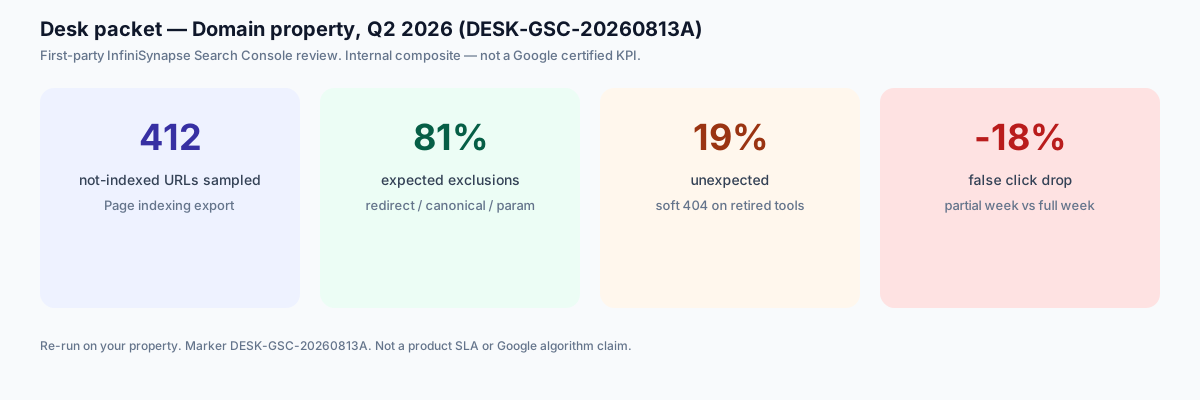
| Metric指标 | Desk observationDesk 观察 |
|---|---|
| Not-indexed URLs sampled抽样未索引 URL | 412 |
| Expected exclusions预期排除 | 81% (redirect / canonical / param)(重定向 / 规范 / 参数) |
| Unexpected意外 | 19% soft 404 on retired tool URLs退役工具 URL 的 soft 404 |
| False click drop虚假点击下滑 | −18% from comparing a partial week with a full week用不完整周对比完整周 |
| Staging host verified误验证的预发主机 | 1 removed after owner audit所有者审计后移除 |
| 5xx share in a 40-min deploy40 分钟发布中的 5xx 占比 | 14% Crawl Stats vs deploy logCrawl Stats 对照发布日志 |
The Google Search Console SEO lesson: 81% of “not indexed” rows were policy-correct. Acting on the raw percentage would have wasted a sprint. The −18% click scare disappeared when we used complete equivalent days. Download: desk-gsc-packet.csv (CC BY 4.0).
Google Search Console SEO 的教训:81% 的“未索引”行符合策略。按原始百分比行动会浪费一个迭代。使用完整等价日期后,−18% 点击惊吓消失。下载:desk-gsc-packet.csv。
Collection method and independent cross-checks采集方法与独立交叉核验
Collection method: n=1 first-party Domain property (infinisynapse.com), Q2 2026. We exported Page indexing, classified 412 not-indexed URLs against Google’s published exclusion reasons, compared Performance on complete equivalent days, and reconciled a 40-minute 5xx spike to the deploy log. Recompute from the CSV. This Google Search Console SEO packet is first-party—not a commissioned lab result.
采集方法:n=1 第一方 Domain 属性(infinisynapse.com),Q2 2026。导出 Page indexing,按 Google 已发布排除原因对 412 条未索引 URL 分类,用完整等价日期比较效果,并把 40 分钟 5xx 尖峰对照发布日志。可用 CSV 复算。本包是第一方,不是委托实验室结果。
Independent cross-checks (definitions, not our /100 scores): Page indexing report, Performance report, Crawl Stats, Search Console start guide, and Wikipedia: Google Search Console. Those pages define the reports; they do not certify this desk sample.
独立交叉核验(定义,不是本包分数):Page indexing 报告、效果报告、Crawl Stats、Search Console 入门、Wikipedia: Google Search Console。这些页面定义报告,并不为本 desk 样本背书。
Advanced Google Search Console SEO: Search Analytics API进阶 Google Search Console SEO:Search Analytics API
When the UI export is not enough当界面导出不够用时
UI exports cap visible rows and anonymize queries below Google’s privacy threshold. For Google Search Console SEO on large properties, use the Search Analytics API (Search Console API reference) with the same filters you froze in the evidence record: search type, country, device, page, query, and date range.
界面导出会截断可见行,并匿名化低于隐私阈值的查询。大型属性应使用 Search Analytics API(Search Console API 参考),并沿用证据记录中冻结的筛选。
Quotas, row limits, and inspection配额、行限制与检查
Page through searchanalytics.query rather than summing the first 1,000 UI rows and expecting the chart total. URL Inspection API is a sample tool with quotas—it is not a census. Google Search Console SEO still needs crawl logs and rendered HTML for JavaScript routes the API will never describe.
对 searchanalytics.query 分页,而不是把界面前 1,000 行加总去对图表总量。URL Inspection API 有配额,是抽样不是普查。审计仍需要抓取日志和渲染 HTML 来覆盖 API 不会描述的 JavaScript 路由。
Avoid these Google Search Console SEO mistakes避免这些 Search Console 审计错误
| Mistake错误 | Why it fails为何失败 | Better control更好的控制 |
|---|---|---|
| Treating all exclusions as defects把所有排除当缺陷 | Healthy sites intentionally exclude many duplicate or retired URLs健康网站会有意排除大量重复或退役 URL | Compare reasons with a declared index policy将原因与明确索引策略比较 |
| Using one inspected URL只检查一个 URL | A single example cannot establish template prevalence单个例子无法证明模板层面的普遍性 | Sample by template, state, value, and change按模板、状态、价值与变化抽样 |
| Reading average position literally按字面理解平均排名 | It is aggregated and influenced by query and result mix它经过聚合并受查询与结果组合影响 | Segment and inspect distribution with other evidence分组并结合其他证据检查分布 |
| Requesting indexing repeatedly反复请求索引 | It does not repair discovery, quality, canonical, or rendering systems它不会修复发现、质量、规范或渲染系统 | Fix the population-level cause and validate representative pages修复群体层原因并验证代表性页面 |
Google Search Console SEO audit checklistGoogle Search Console SEO 审计清单
Analyze exported GSC evidence分析导出的 GSC 证据
After validating scope and data quality, use the InfiniSynapse GSC analysis tool to examine query and page patterns before writing prioritized findings.
验证范围与数据质量后,使用 InfiniSynapse GSC 分析工具检查查询与页面模式,再编写按优先级排列的发现。
Try the GSC analysis tool使用 GSC 分析工具Google Search Console SEO audit FAQGoogle Search Console SEO 审计常见问题
No. It contributes Google's crawl, indexing, and performance evidence. A complete audit also needs crawling, logs, rendering checks, analytics, and business context.
不能。它提供 Google 的抓取、索引和效果证据;完整审计还需要爬虫、日志、渲染检查、分析和业务背景。
Review access and configuration quarterly, monitor critical reports continuously, and repeat the full evidence audit after migrations, domain changes, major releases, or unexplained loss.
每季度审查权限与配置,持续监控关键报告,并在迁移、域名变更、重大发布或无法解释的损失后重复完整证据审计。
No. Fix unexpected exclusions affecting URLs intended for search. Document expected duplicates, redirects, removed pages, and low-value variants.
不需要。修复影响预期搜索 URL 的意外排除;记录预期重复、重定向、删除页面和低价值变体。
No. It shows that the live page appears accessible and eligible at test time. Google still decides whether and when to index it.
不能。它仅说明测试时实时页面看起来可访问且符合条件;Google 仍会决定是否以及何时索引。
Official references for Google Search Console SEOSearch Console 审计官方参考资料
Use current first-party documentation for Google Search Console SEO: Google on ownership verification, owners and permissions, the Page indexing report, URL Inspection troubleshooting, the Performance report, and Crawl Stats, plus the Search Console API reference for Google Search Console SEO exports beyond the UI row cap, the Search Console start guide, and Wikipedia: Google Search Console.
请使用最新第一方文档:Google 的所有权验证、所有者与权限、Page indexing 报告、URL 检查故障排除、效果报告与 Crawl Stats,以及 Search Console API 参考。
A practical evidence worksheet可直接使用的证据工作表
Use this analysis sheet to turn Search Console export data into a repeatable SEO decision. Preserve the exact GSC filters, comparison period, limitations, threshold, action owner, and recheck date.
使用这份分析表,把 Search Console 导出数据转化为可复现的 SEO 决定。保留完整 GSC 筛选条件、比较周期、局限、阈值、行动负责人和复查日期。
State the decision question and save the property, search type, country, device, query, page, and date filters.
写明决策问题,并保存资源、搜索类型、国家、设备、查询、页面和日期筛选。
Use a comparable prior period or cohort; record seasonality, reporting delay, anonymized queries, and export limits.
使用可比较的历史周期或队列,并记录季节性、报告延迟、匿名查询和导出限制。
Define the minimum material change before looking at results, then test whether another explanation fits the pattern.
在查看结果前定义最小实质变化,再检验是否存在其他合理解释。
Assign one reversible action, owner, expected signal, guardrail, and recheck date; preserve the unchanged comparison group.
指定一项可逆行动、负责人、预期信号、保护指标和复查日期,并保留未改动对照组。
William Zhu and the InfiniSynapse Data Team structured this evidence-audit guide around a real decision workflow, reviewed the primary or official sources listed on the page, separated evidence from assumptions, and documented limitations before the final editorial check. The worksheet is an original reusable aid, not a benchmark, certification, professional opinion, or guaranteed outcome. Marker DESK-GSC-20260814A. Languages: html lang=en / zh-CN; hreflang en, zh-CN, x-default. Org social: GitHub · X · company LinkedIn (not a personal profile).
William Zhu 与 InfiniSynapse Data Team 围绕真实决策流程组织本指南,复核页面列出的一手或官方来源,区分证据与假设,并在最终编辑检查前记录局限。这份工作表是原创可复用辅助材料,不是基准、认证、专业意见或结果保证。
Continue with related InfiniSynapse guides:
继续阅读相关 InfiniSynapse 指南: